
Just before 17:30 on the opening afternoon, a troop of Hanfu-clad cosplayers stepped onto the paving stones of Changdi Street (长堤街) in Wuhan, and the crowd that had been working its way along the stalls turned to watch. The moment was part of the street market that opened on August 28 beside the Baoshou Bridge (保寿硚) on Hanzheng Street (汉正街), the old commercial spine the city once called the “living fossil” of its business history. The fair runs daily from 10:00 to 22:00 until September 3.
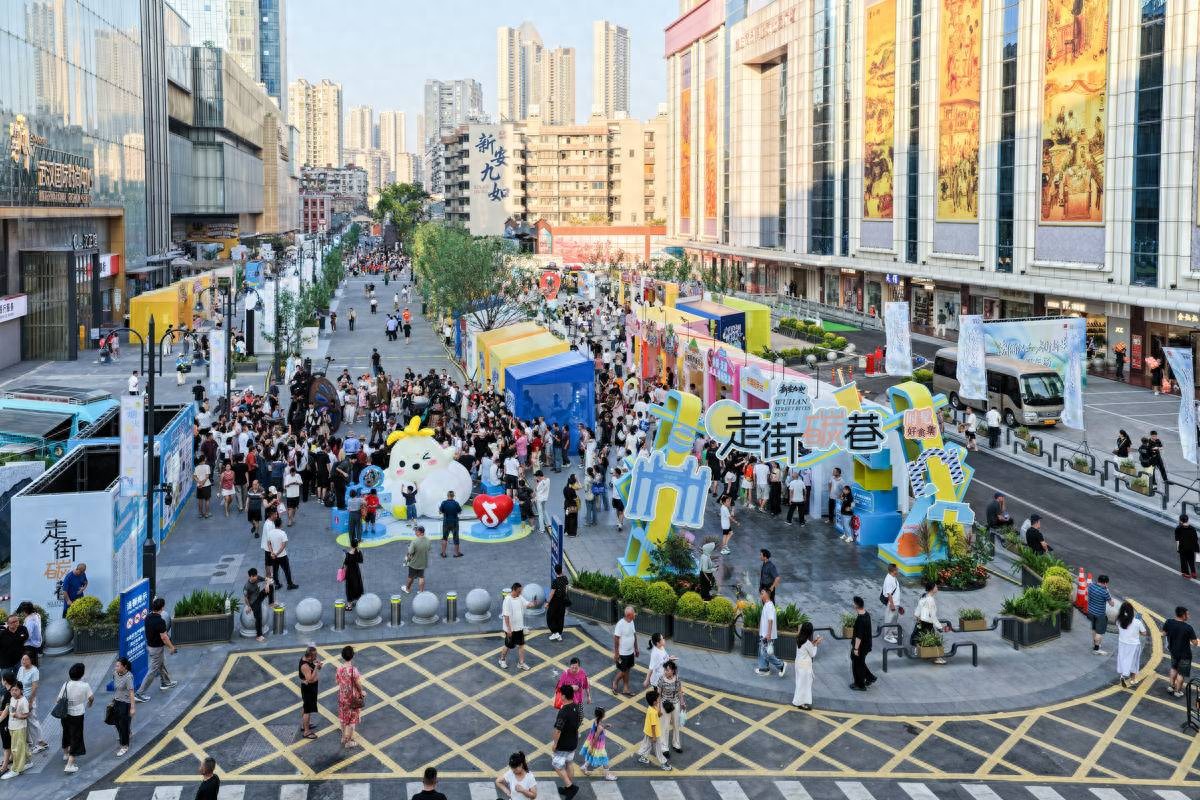
The market lines up more than 70 vendor booths, and six in ten of the businesses are making their Wuhan debut. The stalls are grouped into four zones: the Hanzheng old-brand food quarter, a Hubei heritage-handcraft area, a college makers’ zone and a trend-and-newcomer strip. Shoppers can eat local snacks, watch ICH craft demonstrations, browse student-designed products and try DIY workshops. The opening also doubled as the launch event of the 2026 Hanzheng Street International Fashion Week, making this the century-old street’s first big showcase after a full upgrade.
A Schedule of Street Performances
Afternoon performances ran on a tight timetable. A Chinese-style band led the entertainment; then came three back-to-back passes of “Punk Planet 2060,” a steampunk visual show that has performed at the Wuzhen Theatre Festival (乌镇戏剧节), sending a giant steam locomotive along the stone lanes; at 17:30 the Hanfu-and-cosplay procession wandered through, with performers free to be approached and photographed at any point. The street’s own history supplied the backdrop: shops rebuilt for the fair keep their old frontages, and the performances happen where the goods are being sold.
After dark, the buildings themselves became screens. A naked-eye 3D projection titled “Endless Vitality” (生生不息) turned the old facades on Baoqing Street (宝庆街) into a giant canvas, tracing the commercial memory of Hanzheng Street through different eras of the city. The show is free and runs every night from 20:00 to 21:00 through September 3, with a different headline performance each of the first three evenings.
A 400-Meter Spine of History
Changdi Street runs roughly 400 meters, from Duofu Road (多福路) in the west to Baoqing Street in the east. Six historic sites line the route — the Baoshou Bridge, the former Hankou Volunteer Fire Association building, the Xin’an Academy (新安书院), the cobbled Yaobang Lane (药帮一巷), the Baoqing Guild Hall and the former Red Cross Society of China Hankou Branch building. The bridge is the oldest: built in the early Kangxi era of the Qing dynasty, this single-arch stone span of about 10 meters is more than 360 years old, and it is the only surviving physical witness to the name “Qiaokou” (硚口) — the bridge, in effect, gave the district its name. The restoration work for the market polished the bridge up, and it now lights up at night as part of the street scene.
Officials of Qiaokou District described the fair as the first demonstration section of the Xin’an Jiuru Historic District, a renewal project built around original fashion: a “storefront-plus-workshop, street-corridor-runway and immersive shopping” model that keeps the old walls, the old trees and the old street layout intact while injecting new businesses. Within the next year the district is set to gather 50 original designer brands, 10 flagship trend stores and one regular fashion launch center — the plan for turning Wuhan’s once-famous trading street into a place young people come to on purpose.