
Singer Gong Linna (龚琳娜) arrived at the opening red carpet of SS2027 Beijing Fashion Week on September 7 in a look that read more like sculpture than standard gala dressing: a slim white gown, cut close through the body, paired with a feather-and-mesh cape of striking volume that spread and settled behind her with each step. The layered cape mixed sheer net with feather tips, so that the dress beneath showed through the veil while plumes framed her shoulders and trailed down her back. The combination of architectural white and the soft texture of the feathers gave the outfit a distinctly Chinese artistic quality, and her relaxed, unhurried manner drew immediate comment, with viewers calling the appearance “such a distinctive red-carpet look from Gong Linna.”
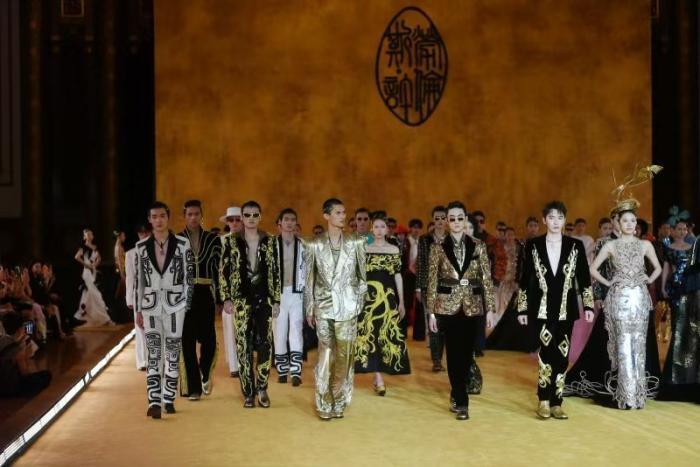
The look did not stand alone. The same evening’s opening gala, held in the Golden Hall of the Beijing Hotel under the fashion week’s banner “Opening a New Chapter, Boundless Symbiosis” (序启新章·无界共生), was built around the same East-meets-aesthetic language: designer Laurence Xu and the Nanjing Yunjin Museum (南京云锦博物馆) presented the couture collection Qi (祈), in which the house’s Liulu embroidery (鎏络绣) raises threads into low relief echoing bronze decoration, and Zhuanghua (妆花) fabric is woven with real gold thread to evoke the tranquil prosperity of the Northern Song New Year painting Suichao Tu (岁朝图). Gong Linna and other singers performed live through the show, their voices carrying the runway in what the organizers called a staging of “sight and sound from one source”. The label captures an ambition to treat music and fashion as a single experience rather than a catwalk with background audio: the voices were woven into the presentation as it moved, not layered over it afterward.
It is the kind of placement that suits her repertoire. Gong Linna is best known for pushing folk vocal traditions through experimental performance, and the outfit echoed that stage identity: Chinese in reference, contemporary in execution. The feather cape, enormous but weightless in effect, worked almost as a piece of stage design, and its white palette let the cut and texture of the dress underneath do the talking. Where many red-carpet looks compete through color, hers competed through proportion, a silhouette that moved like a banner as she walked into the hall. The choice of white also gave the overall image a sense of restraint, letting the cape’s volume carry the drama rather than competing with the embroidered brilliance of the couture on stage behind her.
The Beijing Youth Daily wrote of the evening that the opening show put three thousand years of ritual-music civilization on the runway, and that Chinese fashion design is now stating cultural confidence through an Eastern aesthetic. Its report described bronze motifs and the splendor of Yunjin (云锦) reflecting off one another as the light shifted across the catwalk. Gong Linna’s own styling belonged to the same sentence: her white feathers and the gold-thread brocade were two ends of one palette, the ethereal and the imperial meeting on a single stage. The singer’s appearance, in that reading, was the night’s first frame on the red carpet.