
On September 6 the 15th Zhengxiandan Culture Month opened at the hilltop square of Mingchun Valley (鸣春谷) on Baiyun Mountain in Guangzhou, and it runs through September 19 under the theme “Roam the Cloud Mountain, Pray for Wellness”. The day’s clearest invitation was aimed at Hanfu wearers: anyone entering in period dress through the South Gate between 9 a.m. and 6 p.m. skipped the admission fee, part of a program that folds intangible-heritage customs, forest wellness, Guochao (国潮) experiences and outdoor sports into one southern Guangdong celebration.
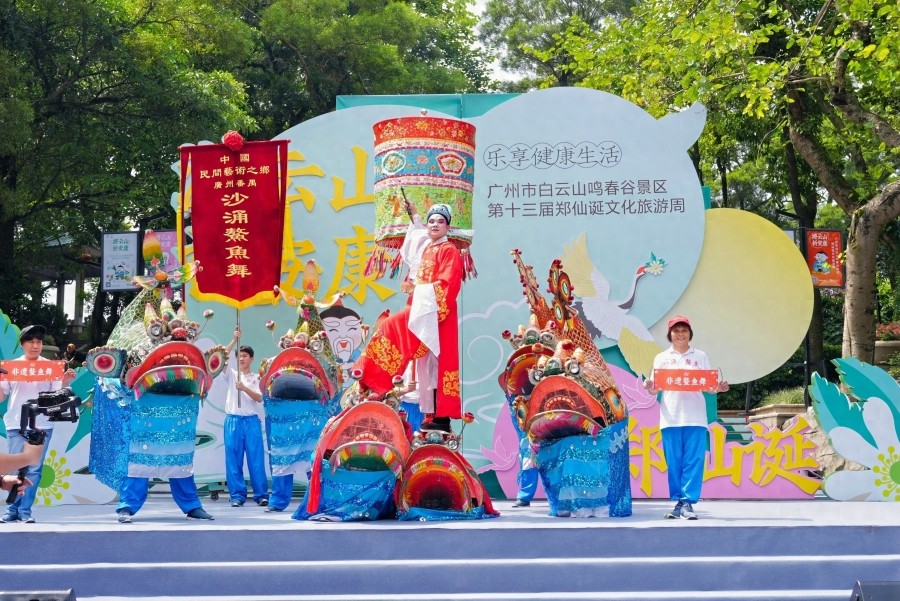
Locals call the fete “Guangzhou’s first birthday festival,” a title earned over more than 1,600 years. It honors Zheng Anqi (郑安期), an alchemist-physician of the late Qin dynasty said to have gathered herbs on the mountain to heal the sick before ascending to immortality from its cliffs. The opening ceremony staged Aoyun Xianzong, an original play retelling the tale of Zheng gathering sweet flag to drive out plague, and premiered “Cloud Mountain Has Stories”, a promotional song for Baiyun Mountain written by well-known Guangdong musicians. Guangdong TV’s official platform Yue TV (粤TV) streamed the ceremony, drawing more than 200,000 online viewers.
Beside the opening stage ran the Aotou wellness temple fair, laid out in seven zones: traditional Chinese medicine consultations, light sport in period style, Guochao games, heritage craft stalls, Cantonese food, folk performances and a showcase of mountain products. Visitors could try Touhu (投壶) pitch-pot and ring toss, rent Hanfu for the day or join period-style handicraft sessions. The market tables carried Cantonese embroidery, tongcao pith-paper paintings (通草画), ao-fish paper sculpture and other Lingnan heritage goods, while water chestnut cake and old-style crisp pastries covered the snack side. Old pharmacy names under Guangzhou Pharmaceutical, among them Chen Liji (陈李济), Pangaoshou (潘高寿) and Wanglaoji (王老吉), staged national-heritage demonstrations of tangerine-peel processing, wax-shell pill making and honey paste refining, with herbal tea tastings on the side.
A new twist this year ties the festival to a wider landscape. The organizers issued a blessing-collection passport that links seven mountains, so visitors can stamp their way across Baiyun, Luofu (罗浮山), Nankun (南昆山), Maofeng (帽峰山), the Liuxihe National Forest Park, Yuexiu Hill (越秀山) and Baishui (白水山), unlocking forest-therapy trails and traditional Chinese medicine study routes at each stop. Travel agency GZL (广之旅) has packaged the circuit into two-day-one-night and three-day-two-night forest wellness itineraries that string the mountain ecology together with nearby farm and cultural businesses.
The month continues well past the opening. Programs on the calendar include a Yunshan storytelling contest, a Xiangyunsha (香云纱) fashion show staged by Gloria’s heritage Xiangyunsha study workshop under the banner “Heritage in Dance, Cloud Gauze in Rendezvous,” science-study tours and youth reading and writing competitions. The fair also debuted acorus and mugwort sachets, mugwort foot-soak packs and “Zheng Xiandan wellness” blind boxes, and a retrospective photo show of past festivals is on view at the Baiyun Wanwang viewpoint (白云晚望). A custom that began with one healer on one mountain now fills a month of the city’s calendar, and the festival keeps finding new ways to move from old books into street life.