
Why One Copycat Won a Husband While the Other Lost Everything
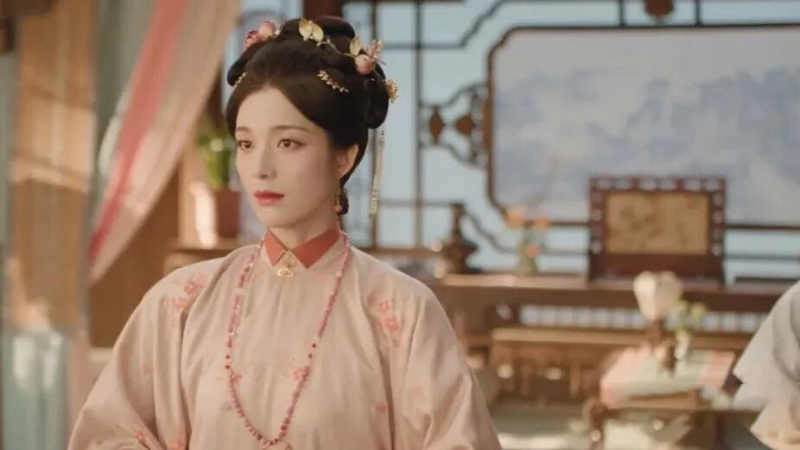
In the intricate dance of love, marriage, and survival, imitation often becomes a strategy. Yet, as the drama The Road to Splendor (花开锦绣) reveals, the outcome of such mimicry depends entirely on the imitator’s endgame. When two women, Wu (吴) and Fan Yake (范雅客), both model themselves after the ethereal Fu Tingyun (傅庭芸) to win the heart of Yu Jingxiu (俞敬修), the results are polar opposites.
One secures her shelter and security; the other loses her identity and her husband’s respect. This is not a simple tale of a man seeking a replacement for his first love. It is a story about strategy, self-awareness, and the dangerous cost of losing oneself in the shadow of another.
Winning Through Utility
Wu enters Yu’s life not as a romantic ideal, but as a practical survivor. He initially refuses to take her as a concubine, but she quickly identifies his deepest vulnerability: his unresolved obsession with Fu Tingyun. Wu does not try to be a perfect replica of Fu; instead, she becomes the keeper of the memory. She listens to Yu talk about Fu all night, a move that earns her the nickname “comrade” among fans, as she shares his fixation without the burden of genuine emotion.
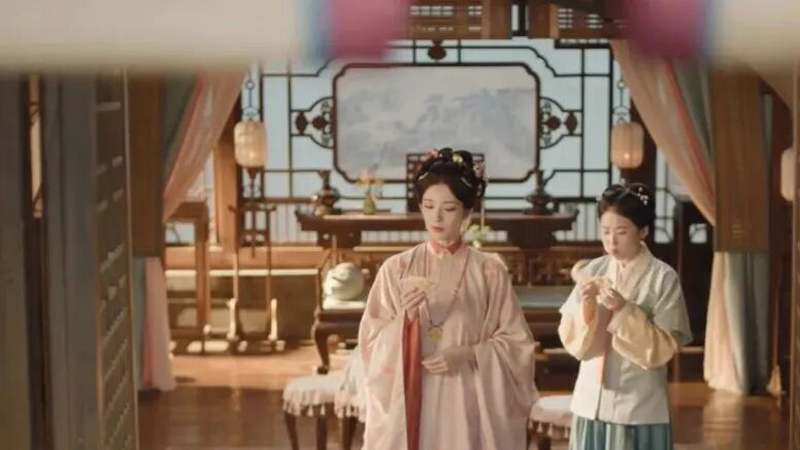
Her most brilliant tactic is the making of Hu Bing (胡饼), a flatbread that symbolizes Yu’s memories with Fu in the northwest. For Yu, it is a sacred token. For Wu, it is simply a tool. She even visits Fu Tingyun to ensure her version of the bread remains the only one Yu will ever taste, hoping it will become the definitive flavor of his nostalgia. She does not need to be a perfect copy; a mere one or two traits reminiscent of Fu are enough to secure his favor. Her goal is not love, but survival—a safe place to live, food to eat, and warmth. She strategically plays on his weakest point, knowing that his obsession is a door she can walk through to secure her own future.
Losing Through Contradiction
Fan Yake initially scorns the idea of imitating Fu. She believes her uniqueness is what attracted Yu in the first place. However, her actions betray her words. She famously stated, “I do not love narcissus, but orchids,” a clear shift from the flower that was her own love token with Yu. Orchids are more refined, but crucially, they are also Fu’s favorite flower. This is imitation in disguise. She is trying to win him back by adopting the preferences of the woman he truly longs for, all while convincing herself she is above the act.
Her fundamental flaw is the conflict between her pride and her actions. She wants Yu’s love, his respect, and his exclusive devotion, yet she is slowly becoming a carbon copy of a woman she resents. This internal contradiction drains her of the very individuality that drew Yu to her. He married her because he saw her as someone different, someone who valued poetry and conversation over his status. But as she begins to mimic Fu’s tastes, she loses that edge. In his eyes, she becomes “mediocre,” just like everyone else. She wants too much—the status, the love, and the exclusivity—and in demanding all, she loses everything, including her sense of self.
Clarity vs. Greed
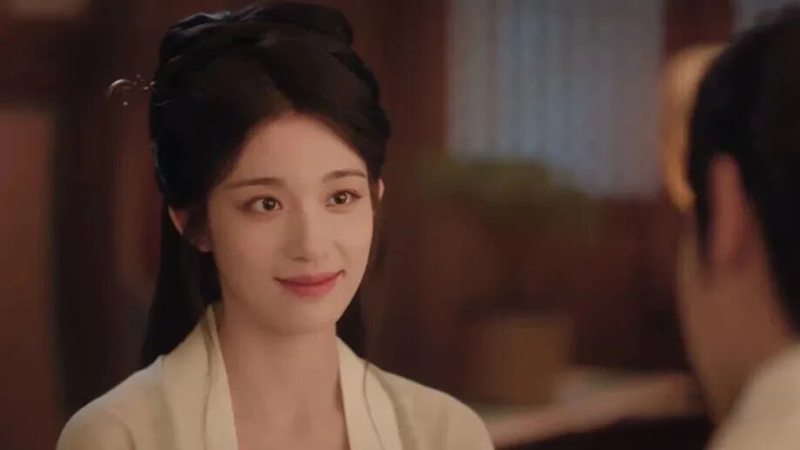
The real distinction between Wu’s victory and Fan’s defeat lies in their psychological approach and their understanding of Yu Jingxiu. Wu understands that Yu’s love for Fu is fueled by impossibility; it is a fantasy of the unattainable. Therefore, she doesn’t compete with the ghost of Fu. Instead, she acts as a medium to that ghost, using it as a bridge to connect with Yu. Her strategy is to get closer to him by discussing Fu, offering a safe space for his obsession, and receiving his pity and affection in return. For her, the object of his affection is irrelevant; the tactic is what matters.
Conversely, Fan is trapped by her own expectations. She wants to be loved for who she is, yet she actively erases that person. Her imitation is half-hearted and fueled by desperation, not strategy. She becomes more like the bitter Zuo (左), the lady of the household, complaining about what she lacks. Wu (吴), in stark contrast, is content with a modest share of his attention. She is not greedy; she only wants a foothold. By not caring who Yu truly loves, she paradoxically becomes the one who can give him exactly what he needs: a listener who validates his past. Wu bets on his obsession and wins because her stakes are clear and her heart is detached, while Fan risks her identity for love and loses it all.