

The Road to Splendor (花开锦绣): Did the Mother’s Self-Neglect Make Her the Hidden Accomplice to Her Own Murder? The latest episodes of The Road to Splendor deliver a heartbreaking gut punch. As Zhao Ling (赵凌) digs into the accounting books of Anzhou (安州), the trail leads directly to the Yu family’s corrupt dealings. Desperate to buy time and cover up their illicit finances, Grand Secretary Yu dangles a coveted official post in front of the Fifth Master of the Fu family. It is a poisoned bait, and Fu takes it.
To secure that phantom promotion, he turns on his own wife—the mother of his children—and poisons her in the cold, dead of night. The show makes it easy to condemn the husband’s cold-blooded ambition. But a closer look at the face of the elderly servant who delivers the news to Fu Tingyun (傅庭芸) reveals a more unsettling truth: this murder had more than one perpetrator. The true accomplice is not another power-hungry relative, but someone so obvious that the audience almost misses her. She is the victim herself.
The Selfless Matriarch
It is genuinely tragic to watch the mother’s story unfold. She was a woman of immense talent and sharp perception, living in an era that demanded women be invisible. When Fu Tingyun was cast out and poisoned by her own family, the mother shattered every societal norm. She knelt before Zhao Ling, a man outside the family, begging him to escort her daughter to safety in the capital. In that moment, her own reputation and honor meant nothing compared to her daughter’s life.
Five years later, when Fu Tingyun returned from the northwest to marry Zhao Ling, the mother defied her husband’s threats again, sending out the betrothal papers to secure her daughter’s happiness. Her reasoning was powerful: “What is a parent’s command? It is that I bless my children to live well, not that I permit them to live well.” That line is a jewel of screenwriting—a sentiment that rejects feudal authority in favor of genuine love. She was, by every measure, an extraordinary mother.
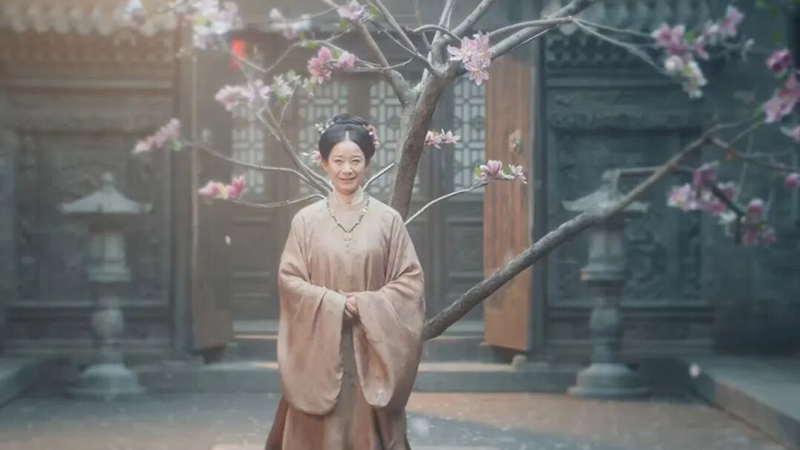
Yet, this same remarkable woman was incapable of applying that strength to herself. Her cleverness, her understanding of the world—none of it protected her. She had given everything to her children, but she had reserved nothing for her own survival. It was as if her compassion had a blind spot, and that blind spot was herself. The audience mourns her not just because she died, but because she lived a life of such devoted self-denial that her own well-being was never a priority. She was a bird that knew how to navigate every storm for her chicks, but never learned how to build shelter for her own broken wings.
The Real Accomplice
The fifth master of the Fu household is a villain. His greed is grotesque, his ambition so consuming that he trades a lifetime with his wife for a political favor. But is he a mastermind? Hardly. He is a blunt instrument, a desperate man who, when offered a golden carrot, swings the axe without a second thought. However, the real horror of this plot lies not in his brutality, but in its necessity. When the old servant arrives to report the mother’s death, her expression is heartbreakingly complex. There is grief, yes, but also a profound, weary resignation. She is not just sad that her mistress died; she is sad that she died in such a preventable way. The servant’s look says it all: the mother was already dying, not from a poison, but from a long, slow starvation of the soul.
If Fu Tingyun had been in her mother’s position, she would have fought back. She would have torn the family apart to survive. But the mother was different. She had been punishing herself for years—for marrying the wrong man, for being powerless to protect her children, for being trapped in a marriage that offered only humiliation. Her health failed not from a single blow, but from the constant, grinding weight of her own self-recrimination. She was a ghost long before the poison reached her lips. In this sense, the fifth master was merely a catalyst. The true force that undid her was her refusal to save herself. She didn’t need to be a victim; she had the intelligence and the resources. She had loyal servants and a powerful daughter and son-in-law. But she chose to martyr herself on the altar of her own despair.
The Unseen Puppeteer
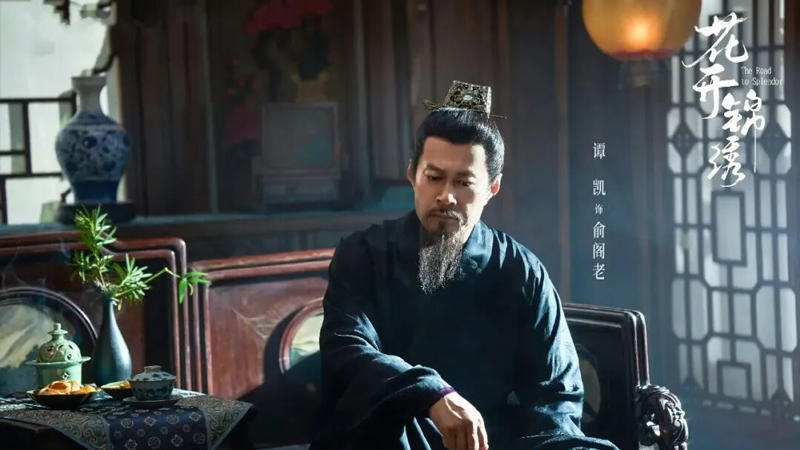
Beyond the family drama lies a chilling political game, and the chess master is Grand Secretary Yu. His strategy is one of ruthless efficiency. He uses the fifth master’s greed like a key to open a door of chaos. By suggesting the murder, he buys himself a window of escape from the financial investigation. Once his escape is secure, he uses a psychological trick to force Zhao Ling to eliminate the fifth master, destroying the last piece of evidence. It is a flawless execution of manipulation. He betrays everyone: the desperate husband, the grieving daughter, and the righteous son-in-law. He plays them all like instruments in an orchestra of his own design.
But his victory is only possible because of the pawns he uses. The fifth master provided the hand, but the mother’s fragile, defeated spirit provided the opportunity. She was a perfect victim because she had already surrendered. Her passivity, born from years of emotional erosion, was what sealed her fate. The scheme was brilliant, but it required her cooperation, even if that cooperation was silent and unwitting. She gave up, and that gave the puppeteer the space he needed to pull his strings. It is a sobering reminder that in the grand theater of tragedy, the most devastating accomplices are often the ones who have simply stopped fighting.