
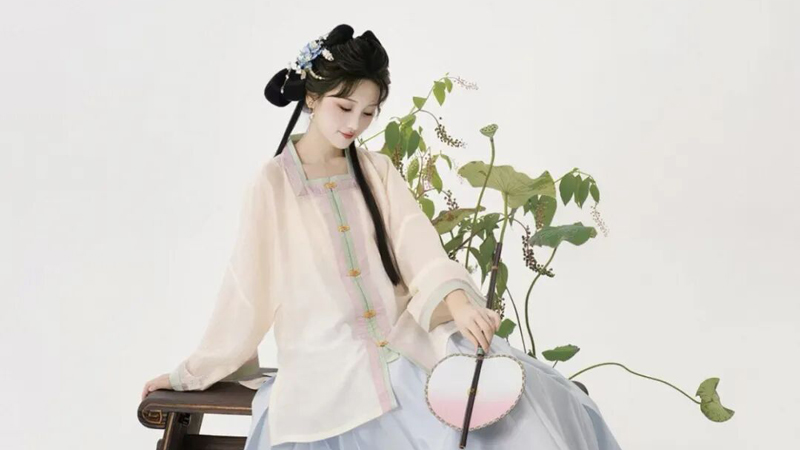
Chushu (处暑), the 14th solar term, marks a subtle turning point. The oppressive heat of high summer finally begins to relent, yet the days still hold a lingering warmth. It is a time of transition, captured not in a single dramatic shift, but in the slow, poetic fading of one season into the next. For centuries, the ancient Chinese have observed this change not just in the behavior of eagles or the ripening of grain, but in the very colors of the sky, the lotus ponds, and the fields.
These traditional hues—each with a name that evokes a sensory experience—offer a unique and profound inspiration for dressing in Hanfu during this transitional period. It is an invitation to clothe oneself in the very essence of early autumn, moving beyond fleeting fashion trends to embody the quiet narrative of the season’s rhythm. This article explores how these specific shades can translate into a modern, thoughtful wardrobe for the late summer days.
A Colorful Pause
Chushu is a season of waiting, a breath held between the blaze of summer and the crispness of fall. The natural world reflects this pause, and the traditional colors associated with it are not loud or brash. They are muted, layered, and complex, much like the sky at dusk or a lotus flower past its prime. These colors are not random; they are derived from careful observation of the natural world, forming a palette that feels both timeless and immediately relevant. When considering your Hanfu ensemble for this time, think of colors that whisper, rather than shout. The goal is to mirror the landscape itself, creating an outfit that feels harmonious with the environment and appropriate for the fluctuating temperatures.
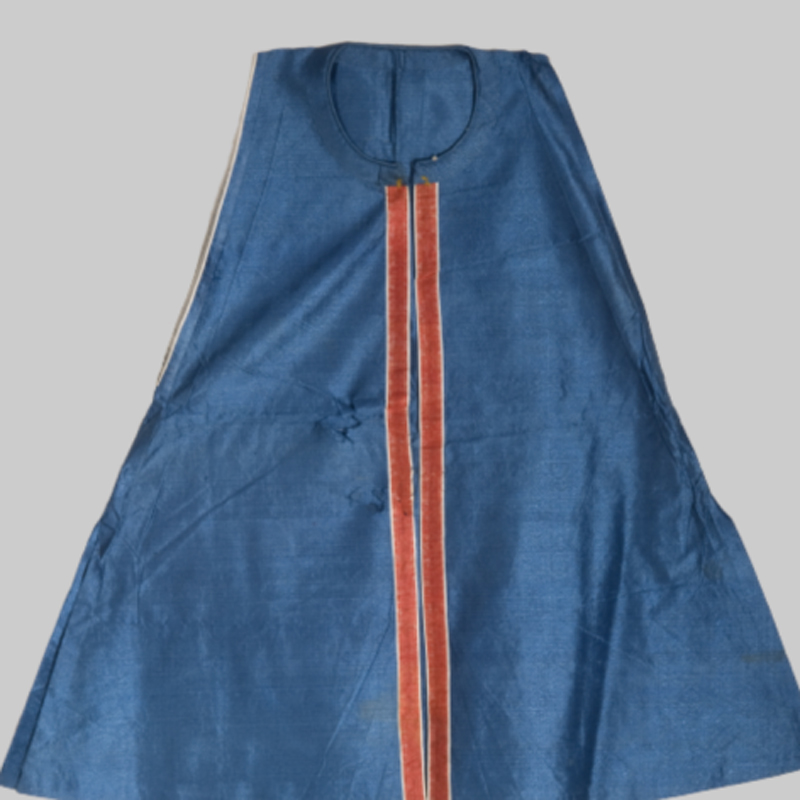
It is in this spirit of quiet observation that we can look to shades like Yue Bai (月白), or Moon White. This is not a stark white, but a pale, almost translucent blue. The name alone evokes a night sky just after the moon has risen. Historically, as documented in the Ming dynasty text Tiangong Kaiwu (天工开物), this color was achieved by a light dip in indigo water, resulting in a tone that is cooler and more ethereal than simple white. For a Hanfu enthusiast, a Yue Bai piece is an ideal transition garment. A lightly colored Beijia (比甲), or sleeveless jacket, like the Ming dynasty example from the Kong Family Mansion (孔府), with its subtle cloud patterns woven into the sheer material, embodies this perfectly. It can be worn over a simple inner robe, providing a layer of visual interest and slight warmth for a cool evening without the bulk of a long sleeve.
Lotus Root
While the lotus flower’s vibrant pink fades, the color of its root, Ou He (藕荷), offers a beautiful moment of reflection. This color is a soft, dusty mauve, a muted purple-pink with a greyish undertone. The poet Yuan Hongdao (袁宏道) of the Ming dynasty evoked it in his writings, cementing its place as a color of refined, literary taste. Ou He lacks the bright, girlish energy of pink or the boldness of purple. Instead, it represents a gentle maturity, a color that holds its own quiet strength. It is the color of a lotus pond that has begun to fade, where the flowers are replaced by seed pods and the water reflects a more subdued sky.
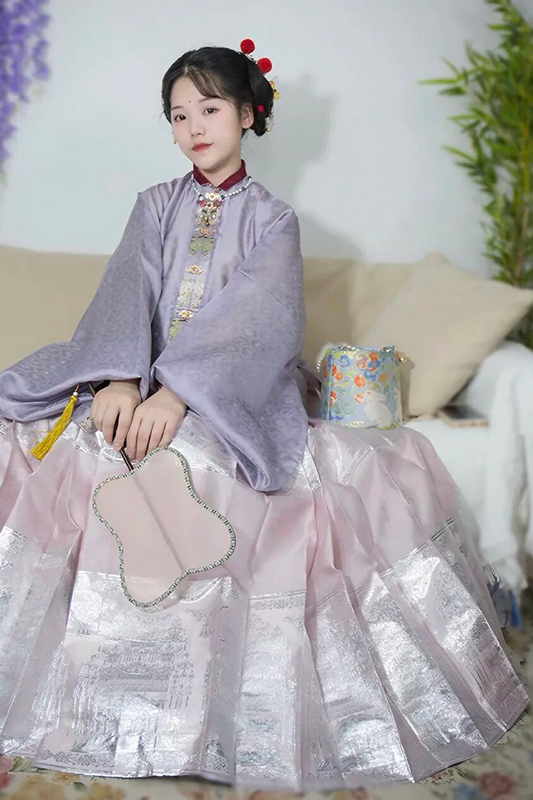
In terms of practical Hanfu dressing for Chushu, an Ou He blouse or Ruqun (襦裙) skirt offers a wonderful alternative to the standard bright colors of summer. It can be paired with Yue Bai for a look that is ethereal and full of poetic charm, echoing the misty mornings of early autumn. When accessorized, it can also feel surprisingly grounding, especially when combined with deeper shades. Its versatility lies in its ability to retain a touch of summer’s floral memory while perfectly aligning with the autumn’s shift towards deeper, more introspective tones. It suggests a personality that appreciates beauty in fading moments and the elegance of understatement.
From Purple to Gold
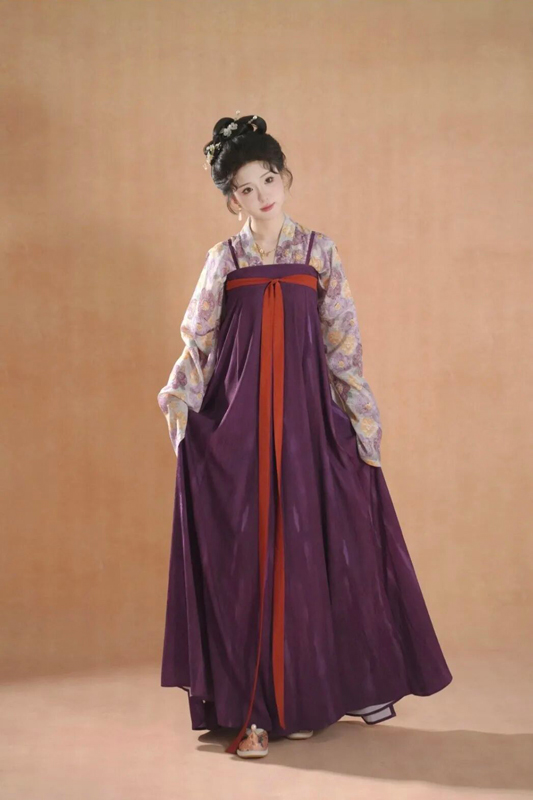
As the season deepens, so do the colors. Zi He (紫褐), or Purple-Brown, is a hue that speaks to this progression. It is a dark, warm color created by adding a brownish hue to purple, offering a sense of stability and earthiness that is distinctly autumnal. It is less floral than Ou He and is reminiscent of soil or bark, the grounding elements of the harvest season. A historical garment, the Southern Song Purple-Brown Luo Singlet discovered in the tomb of Huang Sheng (黄昇), showcases the brilliance of this color on a lightweight fabric called Luo (罗). This sheer silk, woven with a complex openwork technique, feels airy and light, proving that autumn colors don’t have to be heavy.
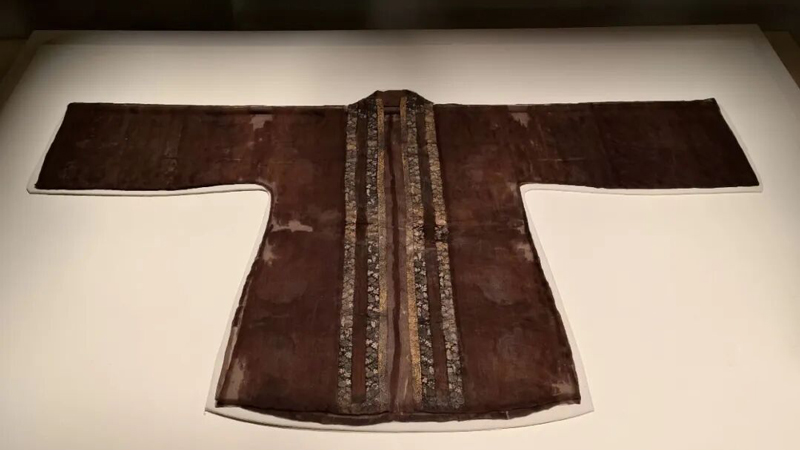
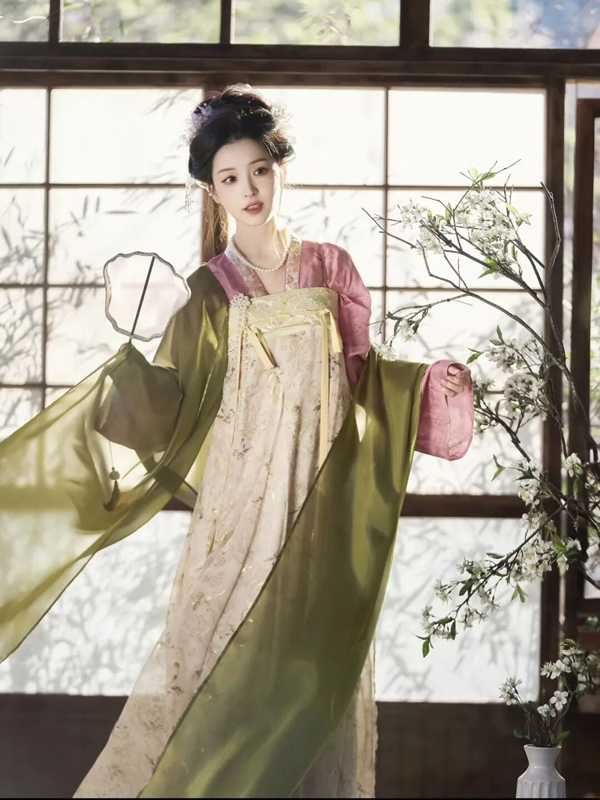
This intersection is where the season’s genius lies: deep, rich color on a fabric perfect for the warm days. Moving further along the seasonal spectrum is Qiu Xiang (秋香), or Autumn Fragrance. This is the color of grains ripening in the fields, a complex yellow-green that perfectly captures the transition from green to gold. It is the color of the “golden hour” of the season, a warm, optimistic hue. For Hanfu, it allows for striking combinations. Pairing a Qiu Xiang jacket with a jade-green skirt or a Yue Bai waistband brings a dynamic energy to the outfit. It balances the warmth of the yellow with the coolness of the green, symbolically fusing summer’s lingering vitality with autumn’s approaching ripeness.
Slow Change
The Chushu palette is a masterclass in nuance. It teaches that the most beautiful transitions are not abrupt, but gradual. Each color, from the clarity of Yue Bai to the grounded, warm tones of Qiu Xiang, represents a layer in a constantly changing landscape. The appeal of using traditional colors in modern Hanfu lies not just in their beauty, but in the story they tell. When you wear a Qiu Xiang-colored robe or an Ou He jacket, you are not merely wearing a garment; you are wrapping yourself in a moment of seasonal poetry.
This approach to fashion is a deliberate act of mindfulness, inviting a deeper connection to the world. It aligns our daily choices with the ancient rhythms of the earth, as observed by the scholars and artisans who named these exact shades. As the old saying goes, “In the seventh and eighth months, watch for the clever clouds.” This season encourages us to do the same with our clothing, to find beauty in the details and the in-between times. By embracing these colors, we can transform our Hanfu from a simple outfit into a personal celebration of nature’s most subtle and profound art: the slow, graceful passage of time.