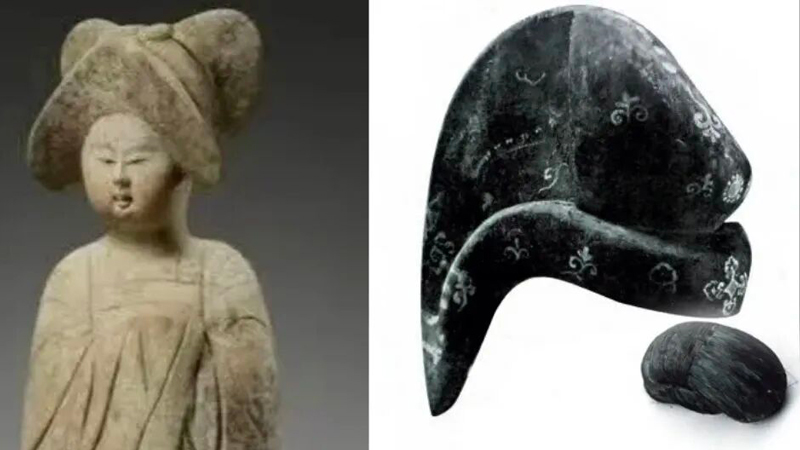
Why do historical dramas always show characters with impossibly thick, jet-black hair? Whether it’s a noblewoman’s towering bun or a scholar’s sleek topknot, the sheer volume seems beyond modern reality. Meanwhile, today’s young adults panic over receding hairlines and thinning crowns, stocking up on anti-hair-loss shampoos. Were ancient people simply born with superior follicles? The short answer is no—their “good hair” was largely a result of lifestyle, care habits, and a fair amount of illusion. Let’s break down the real secrets behind those lustrous locks, and you might pick up a few timeless tips for your own scalp.
Sleep and Serenity
The most lethal triggers for modern hair loss—chronic sleep deprivation and mental anxiety—were almost absent in pre-industrial life. Ancient farmers and artisans followed the natural rhythm of sunrise and sunset; without electric lights or screens, they rested early and enjoyed deep, uninterrupted sleep. Their daily work, though physically demanding, rarely involved the kind of low-grade, persistent stress that comes from endless emails, social media comparison, or workplace competition. This stable circadian cycle allowed their hair follicles to repair and regenerate during the night, keeping roots firm and thick.

Modern life, by contrast, is a minefield of cortisol spikes. Late-night scrolling, deadline pressure, and information overload disrupt the endocrine system, directly triggering telogen effluvium—a sudden shedding phase. When you skip sleep, your body prioritizes vital organs over hair growth, leaving follicles starved of nutrients. Ancient people did face occasional crises—famines, wars, or family losses—but these were episodic, not the constant, low-humming dread that defines contemporary existence. Their hormonal balance remained steady, and steady hormones mean steady hair.
Moreover, they didn’t have the concept of “burnout.” Mental energy was spent on tangible tasks: planting rice, weaving cloth, or preparing meals. This grounded, physical lifestyle kept their nervous system in a parasympathetic state—rest and digest, not fight or flight. Healthy follicles don’t just need vitamins; they need a calm host. So before you buy another expensive serum, consider this: the cheapest hair tonic might be an early bedtime and a daily walk without your phone.
Natural Cleansing
Here’s a harsh truth: most commercial shampoos are overkill. Packed with sulfates, parabens, and synthetic fragrances, they strip away the scalp’s natural sebum, leaving it dry, irritated, and prone to inflammation. Over time, this weakens the hair shaft and shrinks follicles. Ancient people never faced this assault. Instead, they turned to botanicals. The agricultural encyclopedia Qimin Yaoshu(齐民要术)and the imperial compendium Taiping Yulan(太平御览)both detail recipes using soapberry, tea seed cake, and fermented rice water for washing hair. These mild, alkaline-free cleansers removed dirt without destroying the scalp’s protective lipid barrier.

Frequency was another key. They didn’t wash daily—only when necessary, often every few days or weekly. This allowed the scalp’s microbiome to flourish and natural oils to condition the strands from root to tip. Contrast that with the modern “wash every day” mantra, driven by marketing rather than biology. Over-washing triggers a vicious cycle: more oil production to compensate, then more stripping, then more sensitivity. Ancient people also avoided heat styling and chemical dyes—no blow-dryers, no bleach, no permanent waves. Their hair endured none of the thermal or oxidative damage that makes modern hair brittle and prone to breakage.
There’s also the cultural dimension. The Confucian precept “body, hair, and skin are received from parents and must not be damaged” was taken seriously. Most men and women rarely cut their hair after childhood; they let it grow naturally for decades. This cumulative length and density gave them a fuller baseline. Modern people, however, trim and style frequently, reducing the total mass of original strands. So while we envy their volume, we forget that they simply had more years of uninterrupted growth—and far fewer chemical interventions.
The Wig Truth
Now for the biggest revelation: those enormous, gravity-defying buns in ancient paintings and terracotta figures were mostly not real hair. The sheer mass—often towering a foot high—exceeds any human scalp’s capacity. The solution? Artificial hairpieces, called yiji (义髻) in Chinese, which were already standardized by the Western Zhou dynasty (c. 1046–771 BCE). According to the Rites of Zhou · Tianguan · Zhuishi(周礼·天官·追师), a dedicated court official named Zhuishi managed the queen’s headdresses, which included three types of fake buns: fu (副) for grand ceremonies, bian (编) for daily use, and ci (次)—a mix of real and false hair. The Han scholar Zheng Xuan (郑玄) explicitly annotated that all three were “false chignons.” So the state had a formal wig department over 3,000 years ago.

These wigs weren’t cheap. They were made from donated human hair, often from prisoners or the poor, and styled with bamboo frames, silk padding, and resin-based adhesives. The result was a lightweight, voluminous structure that could be pinned over the wearer’s own thin ponytail. This technique is no different from today’s clip-in extensions or padded hair buns sold on e-commerce sites. When you see a Tang-dynasty lady with a “cloud bun” that seems to float, you’re looking at a sophisticated prosthetic, not a genetic miracle. The visual trickery was so effective that it became a status symbol—the bigger the wig, the higher the rank.
So why do we still believe that ancient people had naturally thick hair? Because historical artworks rarely depict the bare truth—they show the idealized, staged version. Contemporary viewers mistake the costume for the reality. In fact, ancient texts also record complaints about thinning hair and baldness, though less frequently. But those cases didn’t make it into imperial portraits. The real lesson here is not to romanticize the past. Our ancestors had the same biological limits; they just compensated with clever engineering and stricter self-care. Instead of envying their “hair wealth,” we can adopt two habits: reduce chemical aggression on our scalps, and accept that some volume is always a little bit fake. That’s not cheating—it’s tradition.