
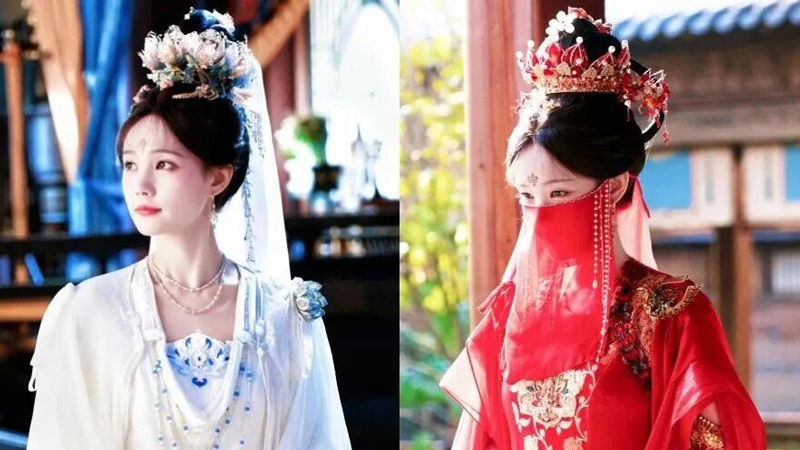
Li Yitong (李一桐) wears a lotus-shaped crown in her new period drama—but is this a historical relic or a modern designer’s fantasy? The answer takes us from Dunhuang (敦煌) caves to Tang dynasty palaces, and from Buddhist sutras to Song dynasty dressing tables. That “strange” ornament, it turns out, has roots deeper than most costume dramas dare to dig.
Lotus Crowns: Not a Whim
When Gu Yue Feng Hua Lu (古乐风华录) released its set photos, viewers spotted Li Yitong in two outfits—both topped with a lotus-shaped headpiece, paired with gauze robes and a forehead floral pattern. The look feels otherworldly, but it did not emerge from a vacuum. Inside the Mogao Caves (莫高窟) of Dunhuang, murals and painted sculptures are filled with lotus crowns. Some show a single large lotus perched on a topknot; others arrange smaller flowers around the main bun, with long bead strings dangling at the temples.
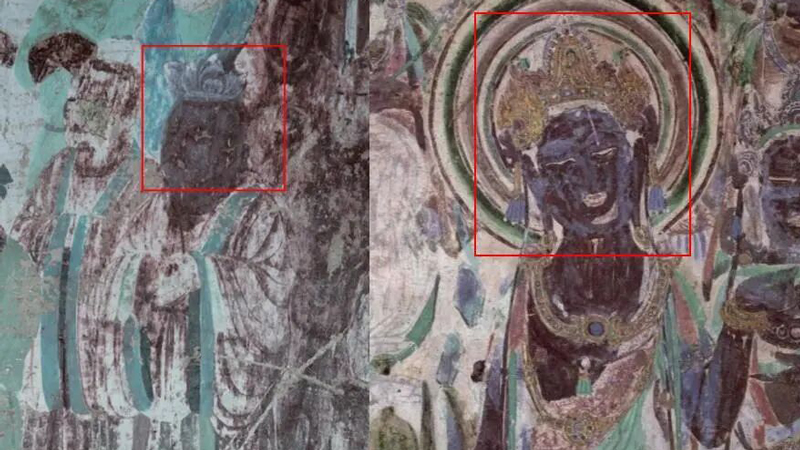
From the Wei and Jin dynasties through the Sui and Tang, Buddhist culture wove itself deeply into Dunhuang life. The lotus, a classic Buddhist symbol, gradually moved from statue pedestals into women’s hairstyles. By the Tang, with both Buddhism and Taoism flourishing, the lotus crown had become a common sight. Excavated Tang pottery figurines and murals already show such images.
Across the Song, Yuan, Ming, and Qing dynasties, lotus headwear never disappeared. Each era tweaked its shape to fit changing tastes. Song designs favored simplicity—small crowns in plain silver or white jade. Ming women added lotus-scroll patterns on their full set of hairpins, while Qing headdresses featured kingfisher-feather flowers in lotus form. So the lotus was not a fleeting fancy; it was a 1,500-year tradition.
Faith, Virtue, and Wishes
Why did ancient women wear lotus-shaped ornaments? The first reason is religious transmission. In Buddhism, the lotus is the sacred flower—most bodhisattvas sit on lotus thrones and wear lotus crowns. Noble women donned them during temple visits to show devotion. A famous example appears in the Queen Wenzhao Worshipping the Buddha (文昭皇后礼佛图) relief, where her crown is unmistakably a lotus. In Taoism, the lotus crown also ranked as a high-status headdress; Tang royalty revered Taoism, and many princesses became female Taoist priests, wearing it as part of their regalia.
The second reason lies in personal aspiration. The lotus has long stood for purity and integrity. A woman wearing a lotus pin subtly expressed her own moral standards—a quiet, daily reminder. And because the Chinese word for lotus sounds like “continuous,” pairing it with a lotus-seedpod motif carried a wish for many sons, a deeply practical hope in pre-modern families.
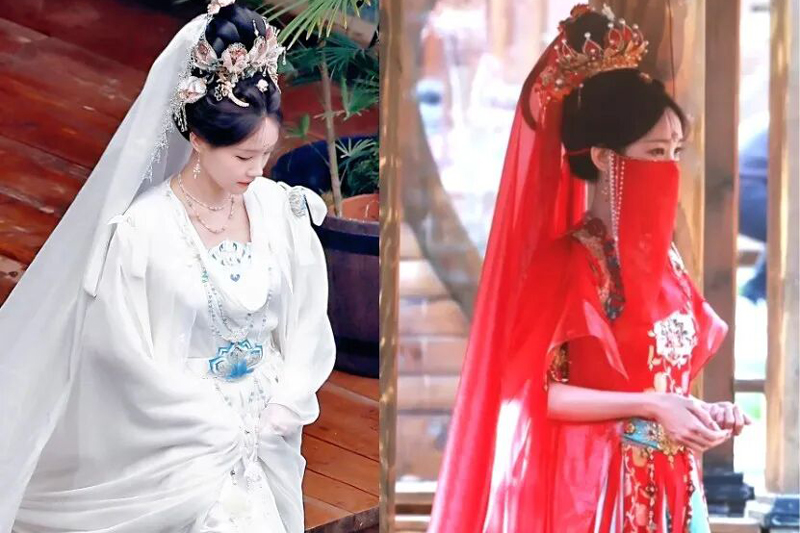
Third, aesthetics made it practical. The lotus petal is symmetrical and graceful—perfect for a full crown that covers the whole bun, or for a single hairpin that accents one side. It fits high, elaborate coiffures and simpler styles alike. The soft curve of the petals also softens the wearer’s facial lines, aligning perfectly with classical ideals of feminine gentleness. It could be grand or understated, making it one of the most versatile ornaments in history.
From Murals to the Screen
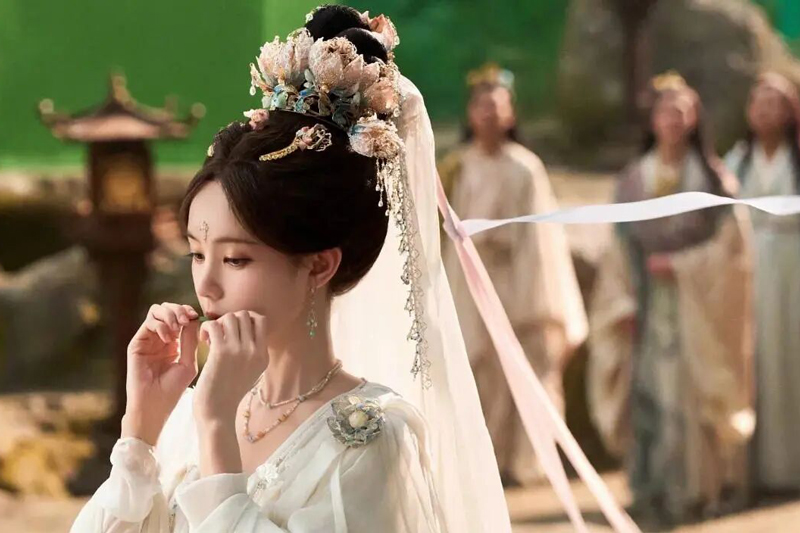
In Gu Yue Feng Hua Lu, Li Yitong’s white-robed version takes an elegant route: the lotus crown uses a pale pink-to-white gradient, with layered petals that look almost real. Blue-and-white lotus accents on her shoulders and belly echo the crown above. Her red-robed look is more lavish—the crown becomes a full circular lotus seat, petals curling upward, edges studded with pearls, paired with a veil that recalls Tang noblewomen out on the town.
The drama itself centers on ancient music, which naturally connects to Dunhuang’s musical and dance heritage. Using lotus headpieces is not just decorative—it ties the visual language directly to the story’s cultural roots. The production team kept the recognizable lotus silhouette but adjusted proportions, colors, and materials for modern camera close-ups, knowing that a literal copy of a mural would look flat on screen.
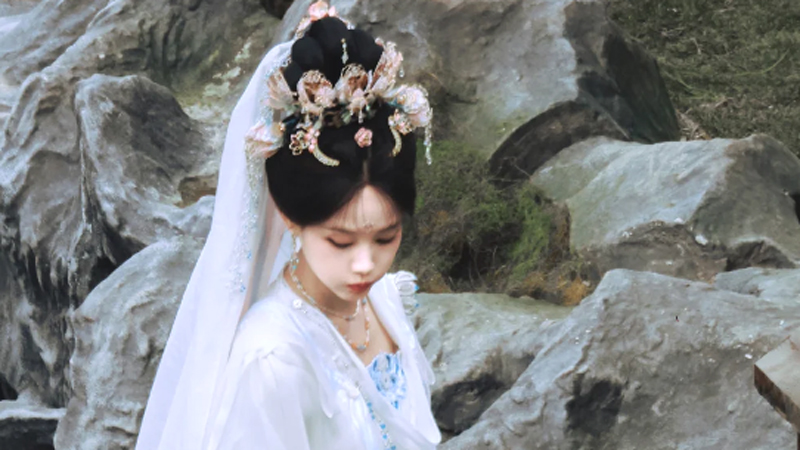
That balance—historical fidelity versus visual impact—is where most costume dramas stumble. Here, the designers avoided the trap of either ignoring history or slavishly reproducing it. They studied Tang and Song examples, noted the different sizes and placements, then added cinematic gradations and jewel tones. The result feels fresh yet grounded, strange yet familiar. It proves that “weird” often just means we have forgotten the past’s own creativity.
From cave walls to streaming platforms, the lotus crown has traveled over a millennium. It survived dynastic changes, religious shifts, and aesthetic revolutions—not because it was sacred or lucky, but because it worked. It framed a face, carried a prayer, and whispered a hope. And now, on Li Yitong’s head, it reminds us that ancient fashion was never boring—it was just waiting for the right director to look up at the murals and say, “Let’s try that.”