
On August 29, a runway inside The Fan Museum in Greenwich, London, will hold five silhouettes that rarely share a stage: the Qipao, the Hanfu, the kimono, the ao dai and the hanbok. The models will mostly not be professionals; they will be mothers and daughters, grandmothers and granddaughters drawn from East Asian communities across Britain, each pair carrying a round fan hand-painted by members of the museum’s workshops. The show is the final event of the Hand to Hand (手手相传) series, officially titled “Passing Living Fan Traditions Between Generations at Maritime Greenwich,” organized by ZSLondon, a community group founded by Zhou Qinsu, a Chinese-born artist and maker living in Britain.

One Runway, Five Traditions
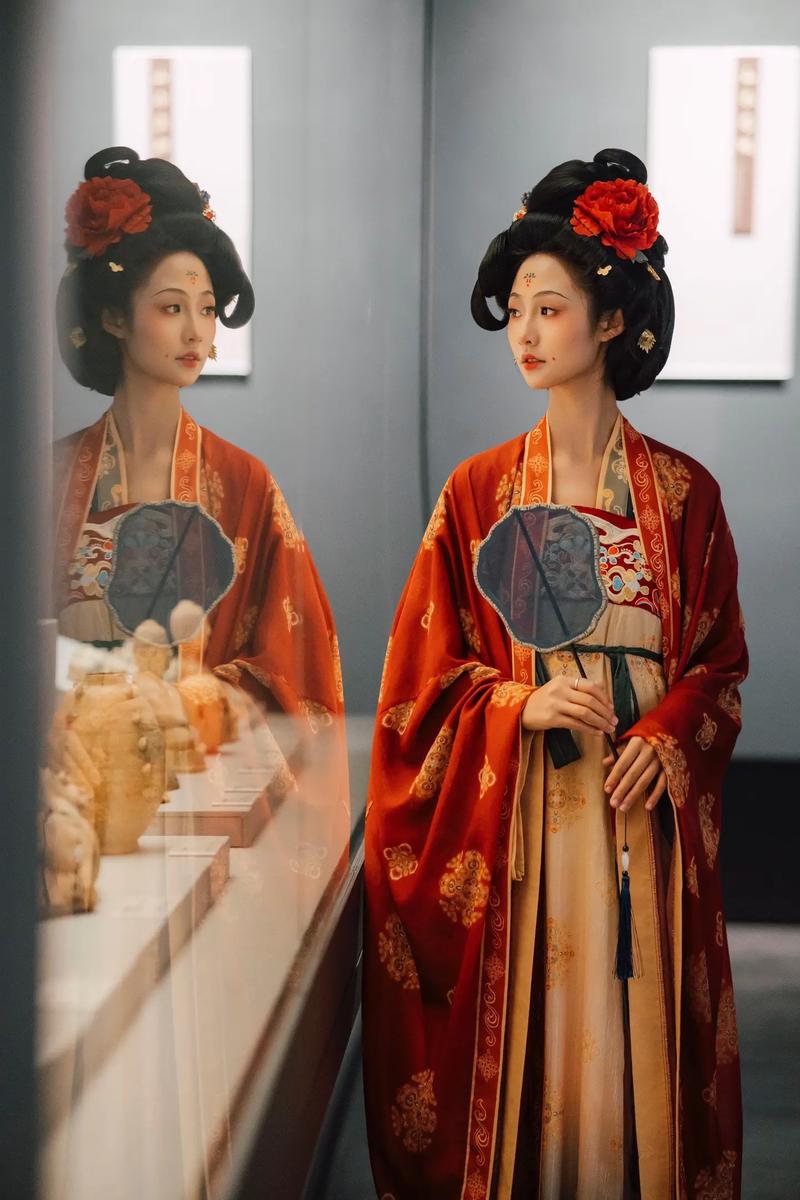
Set out in a row, the five garments map the region’s dress histories. Qipao, born in early-20th-century Shanghai, fuses Chinese tailoring with Western cut and is known for its standing collar, Pankou (盘扣) fasteners and fitted silhouette, a symbol of Haipai (海派) modernity. Hanfu is the umbrella term for Han Chinese dress, covering a long spectrum from the pre-Qin Shenyi (深衣) to the Ming-era Aoqun (袄裙) and Mamianqun (马面裙), and is now enjoying a revival at home and abroad. Each of the other three carries its own grammar: the kimono’s straight cut and obi sash, the ao dai’s long slit tunic worn over trousers, the hanbok’s high-waisted skirt and short jacket in vivid colors. Set side by side on one runway, they read as a horizontal conversation between neighboring dress cultures, and as a single snapshot of how East Asian communities in Britain dress for their own occasions.
A fan anchors the project because it carries meaning across the region: a practical object and an art medium at once, it connects the image of the Chinese literatus, the Japanese geisha and the Korean performer. Zhou Qinsu’s own words frame the ambition. “I wanted participants to slow down and make something with their hands to take home,” she said, “something they can show and say: I made this, and it comes from the Chinese tradition.” Clothing offers another kind of connection. “When you meet someone, the first thing you notice is what she wears,” she said. “It is also the closest thing to your skin, and it reflects your personality and your cultural roots.”
A Question at the British Museum
It all started with a single question. In 2023, Zhou Qinsu’s work was on display at the British Museum when a visitor asked whether anyone still wore such traditional clothing. The question stayed with her. “I wanted to prove to them that yes, people still wear this,” she said. When the UK National Commission for UNESCO and Nottingham Trent University issued an open call for a pilot project on Built and Intangible Heritage, she submitted a proposal built on that moment. “I am Chinese,” she said, “and I want our culture to have a real presence in Britain.” In her view, the culture of Chinese people in Britain has long been flattened into a few familiar labels: pandas, food and cheap goods, an impression deepened by the rise of Temu and Shein. “But we have extraordinary craft traditions,” she said. “Real luxury is something made over generations with skill and investment. That is what we should show the world.” Of the four pilot projects selected in this round, hers is the only one centered on East Asian culture.
First Ink on Silk
On July 25, the first workshop gathered ten participants in the museum’s courtyard garden, where they painted their first ink pictures on silk fans, taught one-on-one by Chen Mengya (陈梦雅), an ink painter based in Britain who grew up in Sichuan and studied under Wang Xiaogang (王晓刚). Wang’s own teacher, Zhao Yunyu (赵云宇), had been a student of Zhang Daqian (张大千), the painter dubbed “the Picasso of the East,” who met Picasso in person in Cannes in 1956 and traded ideas with him. Chen passed the lineage on to her students deliberately. “The West influenced the East, and the East influenced the West,” she said. “It works both ways.”
Teaching started with how to hold the brush, moved on to ink grinding, then to the history of Chinese painting, then to the subjects themselves. Chen drew a line between the two traditions: Western art pursues likeness, while Chinese painting pursues feeling and mood. “It is not about painting exactly the same,” she said. “It is about expressing what you feel inside.” Students meeting xuan paper for the first time discovered its temperament quickly: water blooms the moment it touches the sheet, and ink shades are nearly impossible to predict. Chen called it the magic of the medium, a brush loaded with ink capable of almost infinite variations of tone and texture. “It is hard to explain in words,” she said, “but once you try it yourself, you understand.” By the end of the session, each participant had finished a fan painted with a goldfish, every one different. Chen also prepared a stand for each fan. “I hope they put it where they see it every day, to remind them of today,” she said. “If one day they pick up the brush again, then we have achieved why we came here.”
On August 29, the finale brings the pairs together. ZSLondon has been assembling mother-daughter and grandmother-granddaughter duos from East Asian communities across the country; the oldest model is 65, a woman born in Hong Kong and raised in Britain, walking beside a partner in her twenties. That pairing is the point. “No matter what culture you come from, it only survives when it is passed down from generation to generation,” Zhou Qinsu said. “Many Chinese people living overseas still teach their children Mandarin, calligraphy and classical poetry. That thread has never been broken. I want people to see it.”
What Participants Took Home
Participants came from varied backgrounds, united by curiosity about Chinese ink painting. Son, born in Vietnam, raised in Britain and of Chinese heritage, found the event on Instagram. “It is hard to find activities like this in London,” he said. “I knew I had to come.” What stayed with him was the lineage Chen laid out, from Zhang Daqian to Zhao Yunyu to Wang Xiaogang, which reshaped his sense of how far Chinese art influence reached. “My teacher’s teacher was called the Picasso of the East,” he said. “That shows the influence goes both ways. I had never thought about it like that before.”
For Lucara, a participant from Romania now living in London, the experience was in the doing. “You control the water, you mix the ink, you decide where to leave the blank space. There is so much to think about,” she said. “It made me realize that an artist’s daily practice is far more complex than I had imagined.” She also remembered the quiet Guqin music playing in the background, which pulled her into a rare focus. “We are all so busy. Spending two hours on a single thing is very unusual, and that made today special.”
The organizers say the point of the series is not to keep Chinese heritage behind glass but to let it be touched, learned and carried home. Between the first brush stroke on a fan and the runway at the end of August, Hand to Hand has connected people of different languages, backgrounds and stories. Chen Mengya and Zhou Qinsu both say they hope similar events continue, reach more people, and open more doors for Chinese traditional culture in Britain. The show itself runs once, on August 29, with the hand-painted fans leading each pair down the runway.