
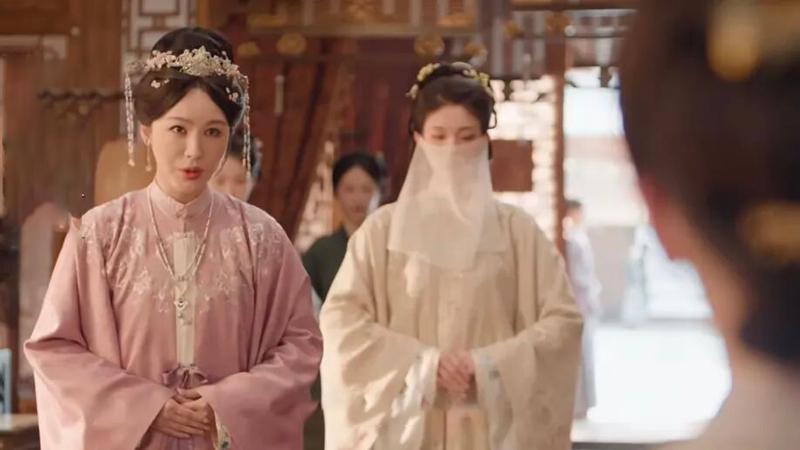
In the sprawling narrative of The Road to Splendor (花开锦绣), few characters evoke as much quiet sympathy as Miss Wu (吴). She is gifted, graceful, and perceptive—yet her lineage traps her in a cycle of transactional maneuvering. Her aunt, Madame Wu, treats her not as kin but as currency, bartering her through one household after another: first the Zhao estate, then the Wei residence, and finally the Yu (俞) mansion.
Each arrangement collapses until the third, when Miss Wu, who once fought desperately to escape such fates, steps into the Yu household as a concubine to Yu Jingxiu without protest. What changed? Was it resignation, exhaustion, or something sharper—a cold-eyed calculation born of survival?
Her Own Reckoning
To understand her choice, one must first clear away the fog of pity. Miss Wu is no naïf. When her aunt tried to push her into the Wei family as an unofficial consort, she sought out Fu Tingyun (傅庭芸)—a woman she barely knew—and begged for intervention. She had watched Fu Tingyun disarm Madame Wu with nothing but measured words, and she recognized power when she saw it. That plea succeeded; the Wei match dissolved. But the act itself reveals a woman who refuses to be a passive pawn. She strategizes. She identifies allies. She acts.
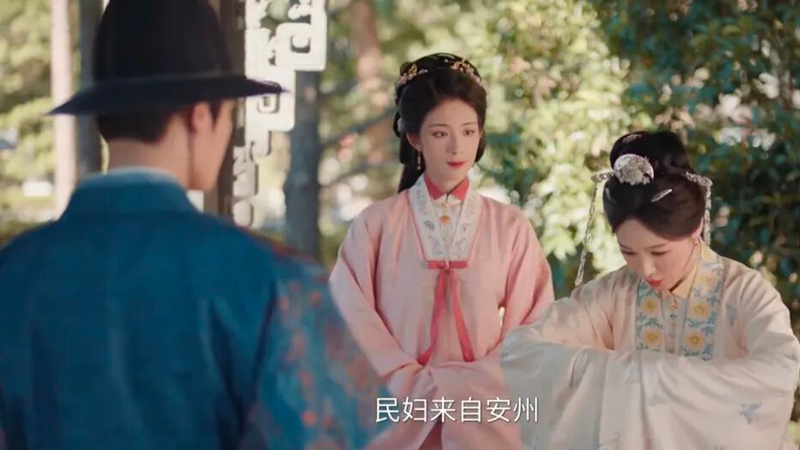
So why, then, does she walk into the Yu household with her eyes wide open? The answer lies not in delusion but in clarity. By the time the Yu proposal resurfaces, Miss Wu has already tasted the cost of refusal. Two broken engagements have stained her reputation; gossip trails her like smoke. In her world, a woman with “failed” prospects rarely recovers. She can continue fighting her aunt’s schemes, but each victory only tightens the noose of public judgment. The Yu mansion, for all its intrigues, offers a roof and a name—modest currencies, perhaps, but currencies nonetheless.
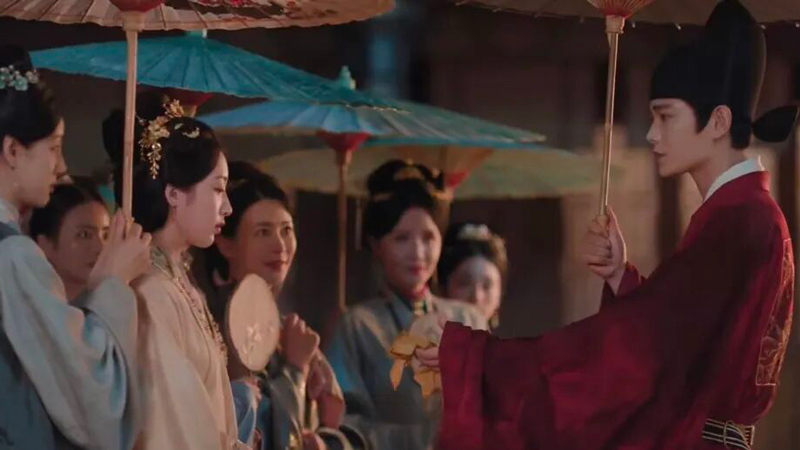
What She Gains
First, liberation from her aunt’s household. Madame Wu’s cruelty is not merely financial; it is psychological, reducing Miss Wu to a vessel for profit. Inside the Yu compound, she becomes a concubine, yes—but also a person with defined status, however low. She no longer starves to maintain a silhouette for buyers. She eats. She breathes. She exists without daily humiliation. That alone, in her ledger, counts as gain.
Second, she reads the room with surgical precision. She observes Fan Yake, the first wife of Yu Jingxiu, who holds scholarly pedigree but alienates everyone with her arrogance. Miss Wu notices that Madame Yu—the matriarch—disdains Fan Yake’s hauteur. More crucially, she perceives that Madame Yu values utility over sentiment. If Miss Wu can prove herself useful—through her own literary skills or her quiet compliance—she believes the elder Madame Yu will shield her from petty torments. It is not friendship; it is insurance.
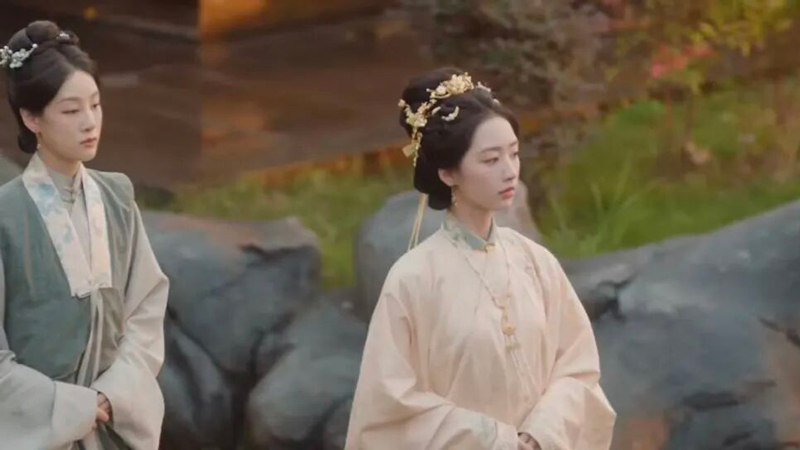
Third, she has no illusions about romance. She once mistook Zhao Ling’s public devotion to Fu Tingyun for a universal template of marital kindness. That mirage dissolved when she understood that such devotion was singular, earned by Fu Tingyun’s own formidable character, not simply bestowed by a husband. Miss Wu does not expect Yu Jingxiu to love her. She expects only to manage his favor well enough to survive. Love, she concludes, is embroidery on a frayed garment—pretty but nonessential. Food and safety are the stitches that hold.
Survival as Art
What makes Miss Wu compelling is not her suffering but her refusal to be crushed by it. She enters the Yu mansion not as a victim but as a player who knows the rules of a stacked game. She does not delude herself about kindness or justice; she operates within the narrow corridor of what her society allows. Her consent to the concubinage is not submission—it is a tactical retreat. She trades freedom of choice for freedom from starvation, autonomy for safety. It is a bargain she makes with clear eyes.
In many dramas, female characters are either saintly or scheming. Miss Wu occupies a grayer space: pragmatic, weary, yet still capable of small rebellions. She does not weep over lost love; she calculates her next move. She does not dream of escaping the system; she learns to navigate its currents. Her story whispers a quiet truth that grander narratives often drown out: for women in precarious positions, survival is itself a form of agency. It is not heroic. It is not romantic. But it is real.
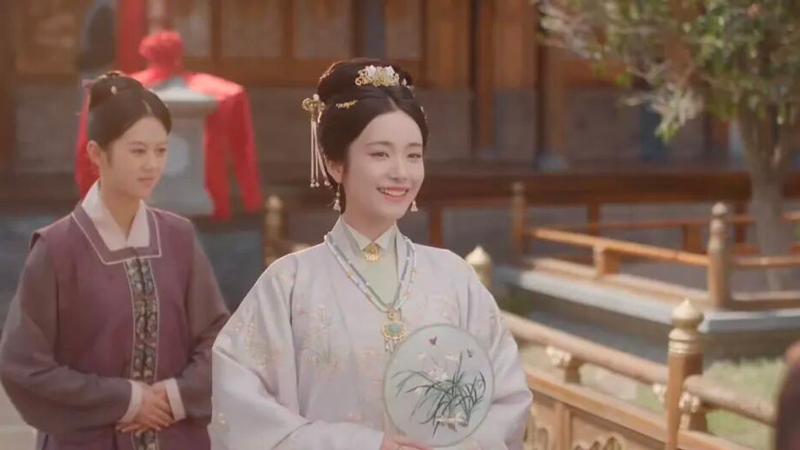
When she finally steps into the Yu courtyard, she carries no girlish hopes. She carries only her wits, her poems, and a resolve to outlast those who would break her. Whether she finds peace or peril remains unwritten. But she has already won one battle: she chose her path, even if it was the only one left open. And that choice, however constrained, belongs entirely to her.