
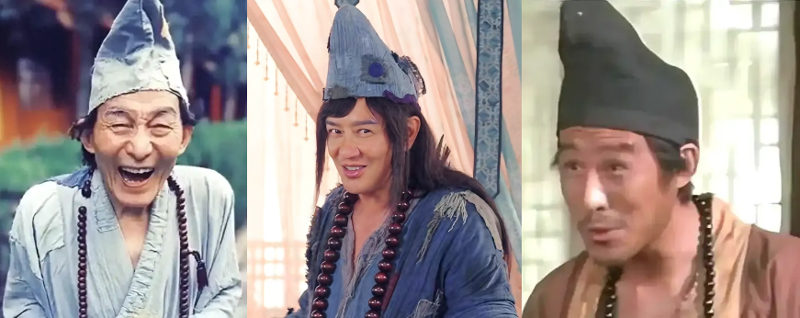
For decades, from the classic television series to today’s short-form dramas, the iconic image of Jigong (济公) has remained remarkably consistent—tattered robes, a broken fan, and that unmistakable hat. It sits on his head like an upside-down gold ingot, with its front raised high and the back sloping low. In Chen Haomin’s (陈浩民) new short drama Jigong: The Dragon’s Arrival (济公之降龙现世), the headpiece looks exactly the same as it did in the 1980s. Why has this particular shape stuck with him for so long?
The answer stretches back nearly a thousand years, weaving through history, opera stages, and the evolution of visual storytelling. What seems like a simple costume choice actually reveals how a real historical figure was gradually transformed into a legend, and how a single piece of headwear became more recognizable than the man himself.
The Real Monk
Historical records confirm that Jigong actually existed. He was born into the Li family in Tiantai (天台) during the Southern Song dynasty. He ordained at Lingyin Temple (灵隐寺) and later resided at Jingci Temple (净慈寺), receiving the monastic name Daochi (道济). Because he frequently intervened to right wrongs and defend the helpless, common people affectionately called him Jigong—”the public benefactor.” A Southern Song text titled Inscription on the Relics of the Recluse of Lake Yin (湖隐方圆叟舍利铭) mentions Daochi but says nothing unusual about his headwear. At that time, he would have worn an ordinary cloth cap like any other traveling monk.
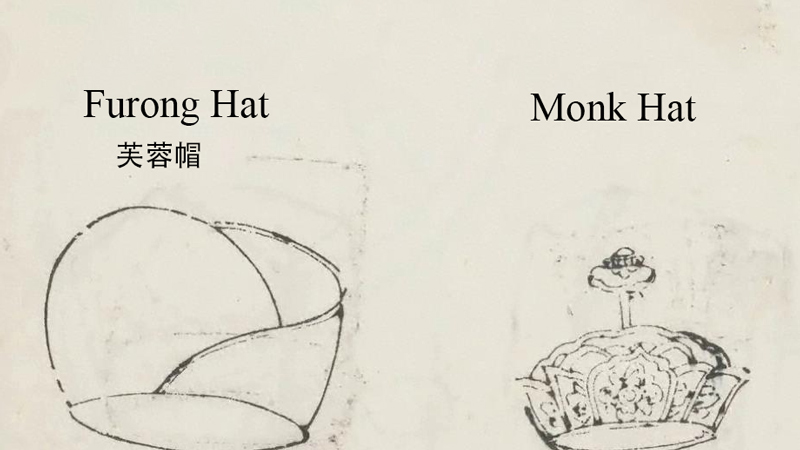
So where did the distinctive “gold ingot” silhouette come from? It turns out the modern hat is a creative adaptation of an ancient Buddhist cap known as the Furong Hat (芙蓉帽), sometimes called the Hezhang Hat (合掌帽) because its front-high, back-low profile resembles a hibiscus flower from the side and praying hands from the front. Seen from a distance, it looks like a Yuanbao (元宝)—the traditional gold or silver ingot used as currency in old China. The Pictorial Encyclopedia of the Three Realms (三才图绘), a Ming dynasty illustrated compendium, includes this hat as standard monastic attire. It was never exclusive to Jigong; ordinary monks wore it routinely. The journey from common cap to iconic trademark began much later, on the theatrical stage.
The Stage Transformation
During the mid-to-late Qing dynasty, Jigong plays exploded in popularity across China. The serial opera Tales of Jigong (济公传) often stretched to dozens of installments, and audiences packed the theaters. The stage demanded instant recognition—performers needed visual shorthand so that a character could be identified the moment he appeared. Since Jigong was famously known as the “Mad Monk,” a standard monastic cap would have given the audience no clues about his eccentric personality or his rebellious nature. Theatrical troupes needed something unforgettable.
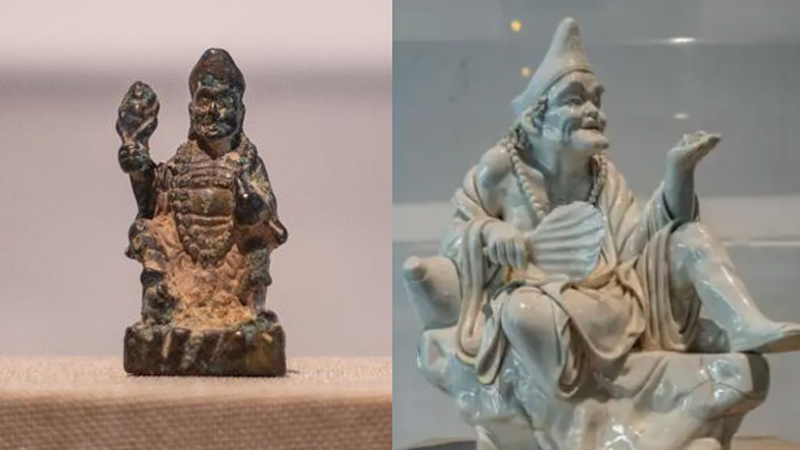
Opera artists began experimenting with the hat’s proportions. They extended the front panel upward and pressed the back downward, making the shape more dramatic and more closely resembling a Yuanbao. They deliberately frayed the edges and added tears to suggest years of hard travel and neglect—a visual cue that matched his reputation as a wandering, unconventional monk. It was a stroke of design genius. Once the audience saw it, they immediately connected the battered, ingot-shaped cap to the chaotic, righteous character on stage. Over time, this invented stage prop became the definitive look, appearing in Qing dynasty sculptures and painted portraits of Jigong.
The Unchanging Symbol
When illustrated storybooks and comic strips gained popularity in the 20th century, artists naturally referenced the opera version of Jigong. The Yuanbao hat was already so deeply associated with him that it appeared in almost every printed image. Then came the 1985 television series starring You Benchang (游本昌), which became a nationwide phenomenon. The show’s producers modified the cap slightly for the camera, but the fundamental gold-ingot outline remained untouched. That series’s theme song—with its famous lines about broken shoes and a broken hat—etched the image into the memory of an entire generation. From that point forward, no filmmaker would dare to change it.
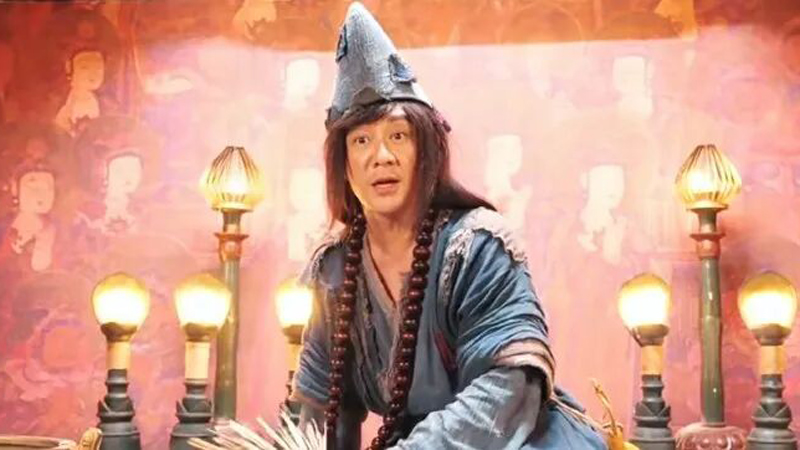
Later portrayals, whether by Lü Liang (吕凉), Stephen Chow, or Chen Haomin, all feature the same unmistakable silhouette. Even in Chen’s latest short drama Jigong: The Dragon’s Arrival, the hat remains untouched. If a production team suddenly placed an ordinary monk’s cap on him, the audience would not recognize the character at first glance. That simple costume piece now functions as a visual signature more direct than his name. It is not a historical artifact; it is a theatrical invention that evolved over centuries through folk storytelling, opera, film, and television. The real Southern Song monk Daochi probably wore an unremarkable Furong Hat. But the Jigong we see on screen today wears centuries of creative reinvention on his head.