

How did ancient Chinese women achieve gravity-defying hairstyles without modern tools? The answer lies not in natural hair volume, but in a sophisticated system of wigs, hidden pins, and natural styling gels that would impress any modern hairstylist.
From the towering buns of the Tang Dynasty to the seemingly loose, floating locks of the Wei and Jin periods, these looks were carefully engineered. It was all about clever preparation and structural support, a forgotten art of daily beauty that reveals a deep understanding of materials and physics. The secrets are more practical than magical, and they tell a story of ingenuity that has been largely overlooked in favor of myths about natural hair abundance.
The Pre-Made Foundation
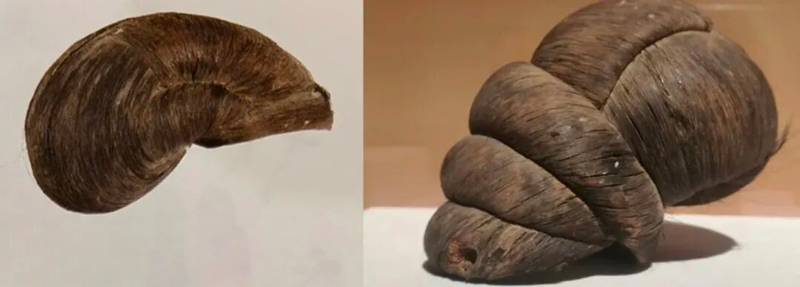
Forget the idea that all that hair was real. From the Han Dynasty onwards, women extensively used wigs and pre-styled hairpieces, known as Yiji (义髻), which were the ancient equivalent of a modern hair topper. These were not simple add-ons but expertly crafted foundations made from human hair, horsehair, hemp, bamboo, or silk threads. Artisans would weave these materials into the complete framework of high buns, half-swooping buns, or double-loop styles. This way, a woman could simply fix the entire pre-made structure onto her head with a few pins, instantly achieving a perfect, towering shape that her own hair could never manage.
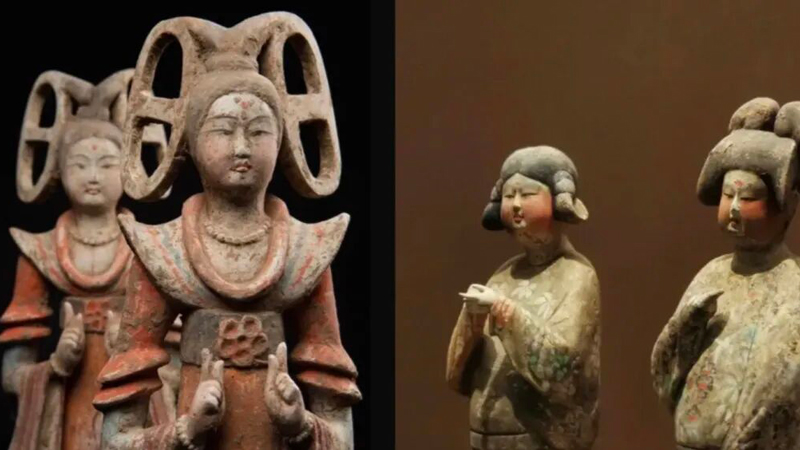
These Yiji were the key to the uniform perfection seen in classical paintings. They provided a reliable base that wouldn’t collapse under its own weight. Unlike modern synthetic wigs, these were often custom-made to match the wearer’s hair color and texture, making them virtually undetectable. This system wasn’t about cheating; it was about practicality and achieving an artistic ideal that nature alone couldn’t provide. It allowed for consistent, impressive styles that could last all day without requiring a full head of extraordinarily thick hair.
The Hidden Framework
Ancient hairpins and clasps were not just decorative; they were structural engineering tools. The primary method involved a main, thick hairpin driven horizontally through the base of the wig and the wearer’s own hair root to bear the weight. This was the main load-bearing beam. Then, a secondary system of smaller pins, forks, and dangling ornaments were inserted at angles to form a triangle. This geometric principle created a lock that kept the entire structure securely in place, even through rigorous activities like walking, bowing, or sitting for long periods.
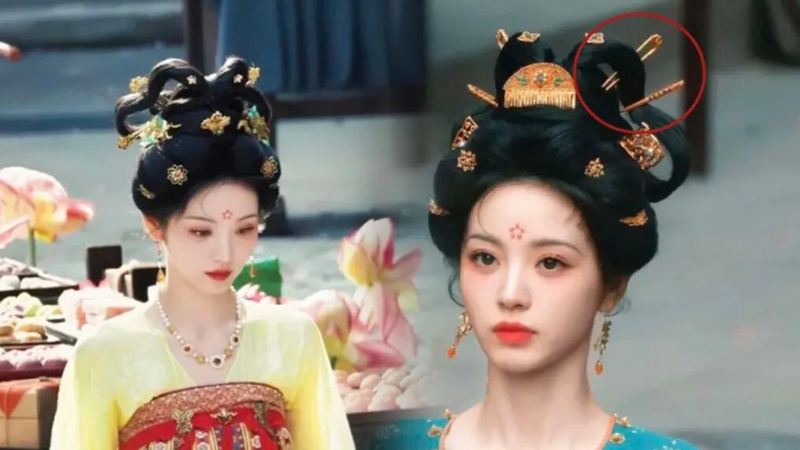
This triangular bracing method was a brilliant application of physics. It distributed the weight of the heavy, towering hairstyle across multiple points on the scalp, preventing it from pulling or toppling over. The placement of these pins was strategic, often hidden within the folds of the wig itself. It was a silent, invisible framework that allowed for remarkable stability. This technique demonstrates a sophisticated understanding of balance and load distribution, far beyond simple decoration, ensuring that a woman’s elaborate coiffure remained perfectly intact from morning to night.
The Natural Setting Gel
Without modern hairspray, ancient stylists used natural ingredients as powerful setting agents. The most famous was Paohua Shui (刨花水), a viscous liquid made by soaking wood shavings from the parasol or elm tree in water. Applied to the hair, this natural gel smoothed down flyaways and created a sleek, obedient surface. When it dried, it formed a thin, stiff film that held the shape of the hair, giving it a clean, crisp line and preventing it from wilting. It was both effective and gentle, a perfect sustainable solution.
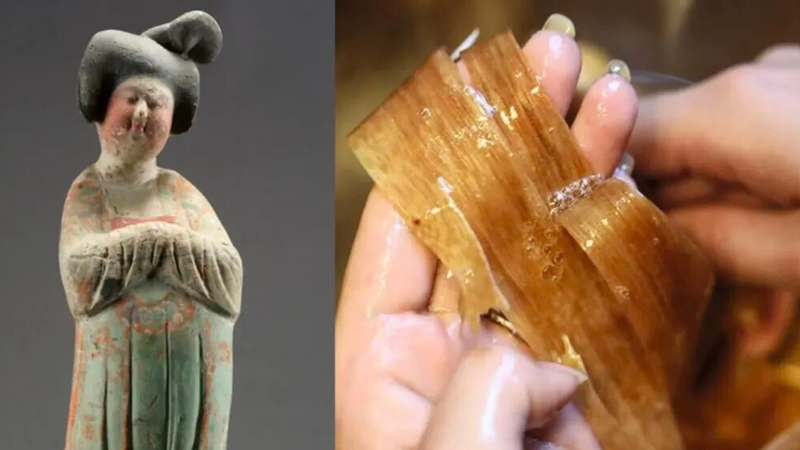
Other fixatives included egg whites and herbal gels, each chosen for specific effects. The egg whites provided a very strong hold for intricate, detailed curls, while the herbal gels offered a lighter, more flexible fix. This natural toolkit allowed for a variety of textures and holds, from the rigidly structured high buns to the softly defined curves of less formal styles. This sophisticated use of natural resources highlights a deep understanding of material properties, where science and beauty combined to create styles that were both resilient and elegant, a testament to the ingenuity of ancient cosmetic practices.
The Art of Controlled Chaos
The famously ethereal and seemingly messy hairstyles of the Wei and Jin dynasties were, in fact, a masterclass in controlled styling. Far from being haphazard, these looks were carefully constructed to appear effortlessly elegant. Stylists would section the hair, utilizing the natural elasticity and strength of the strands. With the help of setting gels, they would create deliberate bends and waves that looked like a gentle breeze had shaped them, but in reality, each lock was meticulously placed and secured.

This required intense skill and a deep understanding of how hair behaves. The goal was to create an illusion of movement and spontaneity, a style that seemed to float and twist weightlessly around the head. This was a high art form, where the difficulty was in making the complex look simple. The technique involved anchoring larger pieces of hair within the wig base while leaving thinner, more pliable sections free to be shaped and sculpted into those iconic, sweeping curves. The result was a style that appeared both wild and perfectly composed, a testament to the skill of the ancient hair artist.