
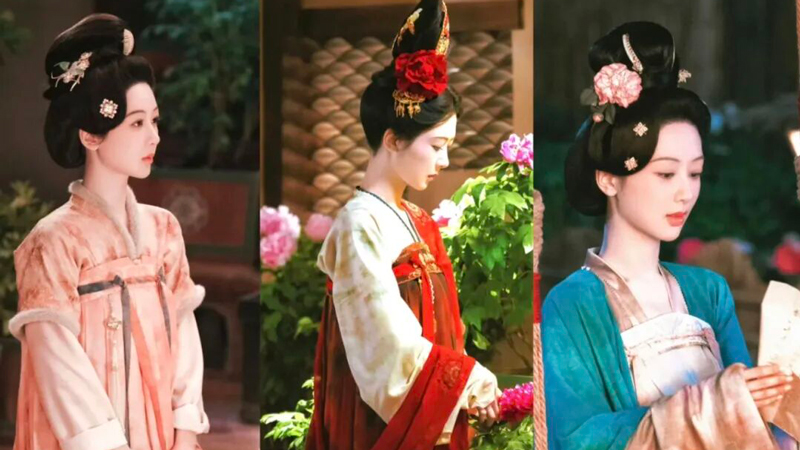
Hanfu, the traditional attire of the Han ethnicity, often appears in historical dramas as voluminous robes with no cinched waist. Yet, wearers frequently find it makes them look taller and leaner than modern, figure-hugging fast fashion. How can a garment that seems to defy Western tailoring rules achieve the opposite of what logic predicts? The answer lies in a completely different philosophy of design—one that doesn’t force the body into the cloth, but uses the cloth to redefine the body’s silhouette.
The Logic of Negative Space
The common misconception is that looking tall requires a tight fit to carve out an hourglass shape. Western fashion relies on darts, princess seams, and clingy knits to physically mold the body. This approach comes with a severe drawback: it amplifies every perceived flaw. A little belly, broad hips, or rounded shoulders become glaring issues, creating a cycle of anxiety where the wearer must conform to the garment. Hanfu rejects this confrontation. Its essence is “conceptual shaping.” It doesn’t squeeze the flesh to create a temporary illusion; it provides a generous, calculated allowance of fabric that does not hug the skin but hangs gracefully away from it.
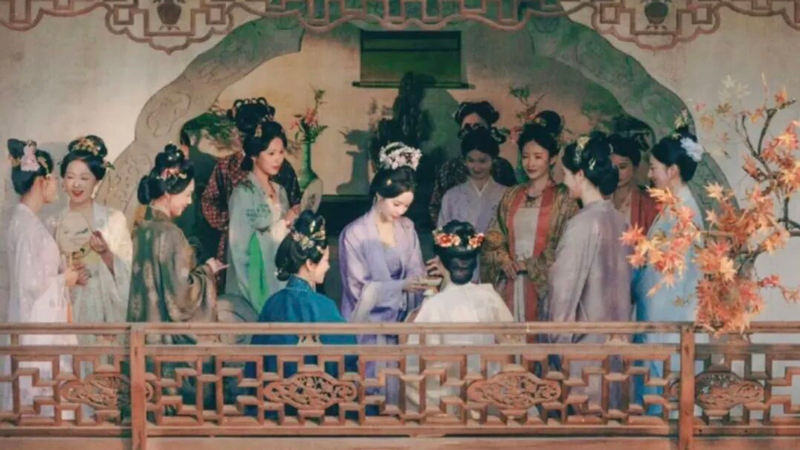
This “negative space” is precisely engineered. The cut is primarily flat, with minimal three-dimensional tailoring. The resulting volume isn’t chaos; it’s a deliberate buffer that masks the body’s irregularities. While a tight dress highlights the exact location of your waist and hips, a Hanfu robe drapes over them, forming a new, clean architectural outline. It doesn’t alter your actual measurements but redefines the visual perimeter of your figure, smoothing out bumps and hollows to create a fresh, unified canvas.
By decoupling the fabric from the skin, it achieves a visual trick: the eye no longer reads the body’s specific geometry but perceives the overall shape of the garment. This shift from “body-first” to “clothing-first” is why it is inherently more forgiving. It prioritizes the wearer’s comfort and the garment’s structural integrity over the relentless pursuit of an unattainable physical ideal, making it a wardrobe solution for the majority, rather than the few.
The Art of the Invisible Waistline
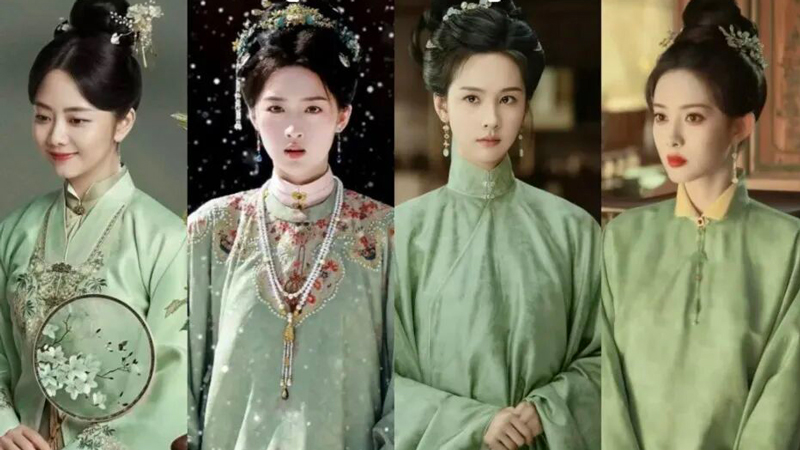
Another deceptive aspect is the “missing” waistline. In Western clothing, the waist is a fixed point, physically constructed by cinching, which often leads to discomfort and visual rigidity. Hanfu employs a “soft” waistline. It isn’t a single seam but a dynamic zone created by the interplay of layers, garment lengths, and draped fabric. The key instruments are the Ruqun (襦裙) and Beizi (褙子), where the top garment is left loose, and the skirt is tied high at the natural waist or even above it. The waistband is hidden beneath the hem of the upper garment, creating a seamless flow.
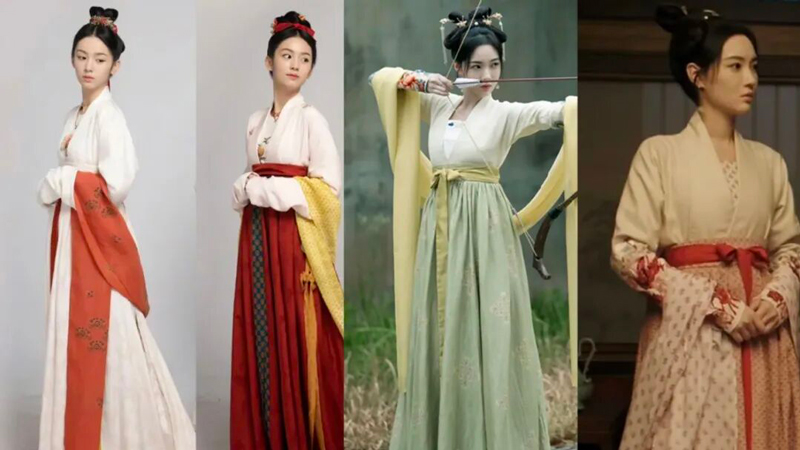
This layering establishes a strategic visual cut without the harshness of a belt. The long, vertical lines of the top draw the eye up and down, while the high tie of the skirt, hidden underneath, dramatically elongates the lower body. It creates a ratio akin to a 6:4 or even 7:3 proportion, making the legs appear significantly longer than the torso. For many, this is a magic trick that instantly corrects a “five-five” figure, a common problem with modern separates that hit at the hip.
Furthermore, outerwear like the Bijia (比甲) or Daxiushan (大袖衫) feature subtle hemlines that are often shorter in the front and longer at the sides. This specific cut further shortens the visual length of the upper body while gracefully covering the hips and waist. It fixes the proportions without the wearer having to squeeze into a restrictive band, accommodating a softer midsection, a fuller belly, or wider hips with equal grace.
The Gravity of Good Posture
Perhaps the most overlooked aspect is the role of fabric weight and drape. Hanfu is rarely made of flimsy, limp materials. It uses textiles with “muscle”—sturdy silks, textured cottons, and brocades that possess a natural weight. This weight is essential because gravity becomes the tailor’s assistant. Instead of fighting the body’s curves, the fabric pulls straight down, creating clean, vertical pleats. This controlled verticality is the direct opposite of the messy, horizontal wrinkles found in cheap, stretchy clothes, which visually add width and create a cluttered, dwarfing effect.
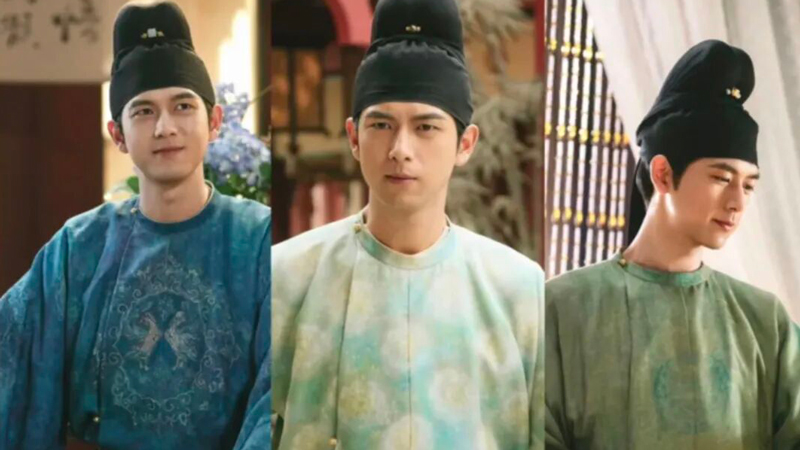
This gravitational pull also serves as a behavioral tool. A t-shirt allows one to slouch without changing its shape, but a well-draped Hanfu jacket will twist or fall awkwardly if the posture is poor. The wearer instinctively straightens their back to maintain the fabric’s pristine line. This forced awareness transforms the body into a hanger for the garment, encouraging an upright, open posture that instantly adds inches to one’s perceived height. The interaction becomes a dialogue: the garment suggests the posture, and the posture refines the look.
Ultimately, the ancient design logic doesn’t see the body as a problem to be solved but as a foundation to be enhanced. It avoids the trap of demanding a specific, standardized figure and instead offers a framework that actively adapts to diversity. By focusing on line, proportion, and material integrity, Hanfu proves that lasting elegance often lies not in clinging to the form, but in understanding the space around it.