
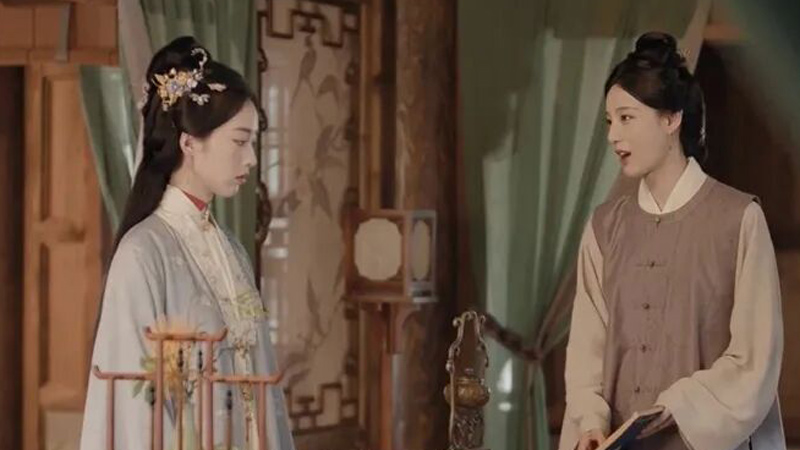
Jiu Xiaojie (九小姐) proposes to Zhao Ling (赵凌)—and he says yes. But this is no ordinary love story. It is a calculated gamble, a strategic merger, and a quiet rebellion against a world that has always told women to wait for a man to choose them. She flips the script. She asks first. And in that single question, she rewrites not just her own future, but the very rules of survival in an unforgiving era.
Set against the backdrop of a corrupt salt-trade conspiracy, a secret identity, and a military outpost called Ganlin Town (甘霖镇), this tale from the drama The Road to Splendor (花开锦绣) asks us: What happens when a woman treats marriage as a business partnership—and dares to make the first move?
The Salt Case and the Split
She was once Fu Tingyun (谢庭芸), a sharp-witted noble daughter with a talent for numbers and people. He was Zhao Ling, a ruthless fixer with a network of shadowy assets. Together, they helped the Sixteenth Prince crack the infamous Salt Certificate Case—a labyrinth of forged permits, bribed officials, and mountain-high profits. Her brain, his brawn; her foresight, his execution. They worked like interlocking gears, each compensating for the other’s blind spots. The prince rewarded her with a new surname—Xie—erasing her old family ties and giving her a fresh start. But that fresh start also meant a clean break from him. Their alliance had been one of convenience, and convenience had run its course.
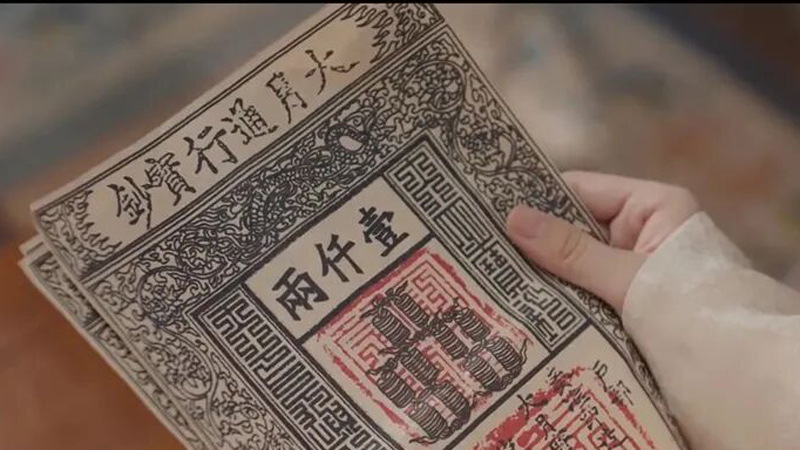
Before parting, she gave him one last piece of advice: hand over every asset of the Nine-Tailed Jiao (九尾蛟) syndicate to the prince. It was a dangerous move—those illegal enterprises were their safety net—but she saw a bigger play. Surrender the poison to buy a future, she argued. He listened. He did it. But he kept three thousand taels of silver. When she found out, she confronted him. He stammered, deflected, refused to explain. She dropped it, assuming the worst—greed, distrust, a man’s instinct to hoard.
The Silver and the Prison Conversation
Packing for departure, she stumbled upon the silver again—not hidden in a chest, but tucked inside his travel bag. That was when it clicked. The three thousand taels weren’t for him. They were for her. He had set aside her travel expenses back to the capital, because he knew she would need a way out once their paths diverged. He had no intention of keeping her tied to his uncertain fate. That silent, awkward gesture—that clumsy refusal to explain—spoke louder than any flowery vow. It was protection without ownership, care without claim.
That discovery replayed an earlier conversation in her mind—a talk with Madam Yan (闫夫人) inside a prison cell, of all places. Madam Yan had spoken of the cruel math of a woman’s life: beauty fades, family favor shifts, and marriage is often just a transaction dressed in silk. But if it is a transaction, she thought, why not be the one to set the terms? Why wait to be bought when you can propose the deal? Her heart, she realised, had already chosen him—not because he was perfect, but because he was honest in his own guarded way. And honesty, in a world of masks, was the rarest currency.

So she decided. She would take her true feelings—fragile, unspoken, dangerously real—and cast them into the forge of interest. Let love become leverage, and let leverage refine back into love. She wanted a partner, not a patron. She wanted someone who would walk beside her, not ahead of her. And she knew, with the cold clarity that had made her a master of strategy, that the only way to get that was to ask for it—directly, openly, without a safety net of hints or games. So when Zhao Ling returned to their temporary quarters, she met him at the door and dropped the bomb: “Will you marry me?”
His Answer and Their New Road
He froze. His face went blank—not in disgust, not in anger, but in pure, unadulterated shock. This was not how things were done. Men proposed. Women demurred. That was the natural order. But she stood there, calm as still water, and laid out her logic: their skills complemented each other, their goals aligned, and their trust—though tested—had survived. She did not plead. She did not blush. She simply said, “I will only ask once.” That line, more than anything, broke his resistance. He realised she was not desperate; she was decisive. And a decisive woman, in a life full of uncertainty, was the most formidable ally a man could have. So he shrugged, laughed nervously, and said yes. “It’s just marriage,” he muttered. “What’s the worst that could happen?” He knew the answer—plenty—but he also knew she was worth the risk.

With that yes, the Sixteenth Prince’s recommendation came through. Zhao Ling was assigned to the frontier garrison at Ganlin Town—a rough, dusty outpost where bandits roamed and promotions were earned in blood. He would start as a lowly officer, but he had her mind behind him and her nerve beside him. She would not stay in the capital as a decorative wife; she would go with him, manage accounts, read military dispatches, and turn a garrison into a base for something bigger. They were not running away from the court’s intrigues—they were running toward a chance to build their own power base, far from the watchful eyes of old nobles.
What will they face in Ganlin Town? Famine, raids, jealous commanders, and the endless hunger of men who have nothing to lose. But she has already shown that she does not wait for storms to pass—she walks into them, umbrella in hand, and dares the wind to knock her down. And he, for all his rough edges, has proven he will follow her lead—not out of weakness, but out of the rarest kind of strength: the strength to trust a woman’s plan over his own ego. Their marriage is a gamble, yes. But so is every breath in a world where the powerful write the rules. She just decided to write her own rulebook—and he signed on the dotted line. Would you have said yes? In the comments, let us know: did her proposal surprise you, or did you see it coming from the first scroll?