Is Yang Mi’s New Drama Costume Wrong? A Historical Twist on the Set of Jiangshan Datong (江山大同)
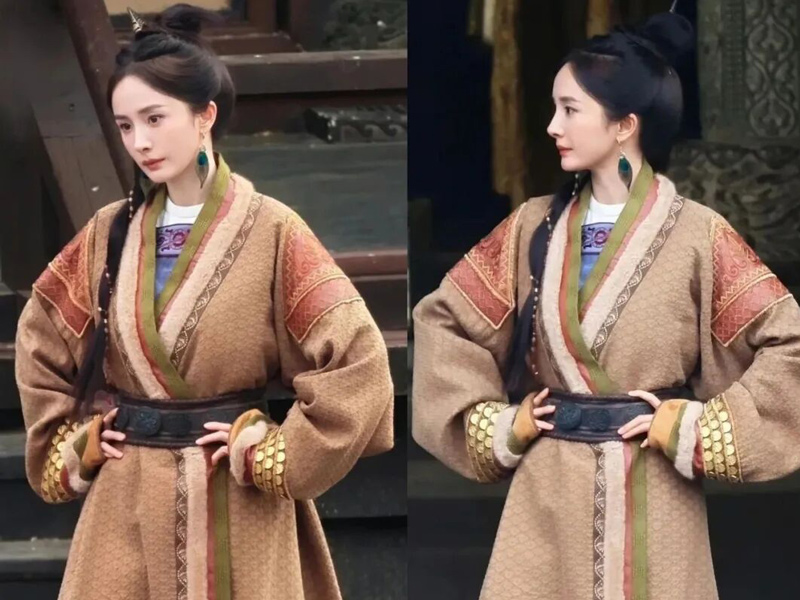
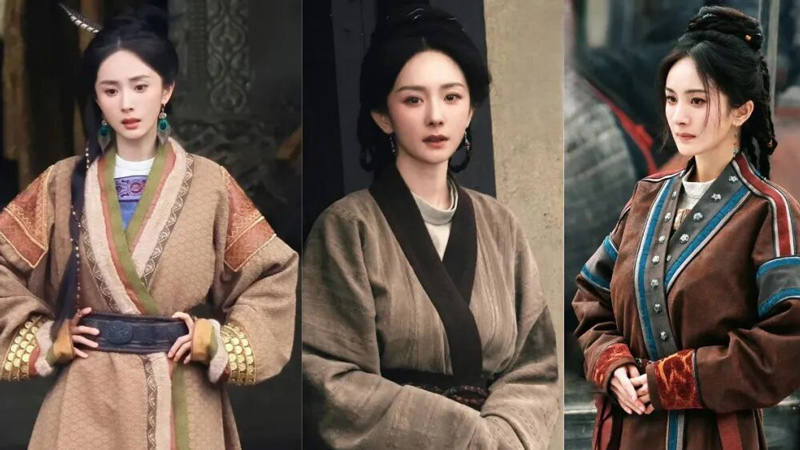
Recent set photos of Yang Mi in her upcoming historical drama Jiangshan Datong have sparked a lively debate among costume drama fans. In several shots, her character’s robe crosses the left side over the right—a style known as left-overlap lapel. For most viewers raised on a steady diet of period dramas, this looks jarringly incorrect. The standard image of Hanfu, the traditional clothing of the Han Chinese, is almost always right-over-left. So, did the wardrobe department make a glaring historical blunder, or is there more to this story than meets the eye? The answer takes us on a fascinating journey through centuries of cultural exchange, nomadic traditions, and the slow, stubborn evolution of everyday fashion.
The Right-Over-Left Tradition
For the Han Chinese majority, the right-over-left closure is more than just a sartorial choice; it is a defining feature of their ethnic identity. This tradition, which involves overlapping the left side of the garment over the right, can be traced back to the Shang Dynasty and became the established norm by the Zhou Dynasty. Several theories attempt to explain its prevalence. The most practical suggests that since the majority of people are right-handed, reaching inside the robe for items is easier with a right-over-left overlap.
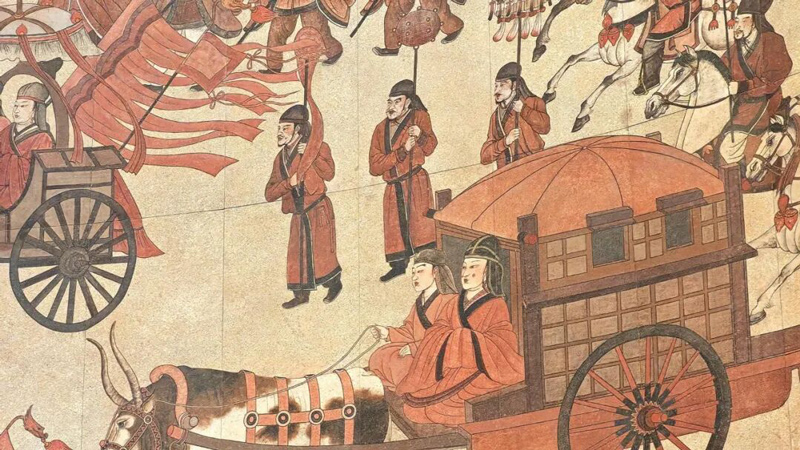
Others see it as a symbolic representation of agricultural society’s rituals and social order, while some view it as a subtle marker of cultural identity, separating the “civilized” from the “barbaric” in the ancient worldview. Regardless of its origin, it became an unshakable standard, a silent grammar of Han attire for millennia.
When the Left Side Ruled
However, the left-over-right style was never entirely absent from Chinese history. It was, in fact, the daily norm for many northern nomadic groups. For centuries, people like the Xiongnu (匈奴), Xianbei (鲜卑), Khitan, and Mongols all considered the left-overlap lapel as their traditional dress. This was not a mistake but a functional adaptation to a life on horseback. When riding, the right arm is in constant use—drawing bows, holding reins, and wielding weapons.
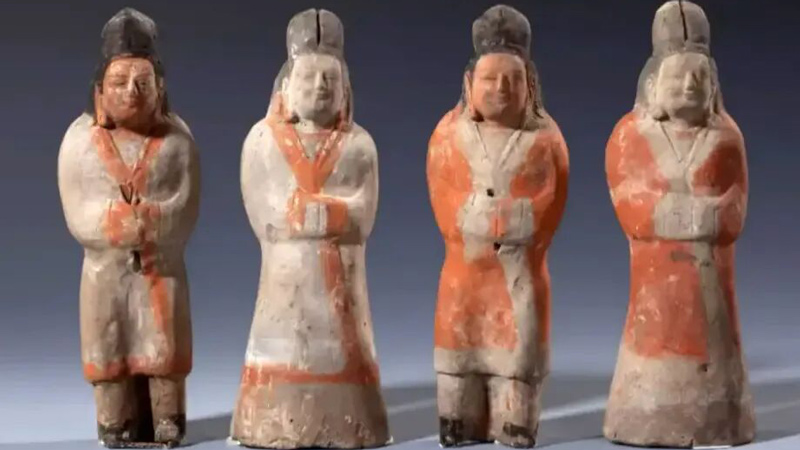
The left-overlap style, where the right side of the garment is on top, allows for unrestricted movement of that dominant arm. It also made it easier to reach inside the robe with the left hand while the right hand remained free for other tasks. Beyond pure utility, many of these groups also held a cultural preference for the left side, associating it with honor and prestige, a tradition recorded in historical texts like Records of the Grand Historian and History of Liao.
The Legacy on Screen and in History
The drama Jiangshan Datong is set during the Northern Wei Dynasty in the city of Pingcheng (平城). This period was defined by the rule of the Tuoba (拓跋) clan of the Xianbei people. As a nomadic group, their traditional attire was the left-overlap lapel, narrow sleeves, and leather boots—a stark contrast to the flowing Hanfu. This was not a rare occurrence but a matter of daily practice, as evidenced by murals and pottery figures from the era. While a later emperor, Emperor Xiaowen (孝文帝), attempted to enforce a comprehensive policy of Sinicization, including dress codes, the change was neither immediate nor absolute. Many people, especially women, were slow to adopt the new right-over-left style, clinging to their familiar clothing. It is a historical nuance that Yang Mi’s costume successfully captures, featuring fitted sleeves and a belted waist, reflecting the distinct aesthetics of the Xianbei people rather than a mere designer’s error.
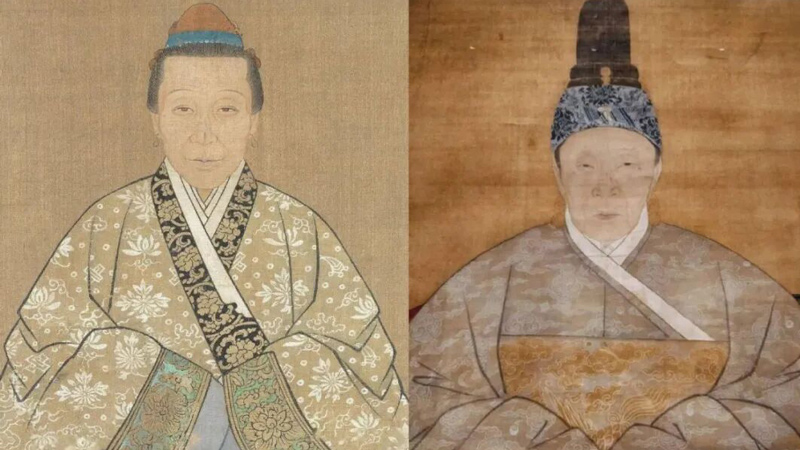
Interestingly, the left-overlap style did not vanish even after the Northern Wei fell. It reappeared during the Yuan Dynasty under Mongol rule. For almost a century, it became the common style, and habits formed over generations are hard to break. When the Ming Dynasty overthrew the Mongols and sought to revive “pure Han” customs, they officially mandated a return to the right-over-left style.
Yet again, the state decree was ahead of public practice. Women’s clothing, in particular, retained a pronounced left-overlap influence well into the early Ming period, as seen in many surviving portraits. It was only later that the right-over-left style fully recovered its dominance. This historical seesaw reveals that what seems “strange” or “incorrect” to modern eyes was often a common, practical, and deeply rooted part of life for people of different eras and ethnicities. The costume in Yang Mi’s new drama, far from being a mistake, is a testament to this rich, untidy history.