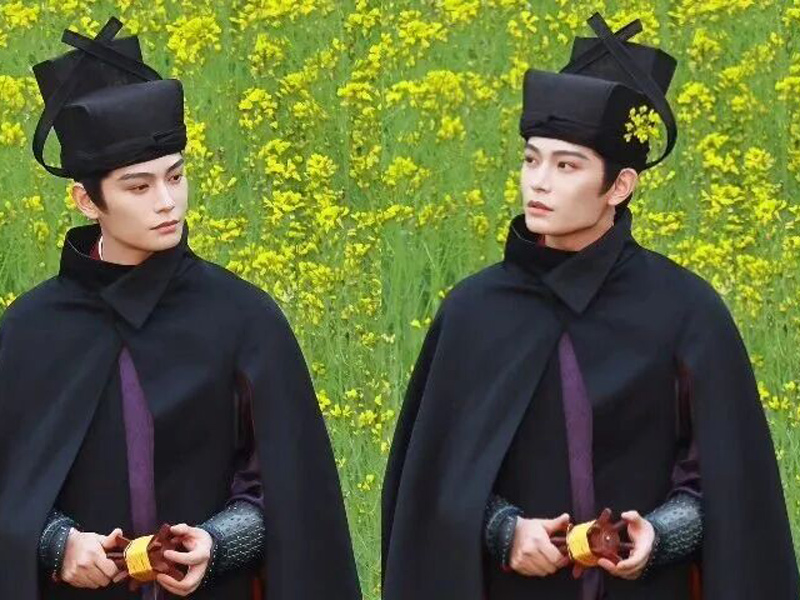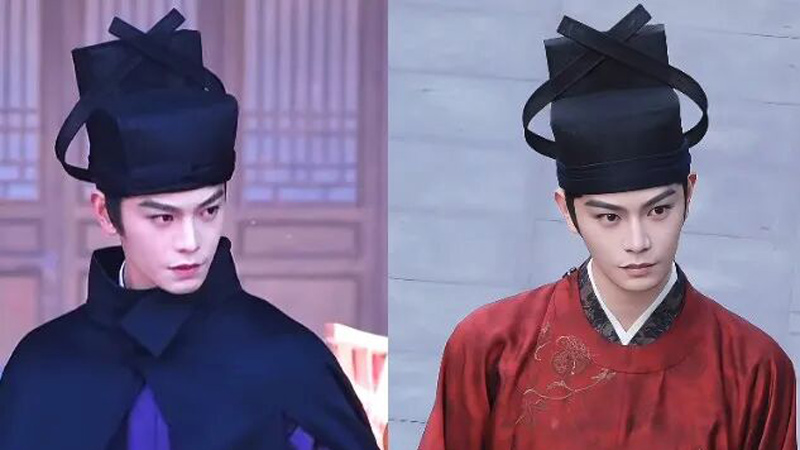
Has Ding Yuxi (丁禹兮) just worn the strangest hat in historical drama history? The actor’s new costume for the upcoming series Si Gong Ling (司宫令) has ignited a wave of curiosity. In the leaked stills, he stands there with a stark black square-topped hat, its side ribbons curving upward like two rigid handles to cross directly on the crown. For anyone familiar with the iconic wing-like hats of Song Dynasty officials, it looks almost comical. But here is the real question that has viewers scratching their heads: Did the props department invent this, or does it have a foothold in history?
A Tangled History
The story of this peculiar headwear begins not in the Song Dynasty, but far earlier. Its root lies in a simple piece of cloth called fujin (幅巾), used by common folk during the Han Dynasty. At that time, men with long hair simply wrapped a square cloth over their heads to keep hair tidy during labor. It was practical, plain, and had no ceremony about it. Then, a crucial evolution occurred during the Northern Zhou period. Someone had the clever idea to add four corners to this square cloth, allowing the wearer to tie two ends on top of the head and let the other two drape down the back. This was the primitive ancestor of what we now call futou (幞头).
By the Sui and Tang dynasties, however, this practical head-wrap had undergone a complete transformation. It was no longer mere peasant wear. The futou became the standard male headgear for everyone from royalty to street vendors. Yet the feet remained soft, freely swaying with the wind. This presented a problem for the image-conscious elite. What a visual mess. Craftsmen soon solved this by adding wire and bamboo strips to the fabric as an internal framework. This single invention changed everything, allowing the feet to be shaped and molded into fixed positions that stood tall and rigid. It set the stage for a flourishing of styles.
More Than Just a Rule
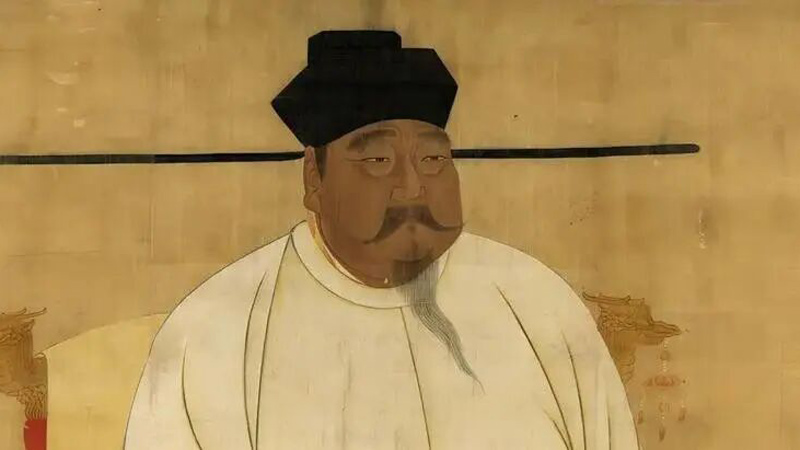
When we arrive at the Song Dynasty, the futou had evolved into a highly formalized system of headwear, clearly categorized in historical records. Shen Kuo (沈括), the famous scholar, wrote in his Dream Pool Essays (梦溪笔谈) that there were five distinct types: straight-foot, curved-foot, crossed-foot, upward-facing, and with-the-wind styles. The most iconic is the long straight-foot futou, the one with massive horizontal wings protruding on each side. Many associate it with Emperor Taizu of Song (宋太祖), believing he invented it to stop officials from whispering to each other during court sessions. However, it is more accurate to note that he wore it himself, and such a design was already popular in the previous Five Dynasties period. The Song merely extended the length, making it more grandiose.
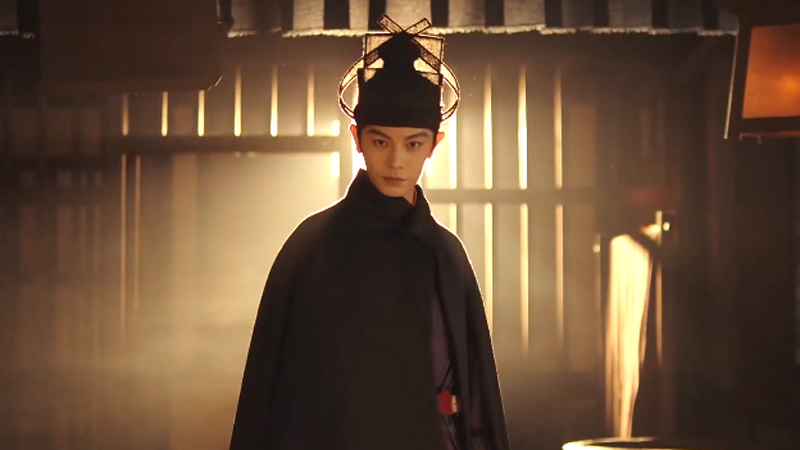
So where does Ding Yuxi’s hat fit in? It belongs to the “crossed-foot” category. Historical texts like the History of Song (宋史) and Dreams of Splendor in the Eastern Capital (东京梦华录) note that this style was designated for bailiffs, clerks, and guards. But here lies the crucial discrepancy. In all Song Dynasty stone reliefs and paintings that have been excavated, the crossed feet of this hat are fixed at the back of the crown. A perfect example can be seen on the soldiers surrounding the main character in the drama itself. This contrasted sharply with the earlier Five Dynasties style, where the intersection point was at the front of the crown. The historical evidence shows a clear, rule-based shift.
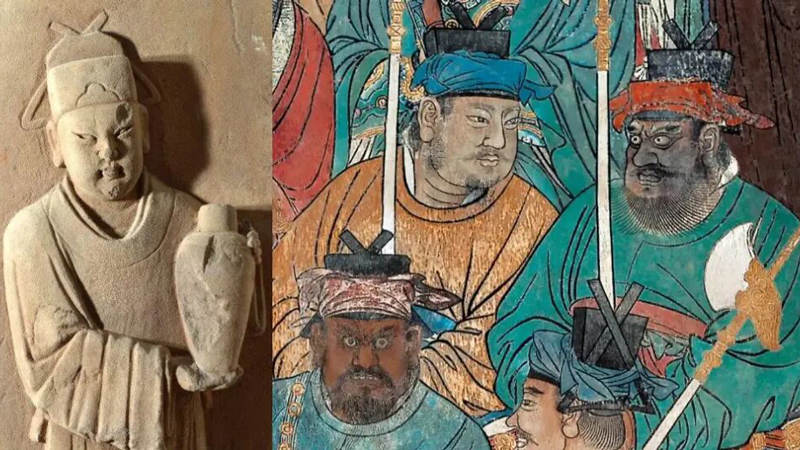
This tradition did not vanish. During the Yuan Dynasty, which followed, many Song Dynasty clothing regulations were preserved. The crossed-foot futou was still used for ceremonial palace guards, though artisans now added golden floral decorations to the hat body, a luxurious upgrade. This is all documented in the ritual chapters of the History of Jin (金史) and History of Yuan (元史). The hat continued its journey into the early Ming Dynasty, where it was primarily assigned to military officers and palace guards. Only in the middle and late Ming, and into the Qing Dynasty, did this official headwear gradually fade from real life, eventually finding its only permanent residence in the vibrant world of traditional opera.
In the end, the production team behind Si Gong Ling did not merely invent a hat out of thin air. They took a real historical artifact—the Song Dynasty crossed-foot futou—and made a deliberate creative choice. By moving the cross to the front of the crown and shaping the feet into two soft rings rather than stiff rods, they created a silhouette that is more rounded and visually distinct. It is a stylistic adjustment, blending historical reference with visual storytelling. It makes you wonder, though: if such a minor detail can spark this much debate, what else might they have redesigned for the sake of the frame?