
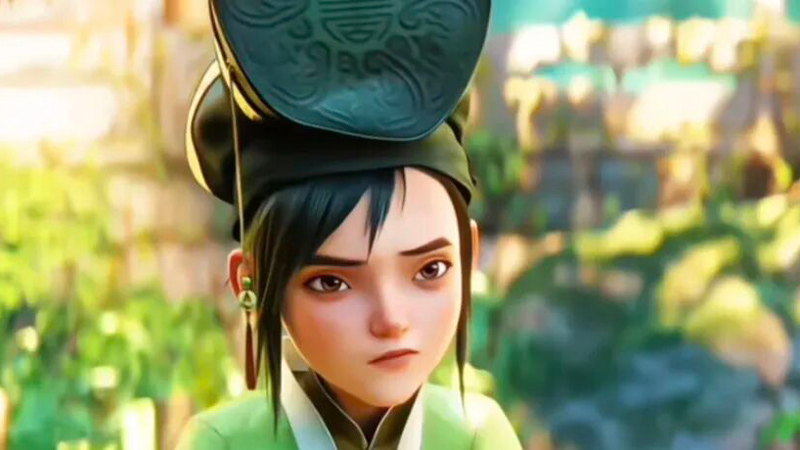
Han Xiangzi (韩湘子), one of the legendary Ba Xian! (八仙), has always cut a refined figure in Chinese myth: a scholarly young man in a Taoist robe, holding a jade flute. But the recent animated film Ba Xian! has thrown that image into chaos. Viewers are locked in a furious debate—not about his flute or his magic, but about the bizarre hat on his head. Is it a coffin? A pillow? Why would anyone wear either?
The controversy has spilled across social media, with audiences divided between those who see a clever design and those who find it morbidly absurd. Before picking sides, it helps to separate centuries of myth from modern movie magic—and ask where this strange headpiece really came from.
A Coffin or a Pillow?
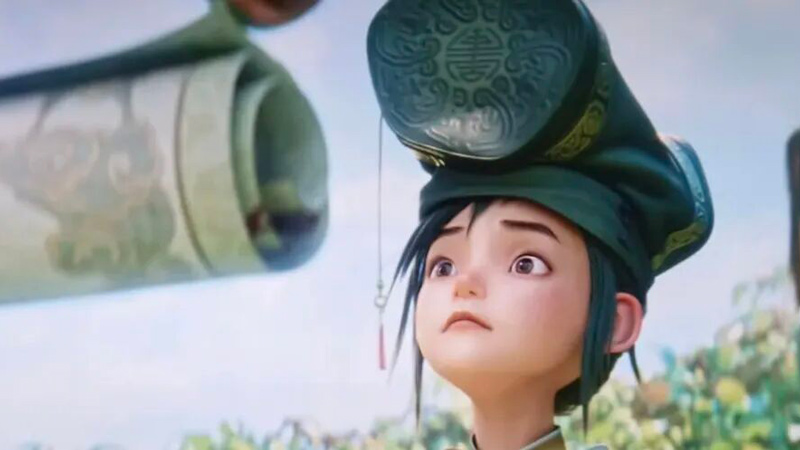
At first glance, the hat’s long, boxy shape does resemble a miniature coffin. The central character for longevity carved on the front only fuels that impression. In folk imagination, coffins and funeral rites are never far from each other, so the connection feels almost instinctive. Some viewers even point to Han Xiangzi’s legendary “corpse liberation”—a Taoist ascension where he left behind a decoy coffin and only his jade flute inside. That story, recorded in the Ming novel The Complete Tale of Han Xiangzi (韩湘子全传), makes the coffin reading plausible.
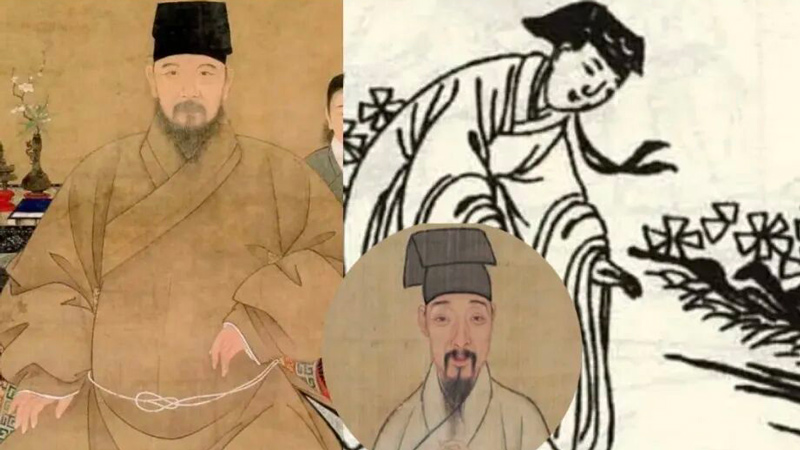
But others argue it’s clearly a pillow. Ancient ceramic pillows from the Tang and Song dynasties had a similar rectangular form, often carved with auspicious patterns. The “shou” character could easily be a blessing for health, not a death omen. Local folktales also whisper that Han practiced “sleeping meditation”, earning him a minor nickname as the “Sleeping Immortal.” So the pillow theory has its own charm. Yet neither explanation holds up under historical scrutiny. Neither coffins nor pillows appear in any canonical Ming or Yuan novel about him. These are modern interpretations overlaying ancient shapes, not authentic traditions.
The truth is simpler: traditional Han Xiangzi never wore anything like this. Early literary sources, from the Tang dynasty’s Youyang Zazu (酉阳杂俎) to the Ming classic Dongyou Ji (东游记), describe him as a young Taoist priest in standard clerical wear. His headgear was the Xiao Yao Jin (逍遥巾), a square soft cloth wrap that tied neatly around his bun, with ribbons flowing down both sides. That is the Han Xiangzi of history and classical fiction—a serene scholar, not a walking curiosity.
History Before Myth
Before he became an immortal, Han Xiang was a real person: a great-nephew of the famous Tang poet Han Yu (韩愈). The New Book of Tang (新唐书) lists him briefly as a minor literary figure, with no mention of magic or Daoism. His transformation into Han Xiangzi took centuries. It began with a Tang dynasty ghost story: a young kinsman of Han Yu could make white peonies change color instantly, with prophetic verses appearing on the petals. That tale appeared in Duan Chengshi’s Youyang Zazu, a collection of strange legends.
By the Northern Song, Liu Fu’s Qingsuo Gaoyi (青琐高议) attached the flower-miracle to Han Xiang himself, creating the famous “flower bloom at Languan” (蓝关) story where he saves his uncle from exile. Still, even then, he was just a wandering hermit in ordinary Taoist clothes. The jade flute, his most iconic prop, came later through stage performances and popular prints. None of these early accounts mention any unusual headwear—only the conventional Taoist cap and robe of a young cleric.
So where did the coffin or pillow come from? They are pure modern inventions, born not from ancient texts but from cinematic visual experimentation. The film’s design team likely mixed the Xiao Yao Jin’s structure with the elongated shape of a Tang pillow, then added the “shou” symbol as a playful nod to birthday blessings and immortality. It was never meant to be historically accurate. It was an artistic gamble—one that clearly backfired with audiences who expected reverence over reinvention.
Art or Error?
The heated debate reflects a broader tension in Chinese pop culture: how far can creators stray from classical images? Many viewers loved the film’s bold aesthetic, arguing that myths have always evolved. After all, the Ba Xian! themselves were reshaped over dynasties by novelists, playwrights, and painters. Why should today’s animators be locked into old designs? They see the hat as a conversation starter, not a desecration—a way to make an ancient figure feel fresh and provocative for a new generation.
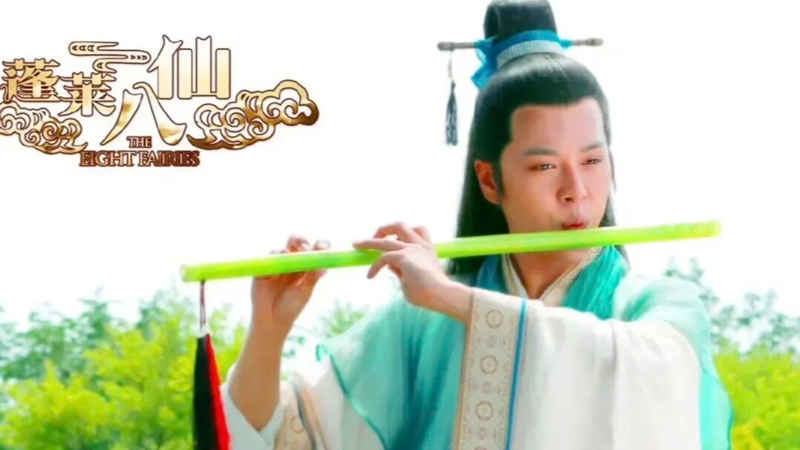
But critics counter that such a radical departure distorts the character’s identity. Han Xiangzi, they say, is a symbol of scholarly grace and musical elegance. Turning him into a walking riddle undermines that legacy. They point to earlier adaptations—like the beloved TV series The Eight Fairies! (蓬莱八仙) or the classic Ba Xian! Cross the Sea (八仙过海)—where he remained unmistakably a gentleman immortal. Those portrayals, they insist, respected the source material while still allowing creative flair.
What both sides agree on is that the film’s design, regardless of intention, has become a cultural phenomenon. It forced audiences to ask: what do we really know about these myths? And why do we feel so attached to certain visuals? The answer lies not in historical texts but in collective memory—the shared images that generations have painted in their minds. When a designer challenges that memory, the reaction is never just about a hat; it is about ownership of tradition.
In the end, Han Xiangzi wears neither coffin nor pillow in any authentic source. He remains the soft-capped, flute-playing immortal of classical tales. The film’s creation is a modern fantasy—a bold, if controversial, reinterpretation. Whether it succeeds depends on whether we view mythology as a fixed relic or a living canvas. One thing is certain: the debate itself proves how much these ancient figures still matter to us today. And perhaps that is the real magic—not the hat, but the conversation it sparked.