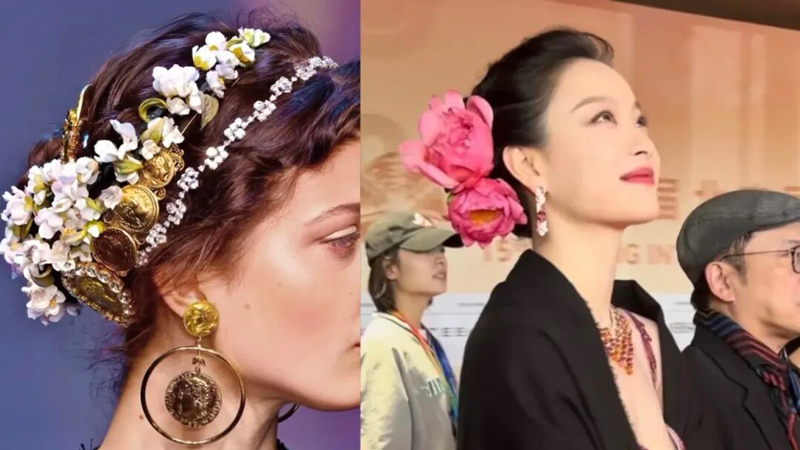
When Wu Jinyan (吴谨言) appears in the period drama Yu Ting Yao (御廷谣), her character Meng Tinghui (孟庭辉) wears a row of brilliant golden blossoms across her hair. When she moves her head, these tiny flowers tremble and catch the light. Viewers have flooded social media with a mix of shock and amusement. Is this real? Did ancient people truly walk around with a whole garden of gold on their heads? Some netizens joked that they finally understood why young women in old stories were called “golden flowers.”
Yet what looks like over-the-top ornamentation turns out to be one of the most historically accurate details in recent television. This is not a costume designer’s fever dream. This is a tradition that flourished for over a thousand years, crossed gender lines, and even influenced wedding customs and court rituals. To understand it is to step into a forgotten world where personal adornment became a language of hope, status, and poetic beauty.
The Roots of the Golden Bloom
That shimmering floral piece has a proper name: Dian (钿). According to the ancient dictionary Shuowen Jiezi (说文解字), the character originally described an inlay technique. It meant setting gems, pearls, or precious stones into gold or silver. Depending on the material, it became gold Dian (金钿), mother-of-pearl Dian (螺钿), or treasure Dian (宝钿). Over time, people began using the word to refer to floral gold ornaments specifically. Think of it as the ancestor of every glittering hairpiece you have ever admired.
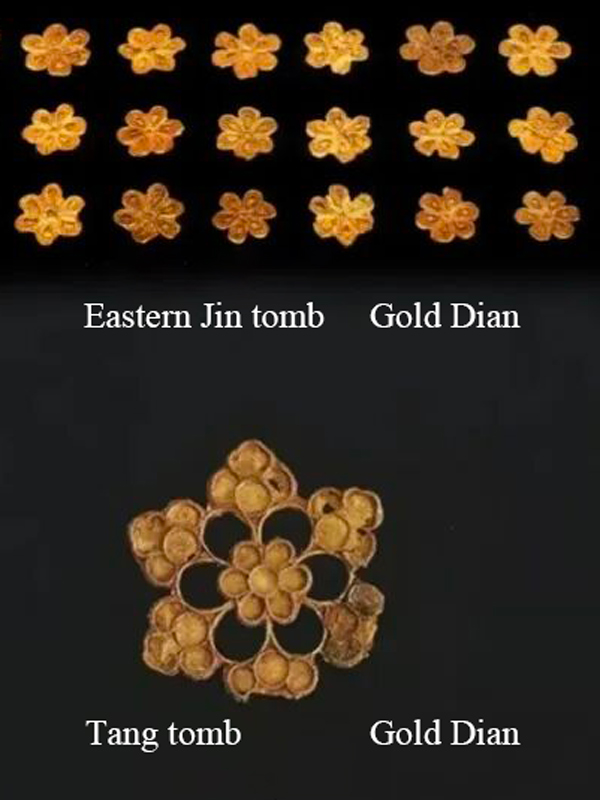
The earliest examples date back to the Wei, Jin, and Southern-Northern Dynasties, but it reached its golden age during the Tang and Song dynasties. Tang artisans perfected the art of hollow carving, creating intricate openwork designs that looked weightless. However, during the Tang, women mostly wore single pieces. It was the Song dynasty that introduced the trend of stringing multiple Dian together on a curved bridge-like hairpin. By the time of the Ming dynasty, archaeologists have even found golden floral hairpins in male tombs. So when you see Wu Jinyan wearing that stunning set, you are looking at a beautifully blended Tang-Song aesthetic that is both rare and legitimate.
How Did They Stay in Place?
This question has sparked endless speculation online. Experts believe that the primary method involved a thin metal rod soldered to the back of the ornament. Essentially, it functioned like a modern hairpin. You simply pushed the rod into your bun. The design of those Song dynasty “bridge hairpins” featured a curved spine that arched over the top of the head, supporting a row of floral heads that fanned out like a peacock’s tail. Some of these pins had five, seven, or even nine flower heads. They created the illusion of wearing multiple separate pins at once, which saved time and also kept the decoration stable. The effect was rich, full, and undeniably majestic.
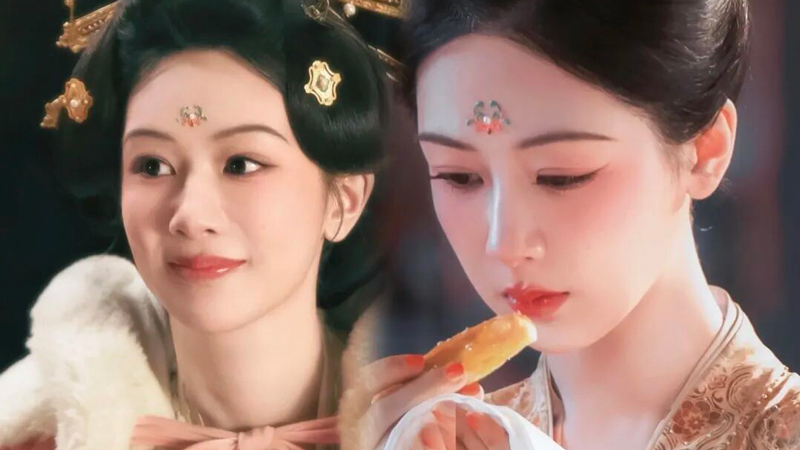
But the Dian was not only for hair. There was another fascinating tradition called Hua Dian makeup. In this version, women would stick thin floral-shaped pieces directly onto their foreheads or cheeks. They used fish bladder glue, a substance that could hold the ornament firmly on the skin. Popular during the Tang dynasty, this face decoration was a daily cosmetic practice. It was not reserved for royal banquets. Ordinary women in the cities and towns wore it, too. A line from the famous poet Bai Juyi (白居易) in Song of Everlasting Regret (长恨歌) reads: “The flower Dian fell to the ground, no one to gather them.” That scene vividly depicts the chaos of war, with noblewomen fleeing and their precious face ornaments scattering in the dust. If the emperor’s concubines wore them in such times, it shows just how commonplace and beloved these golden flowers were.
Men Wore Them Too
It would be a mistake to think this was a female-only trend. In fact, ancient men were quite enthusiastic about it. During the Tang and Song, a man might pin a single large golden flower to his official hat during the spring festival. It was a mark of celebration. The Liangzhuang Prince (梁庄王) of the Ming dynasty, for instance, was buried with a magnificent peony hairpin made of pure gold. The peony held deep symbolic meaning—it represented wealth, honor, and prosperity. Unlike the delicate clusters women wore, men’s pieces were bigger, bolder, and often featured just one prominent flower. They wore them when they passed the imperial examinations, when they got married, or when they departed for military campaigns.
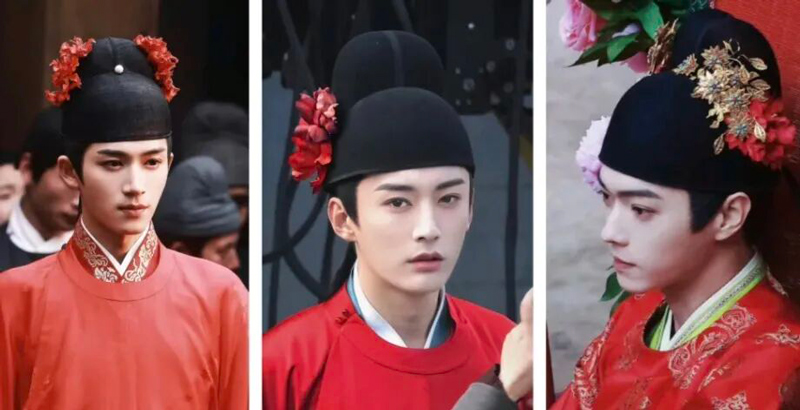
This custom was a direct inheritance from the Tang and Song court rituals. The practice of men wearing flowers was deeply rooted in the idea of auspiciousness. For example, if a young scholar won the highest rank in the civil service exam, the emperor would bestow a golden flower upon him. It was the ultimate public honor. So when we look at those portraits of powerful officials with large gold peonies perched on their black hats, we should not laugh at their vanity. We should recognize the gesture as a powerful social signal. It told everyone, “This is a man blessed by heaven.”
What fascinates modern viewers most is how this aesthetic connects us to something timeless. In contemporary weddings, brides still wear floral hairpins. They may not be solid gold, but the shape and intent remain. The golden flower is never just decoration. It is a prayer for happiness, a celebration of beauty, and a nod to our ancestors’ pursuit of a raDiant future. Wu Jinyan’s headdress may have looked like an explosion of wealth, but it actually reflects a profound heritage that saw every person as a potential bearer of light. Whether you are a general or a princess, a bride or a groom, that shining bloom on your head says the same thing: joy is here. Joy is real.