
The 2026 “Xinjiang Is a Good Place” heritage-aid exhibition has opened in Shihezi, Xinjiang Production and Construction Corps (XPCC), under the theme “Culture Nourishes Xinjiang, Heritage Adds Color.” It gathers 651 representative intangible cultural heritage (ICH) projects and 549 ICH bearers from 31 provincial regions plus the XPCC — the largest participation in the event’s history. Among the exhibits, two Hanfu crafts stand out: the Hanfu-making technique of Heze, Shandong, and the Tang-style Daxiushan technique of Luoyang, Henan, appearing side by side beneath the Tianshan Mountains.

The Shandong pavilion presented two “works”: an auditory one — Shandong Guzheng Music, a national-level ICH item — and a visual one — Hanfu-making, a municipal-level representative project. On stage, Zhu Yanfang, provincial-level bearer of Shandong Guzheng Music, played with the robust, unadorned character of southwestern Shandong, a tone forged by the Yellow River floodplain and folk storytelling cadence. She has performed at CCTV’s intangible heritage gala and at Seoul’s “Silk Road Culture Month”; this time her strings conversed with Xinjiang’s ethnic instruments in the Gobi new town. Complementing the zither sound was the visual chapter laid out at the Luoruyan (洛如焉) Hanfu booth from Caoxian: finely rendered traditional motifs and time-honored cutting techniques, bringing the dress aesthetics of the Caozhou region to the foot of the Tianshan and making the industry’s innovation and the living transmission of heritage tangible.
According to a report from the converged media center of Luoyang’s Chanhe District, Daxiushan pieces in the “Five Stars Rising in the East” and “Tiger Gathering All Blessings” series also appeared at the exhibition. The garments draw on the classic brocade inscription “Five Stars Rising in the East Brings Fortune to China,” rest on the traditional Daxiushan silhouette, and blend classical motif aesthetics with contemporary design. The Tang-style Daxiushan technique is a district-level ICH project of Chanhe, and its heritage workshop is housed in the Tongtuo Muyu (铜驼暮雨) neighborhood. As an outstanding representative of Tang-dynasty dress, the Daxiushan technique carries the memory of a thousand years of silk civilization in the Heluo region; while restoring the wide sleeves and stately dignity of the original form, the craft workshop insists on hand plant dyeing and traditional embroidery as its core techniques.
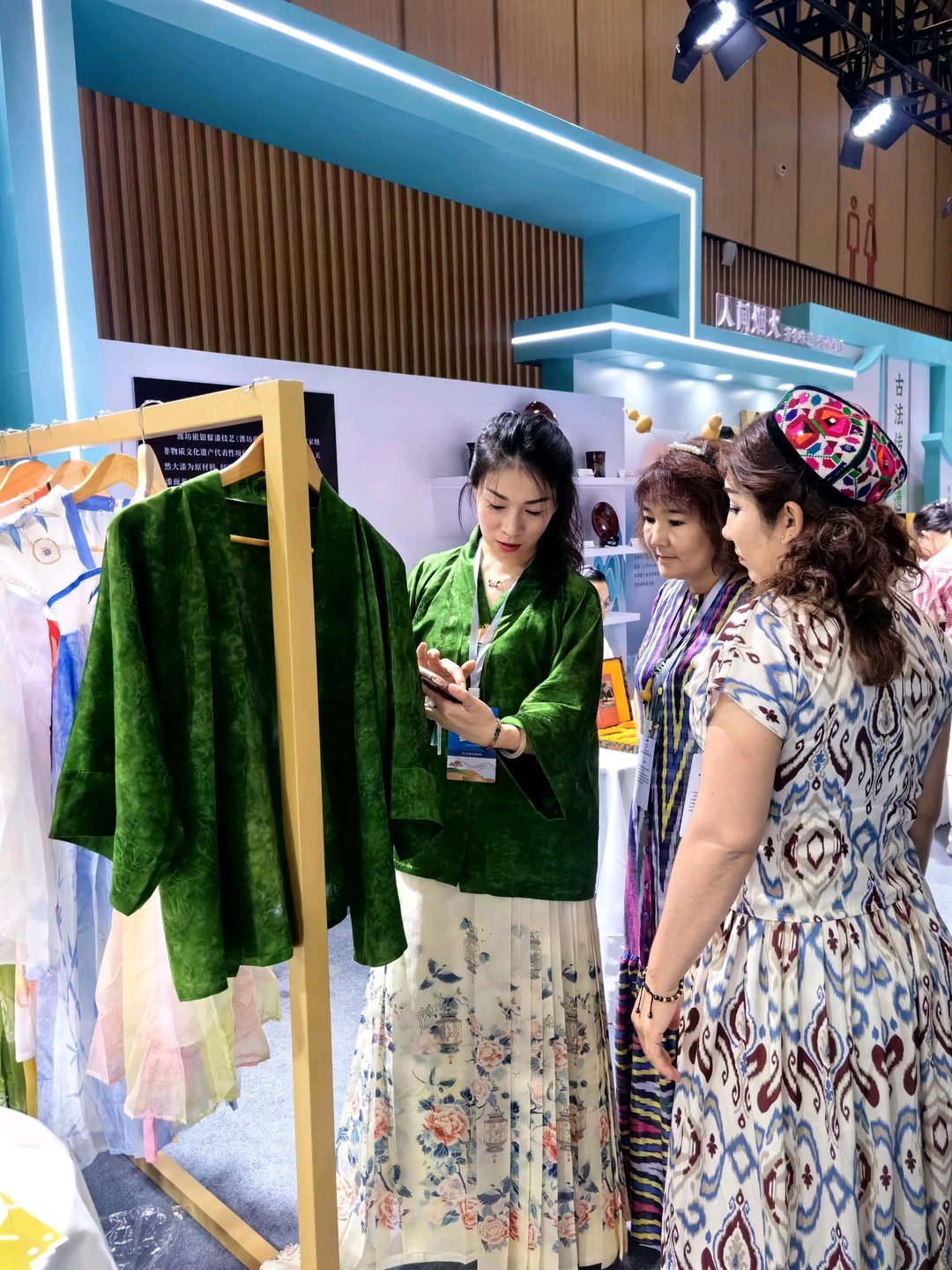
Heze’s cross-regional cultural journey is not an isolated case. In May, Juye County’s southwestern Shandong wind-and-percussion music had already taken the stage of the 2nd China Xinjiang Folk Arts Season, its suona horns piercing the Urumqi night sky. Earlier, the vehicle of cultural aid had begun moving from static halls to flowing spaces: on July 14, the “Qilu No. 1” heritage train — loaded with Lv opera, dough figurine sculpting and ink rubbing of inscriptions — departed Jinan and traveled through seven provinces and regions over 18 days to reach Xinjiang, turning a “heritage museum on rails” from a fixed venue into a moving journey. From the peony town to the Gobi new city, as the clear tones of Shandong Guzheng Music collide with the heat of Muqam, and the elegance of Hanfu sits beside the brilliance of Adras silk, an intuitive sense of “unity in diversity” takes shape.