

Royal Betrothal (御廷谣) – a drama set in a fictional dynasty where power plays unfold in the shadows of a gambling den. The protagonist, Meng Tinghui (孟廷辉), walks a razor’s edge, hunting a secret society while trapped in their web. But when every clue points to the same second-floor room, and every trap seems deliberately laid, why does she believe she can still find the real “Flower Banquet”? Because she notices what the mighty overlook: habit. The enemy’s arrogance is her only weapon – and she wields it not with martial skill, but with cold, patient reasoning.
The Unchanging Stage
The Hu Xiao Bang (虎啸帮) has operated the Changle Street (长乐街) gambling house for years. It is no secret that the Flower Banquet happens every half-month. Regular patrons – all officials or nobles – expect it like clockwork. When Hao Wenming (郝文明), the casino boss, told Meng that the banquet would not be on the second floor this time, he accidentally confirmed that it always had been. If the location changed every session, he would have said “this time it is at…” – not “it is not on the second floor.” That distinction reveals a fixed routine. Routine breeds predictability. And predictability, in the hands of a sharp observer, becomes a map.

Meng also recalled that the second floor had tight security – guards patrolled constantly, strangers were ejected immediately. Yet those very measures made the space ideal for a recurring event. You do not build a permanent fortress for a one-time party. The investment in masks, silent gestures, and quick escape routes to the crowded first floor all point to a stage used repeatedly. The casino’s owners and their official backers had perfected this system over months. Changing it would invite more risk – new staff, unfamiliar exits, loose lips – than keeping it. Criminals are lazy; they stick to what works.
Moreover, the scale of the last banquet far exceeded the one Meng had infiltrated earlier. More guests, more guards, more noise disguised under gambling chatter. Such a large assembly cannot be improvised. It requires pre-booked rooms, pre-arranged food, pre-assigned seating. All of which tie the event to one physical location. Hao’s attempt to lure her elsewhere was a bluff – but a bluff that only worked if she believed the banquet could move. She did not. She trusted the geometry of convenience over the lie of words.
The Weight of Arrogance
The Hu Xiao Bang (虎啸帮) relied on high-ranking protectors – ministers, generals, even judges from the Dali Temple (大理寺). These men wore masks and kept silent during the banquets, terrified of recognition. That fear created a paradox: to keep them safe, the venue had to be both secret and stable. A moving target increases exposure – more couriers, more bribes, more chances for a spy to follow. The gang’s leaders knew this. They chose the casino because the first floor’s chaos was the perfect smokescreen, and the second floor’s isolation was the perfect vault. They grew overconfident in their fortress.

That overconfidence blinded them to one fact: Meng Tinghui had no combat skills. She could not fight her way out, so she had to think her way in. While the gang bragged about their impenetrable upstairs, she studied the downstairs. She noticed that A-Yue (阿悦), the rescued girl, had been held in a back room near the stairs – a room that gave access to both floors. She noticed that the guards’ patrol patterns repeated every quarter-hour. She noticed that the masks were stored in a cabinet on the landing, not brought from outside. These were not random details; they were habits. And habits are the footprints of a fixed location.
When Hao tried to send her to a different venue, she did not argue. She pretended to believe him. Then she sent word to Ying Gua (英寡), her ally outside. She knew that even if the banquet moved, the core participants – the officials – would resist. They had invested too much in the casino’s secrecy. They would demand the familiar room, the familiar masks, the familiar escape route. So Meng stationed herself not at the new address, but at the casino’s back alley. And there she watched the same carriages arrive at the same hour, the same servants carry in the same wine jars. The banquet had not budged.
The Trap That Became a Mirror
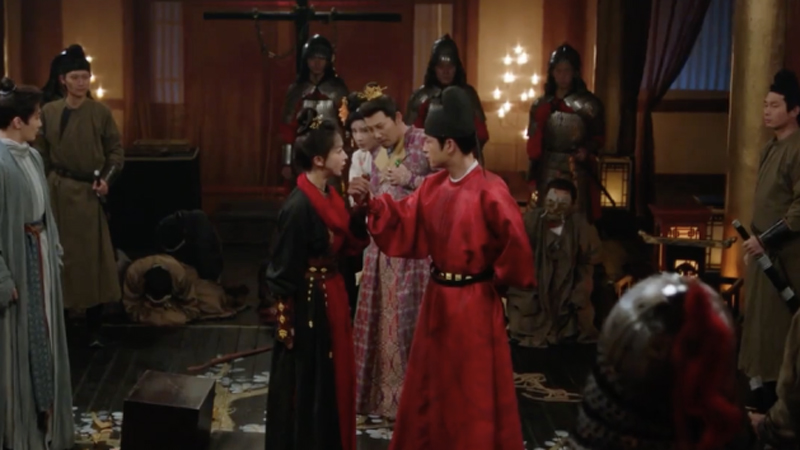
Of course, the gang had laid a trap. Ling Yunfei (凌云飞) nearly killed her. The second floor was rigged with hidden doors and false walls. But Meng understood that a trap works only if the prey follows the predator’s script. She did not. She ignored Hao’s invitation and focused on the physical evidence: the worn floorboards near the eastern window (where guards often stood), the faint smell of incense that matched A-Yue’s description, the sound of muffled laughter that came not from the main hall but from a sealed chamber behind the betting counter. She reconstructed the banquet’s geometry without asking a single question.
The gang’s fatal error was assuming that no one could breach their security without inside help. They never considered that an outsider might deduce the location from the building’s own architecture. Meng had no informant, no bribe, no martial prowess. She had only a ruler and a notebook. She measured distances, timed patrol changes, mapped noise patterns. She found that the second floor had an extra twenty feet of space unaccounted for in the casino’s public blueprints – a hidden hall. That hall was the Flower Banquet. It had always been there. It would always be there until someone proved that permanence is not safety, but a cage.
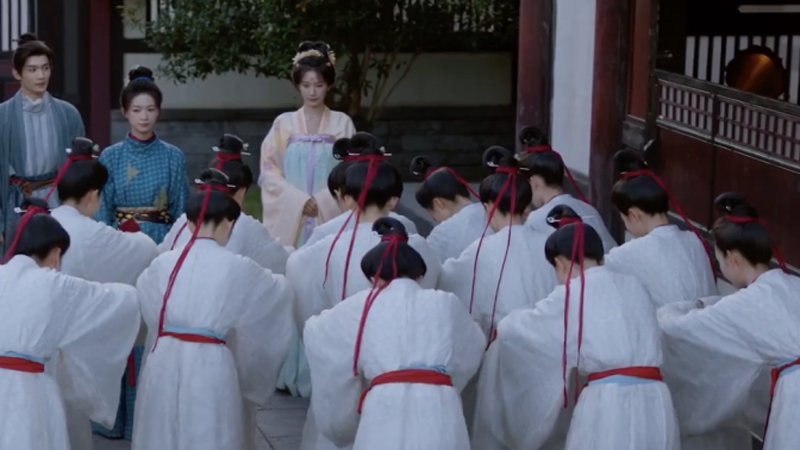
When she finally entered that hall with the Shenwei Army (神卫军) at her back, she found not a moving target but a sitting duck. The officials were too stunned to flee; their masks lay discarded. The gang’s guards hesitated – their routine broken. In that moment of confusion, Meng did not fight. She simply pointed to the eastern window and said, “That is where you always place the wine. That is why I knew.” The enemy had built a perfect machine, but machines repeat. And repetition is the first thread that unravels any conspiracy. She walked out alive not because she was stronger, but because she remembered that even tigers pace the same path – until someone notes the tracks.