
Is That Rag Just a Sweat Rag? Unraveling the Mystery of the Hanjin (汗巾) in Ming Dynasty China
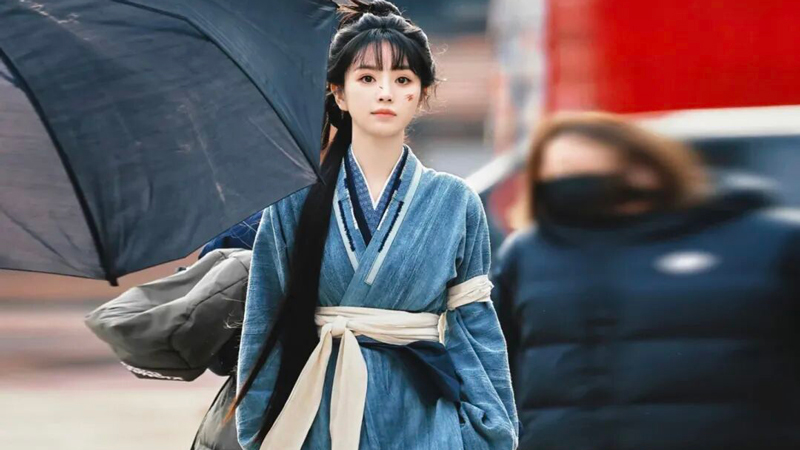
For anyone who has watched a historical Chinese drama like Pursuit of Jade (逐玉) or Under the Microscope (显微镜下的大明), a particular piece of clothing stands out. It’s that long, often white, narrow strip of cloth hanging from the waist of laborers, street vendors, and even palace maids. When the characters start sweating from their work, they casually grab the end of this cloth to wipe their brows.
To a modern eye, it might look like a carelessly tied belt. But ancient people didn’t just throw on any piece of fabric as a belt; this accessory, known as a Hanjin, was a surprisingly versatile and culturally significant item. More than just a sweat rag, its story is woven into the very fabric of daily life, fashion, and even romance in ancient China, far from the simple utility we might assume at first glance.
Utility Beyond Wiping
The primary function of a Hanjin was, as its name suggests, to wipe away sweat. However, that is merely the surface of its purpose. The historical record shows a fascinating split in its use based on social standing and gender. For the common working folk, the Hanjin was a tool of the trade, a long, functional strip of cotton or hemp that was both durable and accessible. It could be worn around the head, neck, or tucked into the waist, ready to be deployed at a moment’s notice. For this group, it was a purely practical item, similar to how a modern construction worker might use a bandana, but with a much longer and more versatile form.

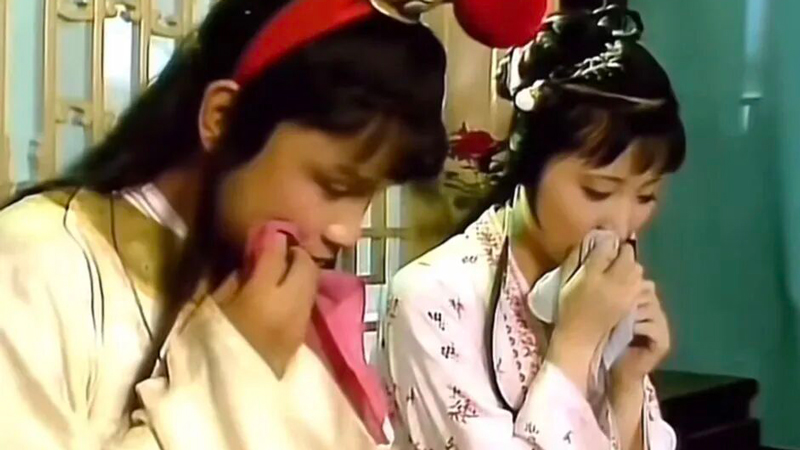
Yet, for women, especially in literature, the Hanjin or its smaller cousin, the Shoupa (手帕), took on a softer, more emotional role. It became the fabric of tears, a prop for sorrow and longing in countless stories. In the Leijiang Ji (酹江集), a tragic scene depicts a woman far from home, crying into her Hanjin. The text even describes a distraught character holding a Hanjin, lamenting over a lost one. This wasn’t just for show; the fabric was a receptacle for genuine grief. In a particularly clever (and dramatic) example from The Tale of Jin Yunqiao (金云翘传), a character, Cuiqiao (翠翘), famously used her Hanjin to fake her tears by soaking it in ginger juice. When she wiped her eyes, the sting produced a convincing and pitiful stream of tears, demonstrating that the object was central to navigating complex social and emotional scenarios.
A Token of the Heart
Beyond its practical and emotional uses, the Hanjin evolved into a significant social marker and a powerful symbol of intimacy. The fabric and craftsmanship of the cloth spoke volumes about its owner’s status. A Hanjin made of coarse linen was for a laborer, while one made of fine Sichuan silk was for the elite. In the classic novel The Plum in the Golden Vase (金瓶梅), the character Pan Jinlian’s (潘金莲) Hanjin is described in lavish, almost obsessive detail as being a dazzling violet color, embroidered with pearls and gold thread. Such a Hanjin was no longer just for wiping sweat; it was a fashion statement, a display of wealth, and a declaration of one’s taste, having transcended its basic function to become an object of art and identity.
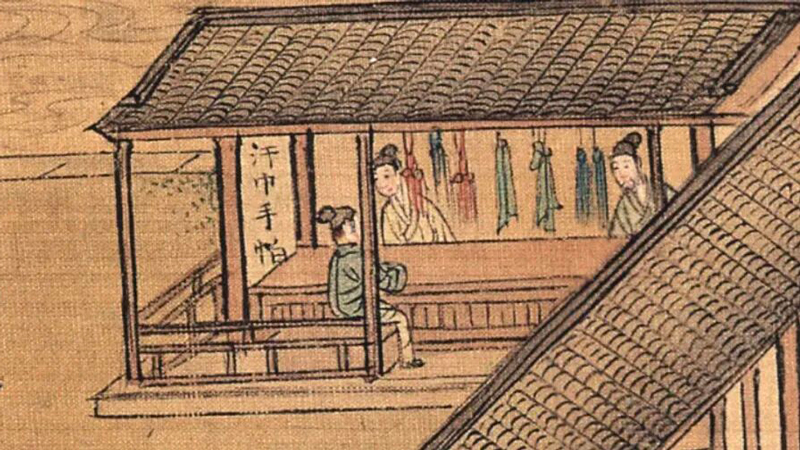
This significance reached its peak in the realm of romance, where the Hanjin became a classic dingqing xinwu (定情信物), or token of love. When a woman wore a Hanjin gifted by her suitor, it was a silent but profound expression of their bond. This was especially true for the long, waist-tying versions, which were far more conspicuous and intimate than a small handkerchief hidden in a sleeve. The length of the cloth itself carried meaning, with “long” being a homophone for “everlasting” in Chinese. Therefore, giving a long Hanjin was a wish for a long-lasting love, making it a powerful and poetic symbol that could be worn and displayed with pride.
The Great Length Divide
The most intriguing aspect of the Hanjin is often its length. While a small version, the Shoupa, was easily hidden, the waist-tying Hanjin could be exceptionally long, often reaching over two meters. Why would anyone need a sweat rag that long? First and foremost, it was incredibly practical. A long cloth provided more surface area for sweating hands, could be adjusted to different parts of the body for support, and was easier to tuck securely into a belt. For laborers, wrapping a long, sturdy cloth around the waist also provided lower back support when lifting heavy objects, adding a layer of functionality that a short handkerchief could never offer. The length also served as a decorative element, allowing for intricate folds and ties that added visual interest to a simple outfit.
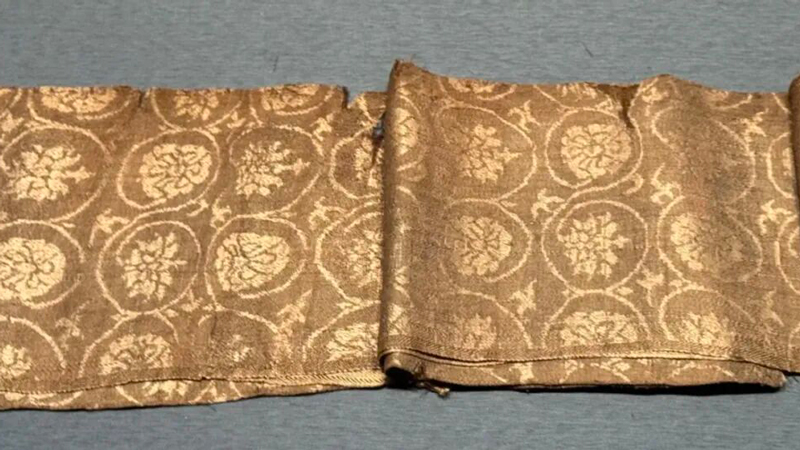
However, the length wasn’t just for the poor. It was a status symbol even among the nobility, as evidenced by the discovery of a 255-centimeter-long Hanjin in the tomb ofZhu Tan (朱檀), the Prince of Huang. This wasn’t meant for wiping sweat; it was a ceremonial piece, woven with the inscription “Guiling Hesuan (龟龄鹤算),” wishing for a long life like that of a tortoise or a crane. The prince’s Hanjin was a glorified fashion accessory. Its length represented its owner’s high status, luxury, and connection to a long and prosperous life. This shows that the Hanjin’s significance dramatically shifted across the social spectrum: for the poor, it was a tool; for the rich, it was an art piece and a status symbol.
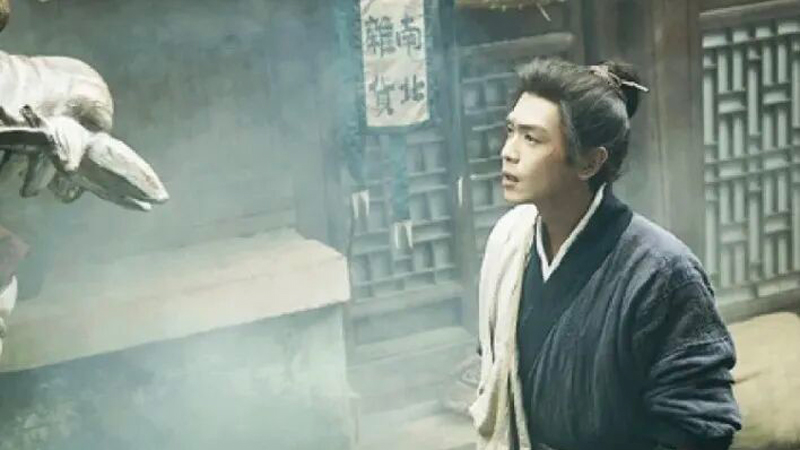
Ultimately, the Hanjin’s legacy is one of profound adaptability. While the contemporary world has reduced its function to that of a simple sweat rag, frequently seen on the heads of laborers in northern China, its history reveals a different story. It was not just a piece of cloth; it was a multifaceted tool for survival and a cultural artifact that has stood the test of time. From the tear-stained faces of tragic heroines to the embroidered belts of the elite, the Hanjin was an ever-present part of ancient Chinese life. Its journey shows us that even the most humble objects can carry a world of meaning, history, and romance within their threads, reminding us that the ancient Chinese were not just practical people but also masters of imbuing everyday items with deep cultural and personal significance.