
On July 25, 2026, the Three Lanes and Seven Alleys (三坊七巷) historical and cultural district in Fuzhou, Fujian Province, reached its summer tourism peak with a “Flower Goddess Parade” (花神巡游) immersive performance along the main South Back Street (南后街) thoroughfare. Co-created by local ICH inheritors and university drama troupes, the event quickly became the defining summer cultural tourism phenomenon in Fujian.
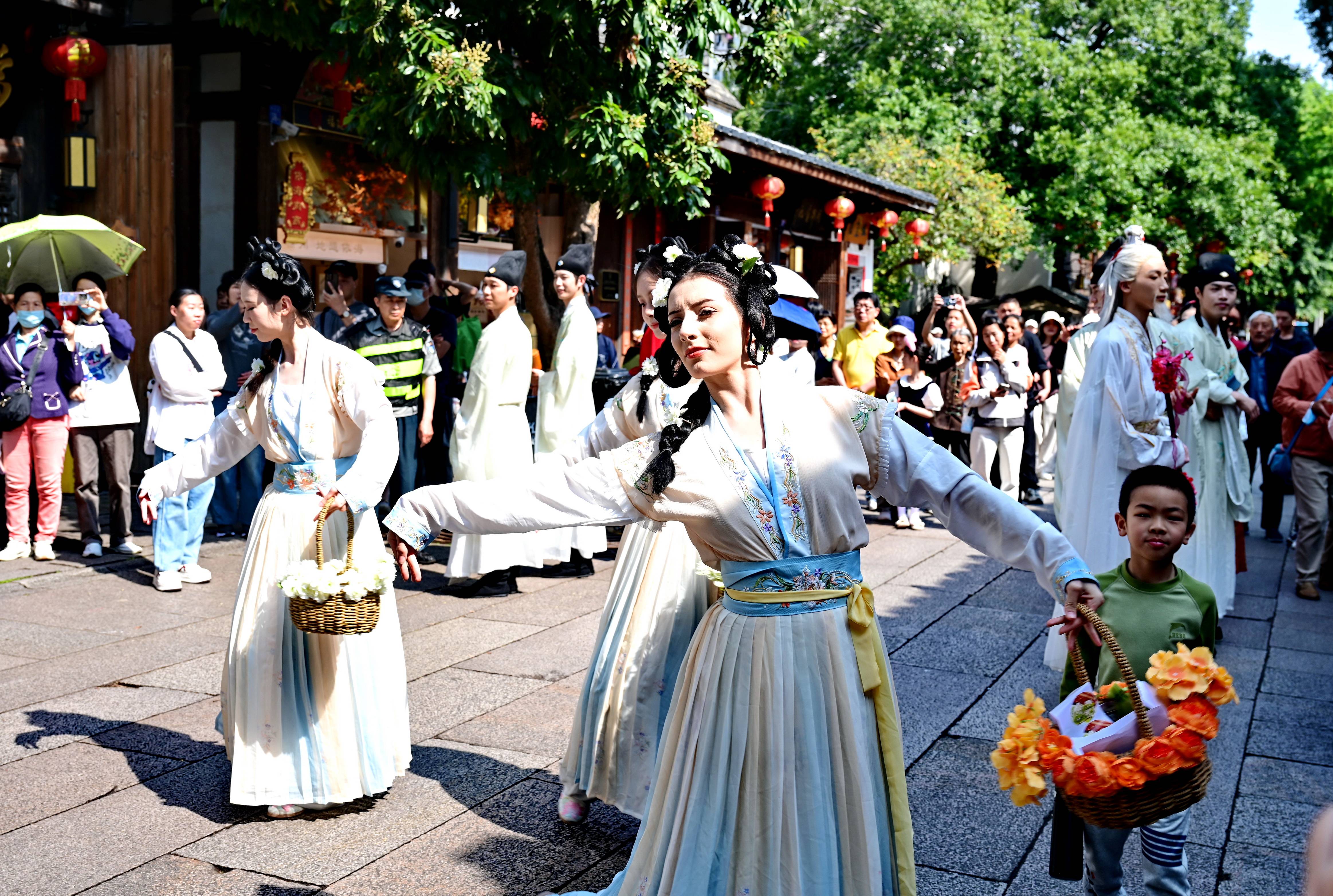
More than a dozen performers dressed in Song-dynasty and Ming-dynasty Hanfu, carrying seasonal flowers and round fans, paced slowly through the ancient lane-and-alley network. The parade was accompanied by live ancient chime-bell music, scented set designs, and immersive lighting effects, drawing thousands of visitors who stopped to photograph, follow, and interact. On-site activities included three-hairpin (三条簪) dance flash mobs, Min capital nursery rhyme sing-alongs (闽都童谣吟唱), and oil-paper umbrella hands-on craft sessions — creating a “one step, one scene; one alley, one charm” living cultural landscape.
According to the latest statistics from the Fuzhou Municipal Bureau of Culture and Tourism, between July 1 and July 25, the Three Lanes and Seven Alleys district received a cumulative 1.863 million visitor trips, a 23.7% year-over-year increase. Visitors aged 18 to 35 accounted for over 60% of the total, forming the core consumer group. More strikingly, the short-video hashtag #FuzhouFlowerGoddessParade (#福州花神巡游) had surpassed 420 million views, with daily new check-in posts exceeding 11,000 — demonstrating the powerful social sharing capacity of living heritage content.
The district’s management stated that the Flower Goddess event was the flagship component of the “Min Capital Summer Charm: Ancient Houses in Performance” (闽都夏韵·古厝有戏) seasonal plan. All costumes and ceremonial protocols were restored in accordance with local historical records including the Min Shu (闽书) and Rongcheng Kaogu Lüe (榕城考古略), balancing historical accuracy with communication adaptability — each “Flower Goddess” makeup and styling was sourced from Ming-Qing Fuzhou gentlewoman portrait albums, while movements integrated Min opera (闽剧) body language with classical dance cadence.
Beyond the parade itself, the district simultaneously launched a “24 Solar Terms Flower Map” (二十四节气花信地图) mini-program guide, linking heritage-protection sites such as the Lin Juemin Residence (林觉民故居) and Yan Fu Residence (严复故居) with AR flower-goddess photo spots. Several time-honored tea houses debuted limited-edition beverages including “Jasmine Flower Goddess Special Blend” (茉莉花神特调) and “White Magnolia Icy Drink” (白玉兰冰饮), achieving a deep integration of cultural experience and commercial consumption. Industry analysts noted that a lightweight living-heritage activation path — with solar-term aesthetics at the core and youth expression as the vehicle — is emerging as a new model of culture-tourism integration under the broader ancient-city renewal framework.

The Three Lanes and Seven Alleys, a national 5A-level scenic area long described as “half of modern Chinese history in one neighborhood,” organized its 2026 summer series around the “Min Capital Summer Charm” theme. The Flower Goddess Parade, folk flash mobs, and Hanfu experiences transformed the ancient houses from a static “architecture museum” into a living cultural space. Statistics show that in the first two weeks of summer vacation 2026, the district’s average daily foot traffic reached 48,000, up 37% compared with the same period in 2025.
The success of the Flower Goddess Parade also reflects Fuzhou’s sustained “ancient house revitalization” approach — no large-scale demolition or construction, but rather letting history breathe: the flower goddesses are real people, not props; the flash mobs are slices of life, not stage sets. When a college student accepted a jasmine sachet from a flower goddess performer, the fragrance of that centuries-old cultural lineage became palpable in a single moment.