
Shenyang, a city long hailed as the “Capital of Qipao“, marked a milestone on July 27, 2026, when the Shenyang Municipal Committee of the Chinese People’s Political Consultative Conference (CPPCC) published an in-depth report chronicling the qipao culture season’s evolution over the past decade. Since its debut in 2017, the annual event has grown from modest folk catwalks and niche aesthetic showcases into a citywide, industry-wide phenomenon — a transformation that mirrors Shenyang’s broader cultural confidence.
Folk Catwalks
The vast landscapes of Northeast China have long given Shenyang’s qipao a distinctive character — dignified, unpretentious, and naturally graceful. Yet for years, this elegance remained scattered among folk circles and street-level enthusiasts, lacking a platform for centralized display, public participation, and industrial empowerment.
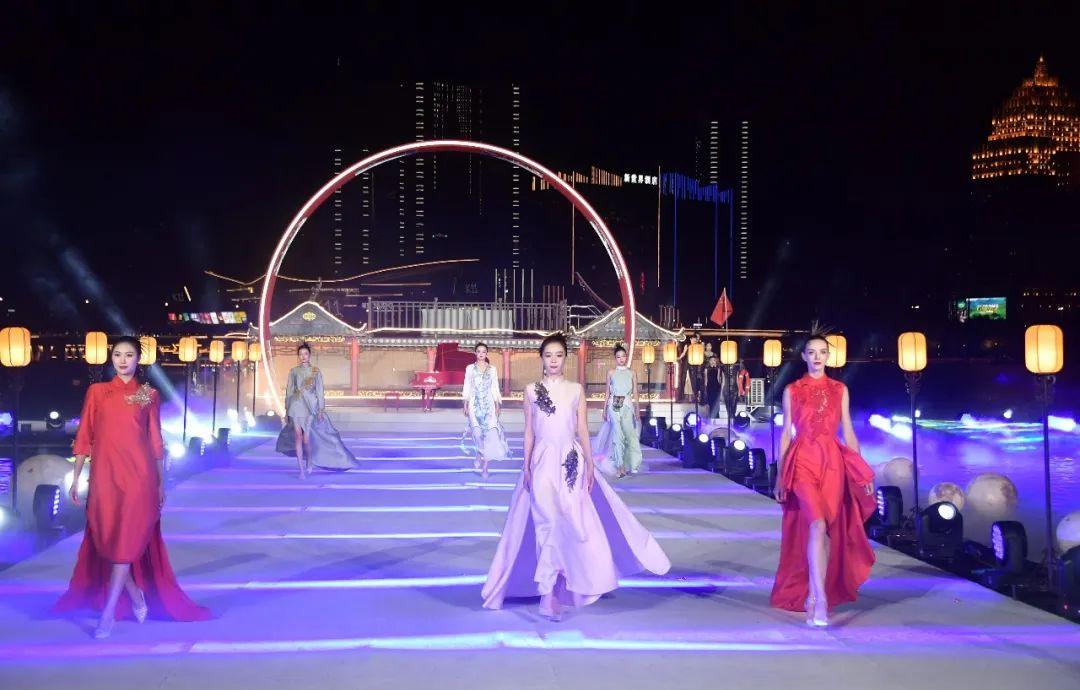
Ten years ago, Shenyang launched its first qipao culture season, beginning with simple folk catwalks and niche aesthetic performances. Each year built on the last, gradually maturing into a cultural IP that radiates nationwide, connects to industry, and enriches daily life. In 2024, under the theme “Taking Qipao as a Bond, Embracing the New,” the season rolled out more than 20 activities across six dimensions: conferences, exhibitions, sales, tours, gatherings, and runway shows. In 2025, the season partnered with CCTV.com for the first time, staging its inaugural televised qipao gala at the K11 Sky Garden, and held an academic symposium at Lu Xun Academy of Fine Arts to systematically document the historical origins and cultural value of the Liaoning-style (辽派) qipao.
By 2026, the qipao culture season achieved a milestone leap. Over a decade of dedicated development, Shenyang’s qipao culture has progressed from heritage preservation and public education toward standardization, branding, and industrialization — a shift from cultural awareness to industrial confidence. This year’s season broke decisively out of its earlier aesthetic-showcase mold, building a new paradigm of citywide mobilization, full public participation, and whole-chain empowerment.
Runway Meets Stadium: Breaking Boundaries
A signature highlight of the 2026 season was the qipao runway show breaking free from traditional venues and audience circles. The Northeast Super (东北超) opening ceremony at the Tiexi Sports Stadium featured a spectacular qipao parade, with themed contingents from four cities — Shenyang, Dalian, Harbin, and Changchun — performing in unison. The event was a cross-boundary collision of traditional Chinese aesthetics and modern Northeast football culture. Additional shows included a local-brand qipao aesthetic gala at Shenyang Guesthouse and original graduate fashion shows at Lu Xun Academy of Fine Arts. Across the city, shopping districts, communities, and public squares hosted regular open-runway events, with participants of all ages joining in.
On July 18, the “Qipao Charm in Shenbei · Trendy Outlets” event — acting as the second-screen national-style exhibition for the Northeast Super — took place in Shenbei New District. The Yingyi Qipao Model Art Troupe presented three original productions in sequence: the qipao peach-blossom show “You Look Like March Peach Blossoms” (你像三月桃花开), the Hanfu round-fan show “Apricot Blossoms Fall” (杏花落), and the Hanfu folding-fan show “A Smile Holding a Flower” (拈花一笑), each layer building upon the last to showcase the grace and vitality of traditional dress. The event also pioneered a “national style + sports” dual-experience model, with large LED screens broadcasting Northeast Super matches in real time, allowing audiences to switch between elegant cultural performances and high-energy sports.
Industry Empowerment and Academic Support
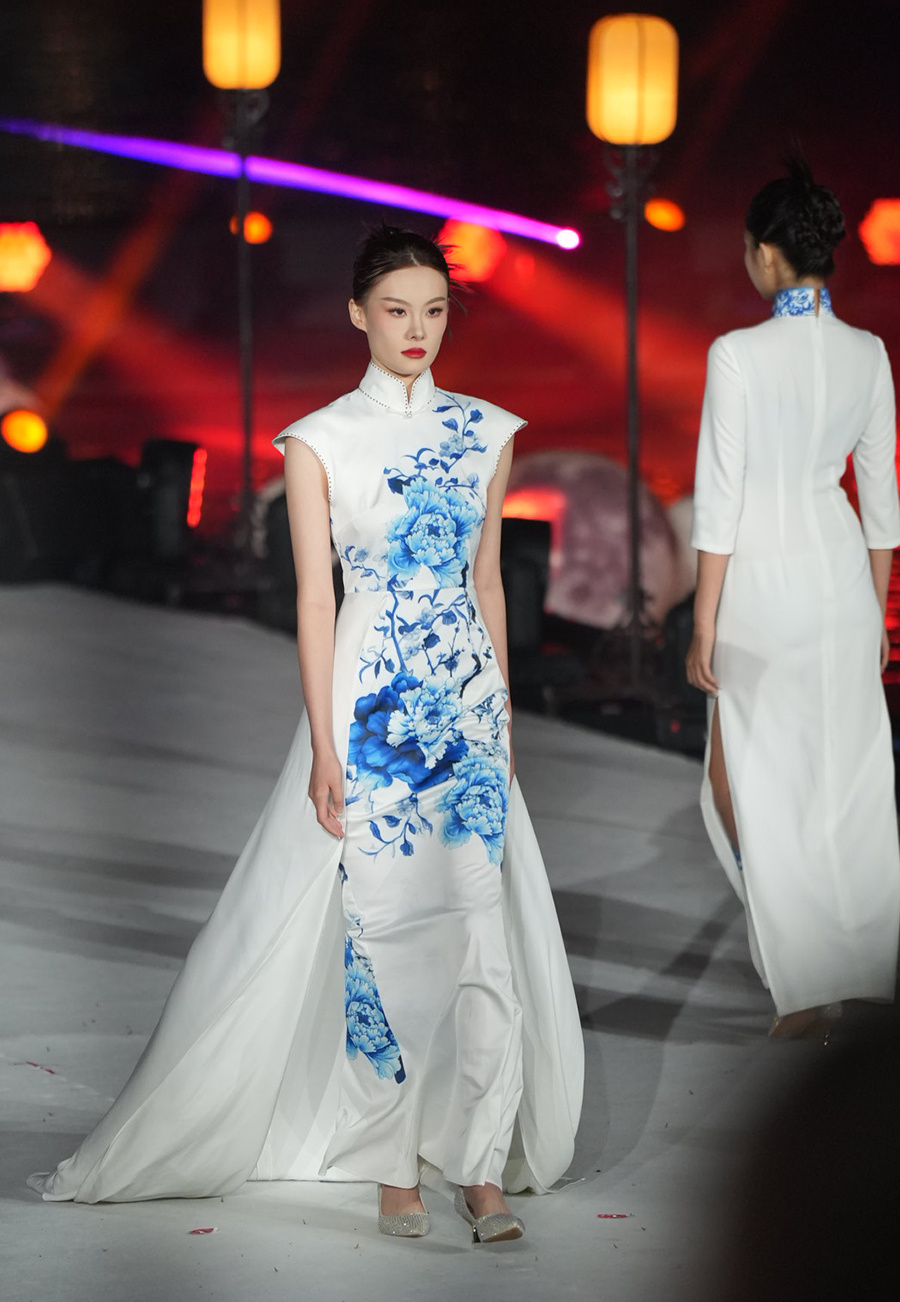
On the industrial front, a three-province (Liaoning, Jilin, Heilongjiang) intangible cultural heritage (ICH) academic exchange brought together Palace Museum experts to discuss heritage revitalization. A tussah silk industry roundtable capitalized on the Liaoning-Shenyang region’s advantages in sericulture, connecting the entire chain from cocoon to yarn to cloth to garment. Leveraging the Wu’ai Garment City (五爱服装城), the season launched the “Qipao Grand Garden” brand incubation plan, aiming to create the largest national-style apparel brand cluster in northern China. On July 21, the “Qipao Culture Season · Wu’ai Garment City Qipao Grand Garden Shopping Month” officially launched, mobilizing 6,000 merchants across the garment city. Over 100 quality qipao and Neo-Chinese (Xinzhongshi) specialty merchants were selected to participate, offering five major benefit categories through August 31: universal giveaways (free ice cream for heat relief), cultural tourism cross-promotion (2026 graduates and ticket holders of Shenyang attractions such as the Shenyang Palace Museum could redeem qipao-themed canvas bags and round fans for free), exclusive consumer discounts, cultural tourism publicity (the Shengjing 1636 Qipao Museum curated a qipao history exhibition area), and immersive national-style experiences (special exhibition zones at the Wu’ai Garment City Qipao Grand Garden).
Exhibitions, Tourism, and Citywide Engagement
The “Ten Years, Ten Memories” (十年拾光) thematic exhibition systematically reviewed the decade-long journey of the Shenyang Qipao Culture Season. A Neo-Chinese (Xinzhongshi) lifestyle aesthetics joint exhibition showcased the latest trends in national-style living. Qipao-themed double-decker buses and national-style subway trains crisscrossed the city, linking cultural tourism landmarks such as the Shenyang Palace Museum (沈阳故宫), historic streets, and cultural creative parks. The “Take Qipao Home” cultural tourism production-matchmaking event and citywide shopping discounts integrated national-style consumption into everyday life. National-style themed markets opened on Zhongjie Street (中街) and Taiyuan Street (太原街), with night markets blending festive bustle seamlessly with traditional elegance. Citywide LED screens cycled through national-style imagery, while photography studios and graduation-season national-style check-in events rolled out across all districts.
In talent development, CPPCC members proposed establishing specialized programs at universities to strengthen recruitment and training. This season, Lu Xun Academy of Fine Arts partnered to build a qipao ICH education base, systematically offering hands-on courses in qipao making, Pankou (盘扣) knotting, and Su embroidery (苏绣). The Yuhong District (于洪区) CPPCC, in collaboration with City Study, hosted qipao culture and ICH handicraft salon events. District CPPCC committees also organized qipao national-style flash mobs, calligraphy and painting exhibitions, and a variety of other activities.
Wang Ping (王平), Director of the Shenyang CPPCC Proposal Committee, noted in the special report that at every critical juncture — when qipao culture moved from “activity” to “industry” and from “performance” to “ecosystem” — the city and district CPPCC played a role. At the top design level, the Municipal CPPCC used special consultations and proposal processing to integrate qipao culture into the broader sports, culture, and tourism development framework. At the industrial cultivation level, members recommended tax incentives, funding support, and other policies to encourage enterprise participation in promotion and inheritance, pushing ICH from “preservation” toward “living application” to strengthen the city’s cultural foundation.
The Decade’s Answer
Shenyang’s decade-long answer to the question of how to keep traditional culture alive spans the Tiexi Sports Stadium’s cross-boundary football collaboration, the Wu’ai Garment City’s 6,000-merchant consumer festival, the Lu Xun Academy of Fine Arts talent cultivation program, and the citywide LED screens broadcasting national-style imagery. The Shenyang Qipao Culture Season has evolved from a local cultural event into a nationally recognized national-style IP, providing a vivid model for urban cultural confidence and industrial transformation.