
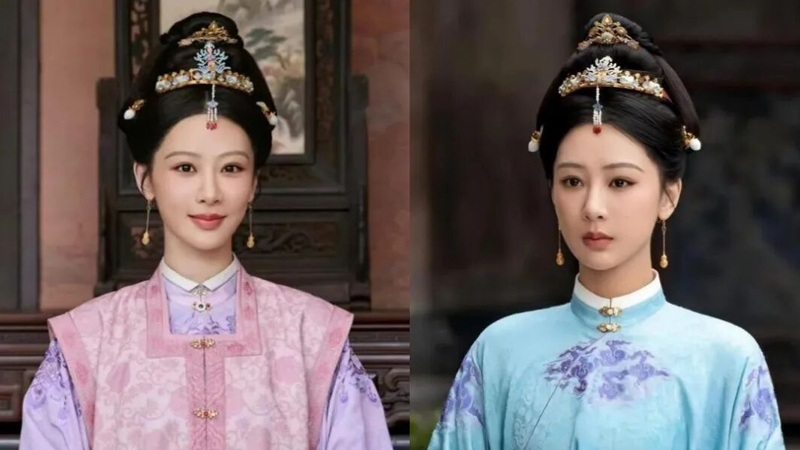
Yang Zi’s character in the historical drama The Mo (家业) wears a striking gold-and-pearl headpiece that looks nothing like the typical floral hairpins or dangling phoenix ornaments seen in other period productions. It sits low on the forehead, curves neatly around the temples, and stands upright at the crown with a small flower pin at the top. Viewers immediately asked: was this a designer’s fantasy, or did it really exist in history?
The answer takes us straight into the dressing table of a married lady from the Ming Dynasty (1368–1644). The entire set, from the base to the final pin, follows a rigid system that combined social rank, practical hair management, and a quiet aesthetic rebellion against the towering styles of the Tang Dynasty. What Yang Zi wears is not an invention. It is a textbook example of a “head-face”, a full ensemble of ornaments mounted on a special hair foundation called the Di Ji (䯼髻)—a woven cap that changed the way Ming women presented themselves in public. Let’s take apart this 600-year-old hairstyle, piece by piece.
What is Di Ji?
The base of Yang Zi’s headdress is a Di Ji, a dome-shaped hairpiece made from human hair, silver wire, or bamboo strips wrapped in silk threads. Instead of building elaborate curls from their own long hair, Ming women simply placed this pre-formed cap over their natural bun and tucked every loose strand underneath. It was quick, neat, and created a smooth, rounded silhouette that served as a canvas for jewelry. Archaeological finds in Jiangsu, Zhejiang, and Jiangxi provinces have unearthed well-preserved Di Ji caps inside wooden burial boxes, often still pinned with their original gold and gemstone pieces.
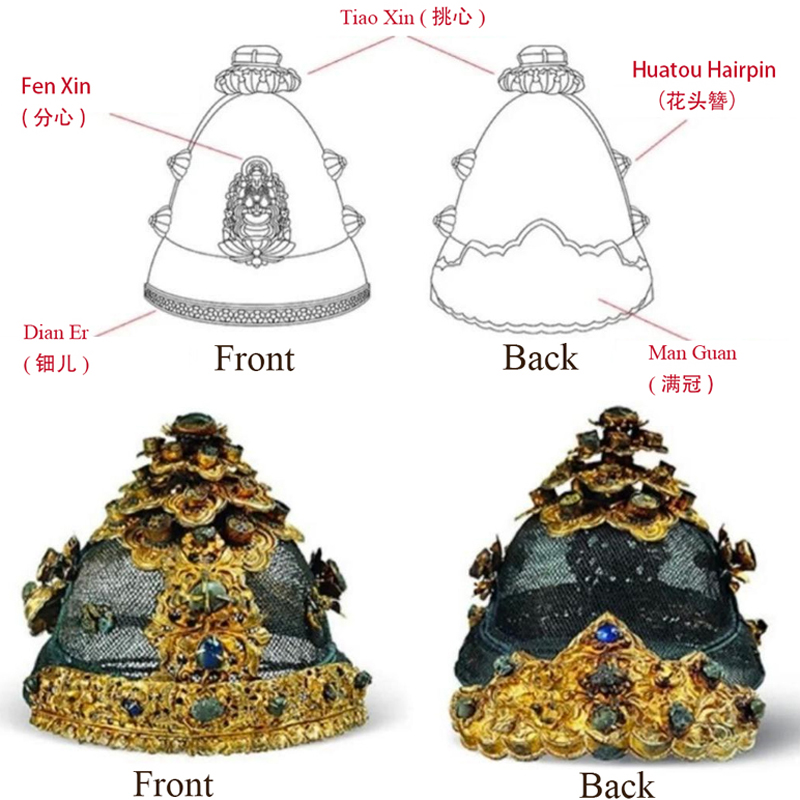
This tells us that it was not an everyday casual item. It was formal wear, akin to a modern woman putting on a matching suit and pearl necklace for a wedding or state banquet. The cap alone looked simple, but once the ornaments were added, it became a billboard of status, wealth, and marital honor. The Di Ji also solved a very real problem: heavy gold ornaments need a sturdy base, or they will pull the hair and slip down. The woven cap acted like an anchor, distributing weight evenly across the scalp. That is why Yang Zi’s character can move, bow, and turn her head without the phoenix wobbling—a detail most modern viewers miss but that historical women would have appreciated deeply.
The Five Essential Pieces
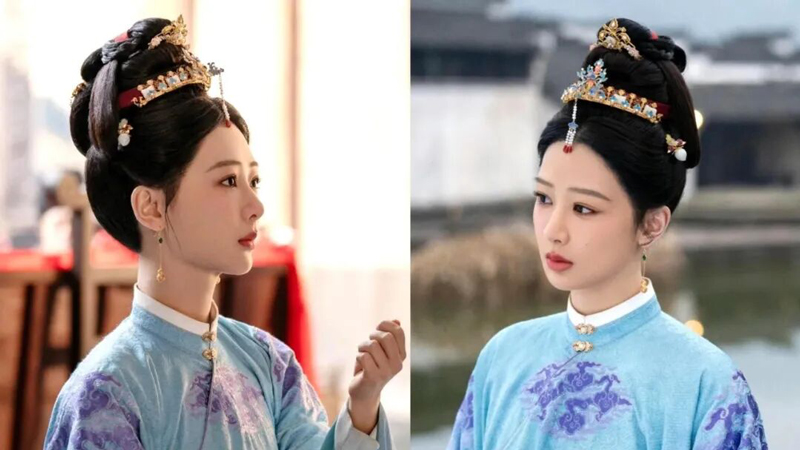
The arc-shaped gold band across Yang Zi’s forehead is called a Dian Er (钿儿). This piece served two purposes: it pressed down the front edge of the Di Ji to stop baby hairs from escaping, and it displayed pearls and colored gems in a neat horizontal line. Excavated examples from Ming tombs look nearly identical to the drama’s prop, right down to the tiny dangling pendants that sway with each step.
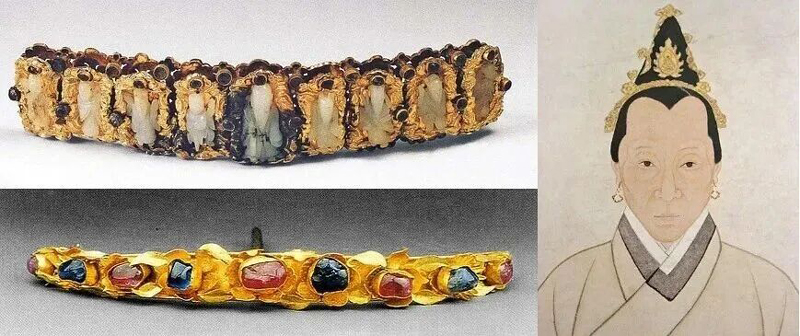
The central ornament, a phoenix hairpin, is known as the Fen Xin (分心). It sits exactly in the middle of the cap and is the most elaborate item in the entire set. In real life, wealthy families used pure gold and inlaid small Buddha figures or floral scrolls, while commoners had to settle for silver with simple grass patterns. The drama’s choice of a phoenix, however, was likely made for camera close-ups—a historical noblewoman might have worn a Guanyin (观音) or a peony motif instead.
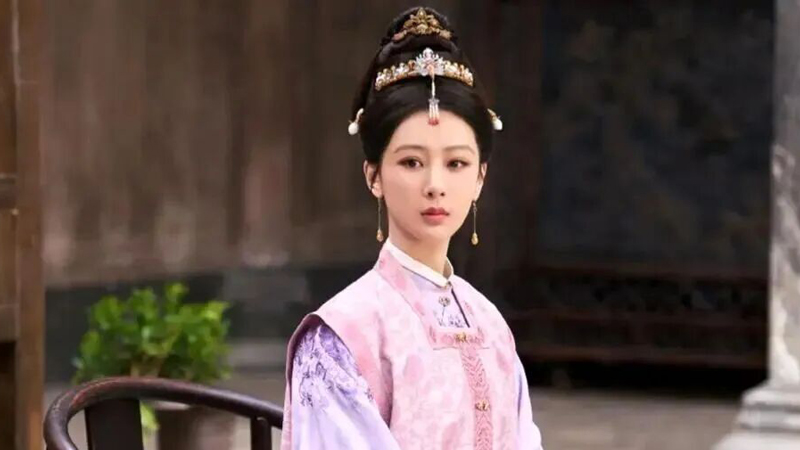
The small flower pin at the very top is the Ding Zan (顶簪), also called the “pick-heart” (挑心) in some regions. It added a vertical line to the round cap, giving the hairstyle depth and height from both the front and side views. Yang Zi’s top pin features a round clustered-flower design with white jade and pearls, echoing the phoenix below.
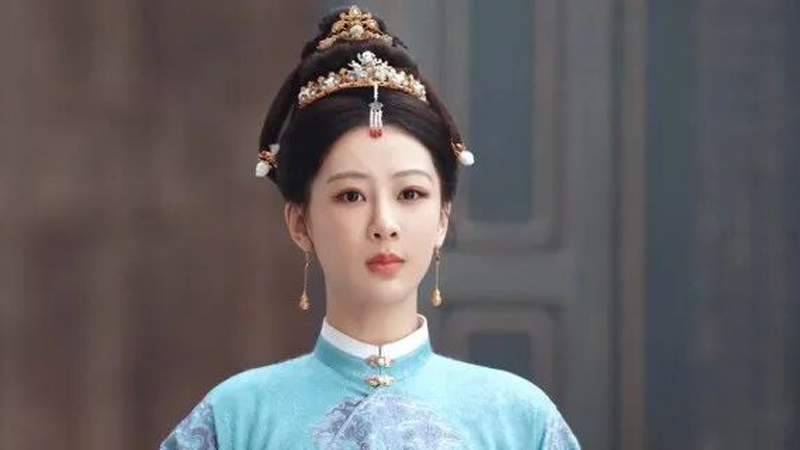
Finally, the side ornaments are the Yan Bin (掩鬓), which mean “covering the temples.” These paired hairpins balanced the front-heavy focus and made the whole headdress look symmetrical. Their main job was to hold the Di Ji firmly against the skull, though some were purely decorative. Together, these five components turned a simple hair cap into a complete ceremonial statement.
Why Wear It?
Two powerful forces drove Ming women to adopt the Di Ji head-face system: etiquette and aesthetics. The Ming court issued strict dress codes that specified exactly which ornaments a duchess, a court official’s wife, or a merchant’s spouse could wear. Gold wire Di Ji paired with a full set of head-face jewelry was the uniform of aristocratic married women. Showing up at a family ancestral ceremony or a New Year’s banquet without it was not just a fashion faux pas; it was a breach of propriety that could invite gossip and even criticism from elders. This was a society where a woman’s visible adornment reflected her husband’s rank and her own virtue.
On the other hand, the Ming aesthetic had turned inward. Unlike the flamboyant, sky-high chignons of the Tang Dynasty—some of which required scaffolding and extensions—Ming taste favored restraint, roundness, and quiet dignity. The Di Ji created a compact, plump oval that looked graceful without screaming for attention. The ornaments were arranged in a clear hierarchy: the grand phoenix in the middle, the glittering band in front, the high flower on top, and the modest side pins keeping everything in place. It was an orderly beauty, a visual echo of the Confucian ideals that governed Ming family life.
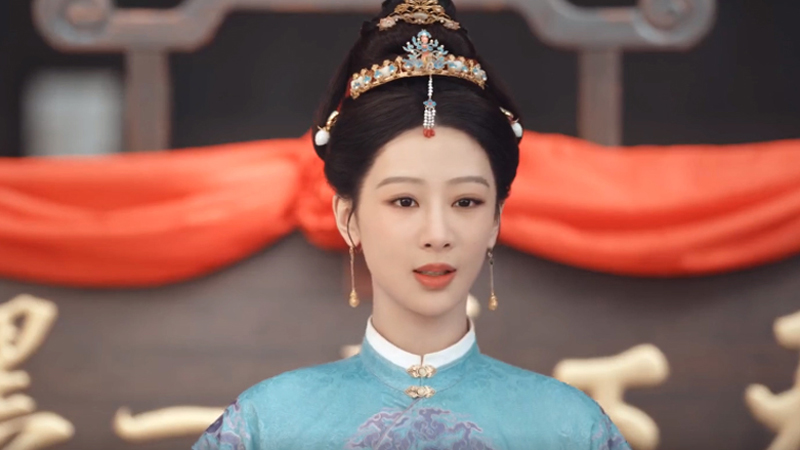
Yang Zi’s headdress in The Mo is historically accurate in structure but slightly enhanced in material brilliance to capture the lighting on set. The production team clearly did their homework, yet they also knew that a screen test needs sparkle. And that raises a final, playful question for the audience: does a 15th-century hair cap, perfected by six centuries of tradition, still look beautiful to our 21st-century eyes? The popularity of this drama suggests the answer is a confident yes.