
Chinese historical dramas have a secret weapon. It is not flying swords or imperial consorts. It is a simple, almost absurd setup: two strangers marry for convenience, then—slowly, awkwardly, irresistibly—fall for each other. The trope is called “Marry First, Fall in Love Later”, or “marriage first, love later.” And over the past two years, five shows have turned this formula into pure gold. From a fake warlord to a butcher’s daughter, each series proves that the best love stories do not start with a bang. They start with a contract. And then they burn.
What makes this trope so addictive?
It is the tension. In real life, arranged marriages are relics. On screen, they are laboratories of emotion. The couple begins as strangers—polite, guarded, sometimes hostile. Every meal, every stolen glance, every accidental touch becomes a battlefield. The audience knows what the characters refuse to admit: that proximity breeds obsession. These shows do not rush. They let the slow burn simmer for thirty episodes, and we love every minute.
But the magic is not just in the waiting. It is in the transformation. A cold general learns to smile. A shy bride learns to scheme. The marriage, once a cage, becomes a refuge. That reversal is what hooks us. We are not watching two people fall in love. We are watching two people discover who they are when someone else is watching.
1. Are You the One (柳舟记)—the master of disguise
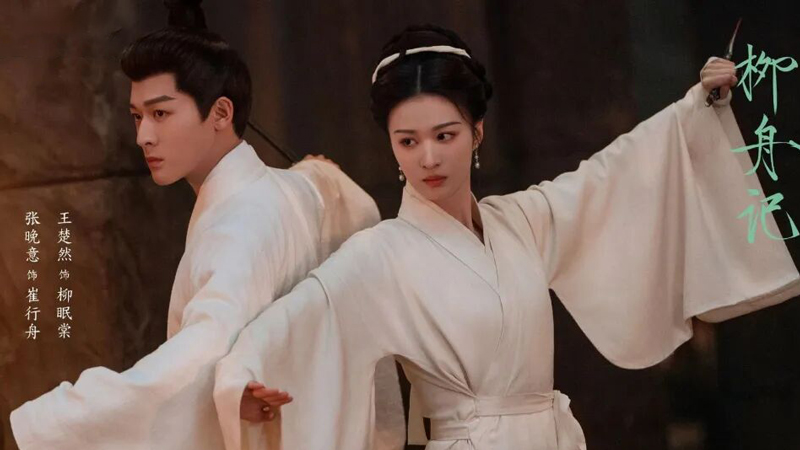
Here, the contract is a lie wrapped in a lie. Zhang Wanyi (张晚意) plays Prince Huaiyang (淮阳), who pretends to be a playboy named Cui Jiu (崔九) to trap a bandit leader. That bandit is Liu Miantang (柳眠棠), played by Wang Churan (王楚然), who has lost her memory. She believes he is her husband. He believes she is a pawn. But the more he plays the fool, the more he becomes one—for her.
It earned a 7.7 on Douban, and for good reason. Zhang’s performance is a masterclass in restraint. In early episodes, his “playboy” act is so stiff it is almost painful. But that awkwardness is deliberate. It shows a man who has never had to be vulnerable. Wang, meanwhile, brings a fierce clarity to her role. Her fight scenes are crisp, but her emotional moments—when she realizes the truth—hit like a blade. The show reminds us that deception and devotion are often the same face.
2. The Prisoner of Beauty (折腰)—the politics of passion

This one waited a year to air, but it arrived with a vengeance. Set in a chaotic era, it pairs Liu Yuning (刘宇宁) as Wei Shao (魏劭), a warlord, and Song Zuer (宋祖儿) as Qiao Man (乔蛮), the daughter of his family’s enemy. Their marriage is a ceasefire. She is a hostage in silk. He is a conqueror who does not trust her smile.
What makes it work is the slow unraveling of his pride. Qiao Man is not a damsel. She is a strategist. She navigates court politics, soothes old wounds, and quietly proves her worth. Wei Shao starts as a brute, but Liu’s portrayal gives him layers—a man who fights wars but cannot fight his own heart. The show gained a billion views post-finale, because it turns revenge into redemption. Their love is not a surrender. It is a treaty.
3. Pursuit of Jade (逐玉)—from butcher’s knife to duke’s heart
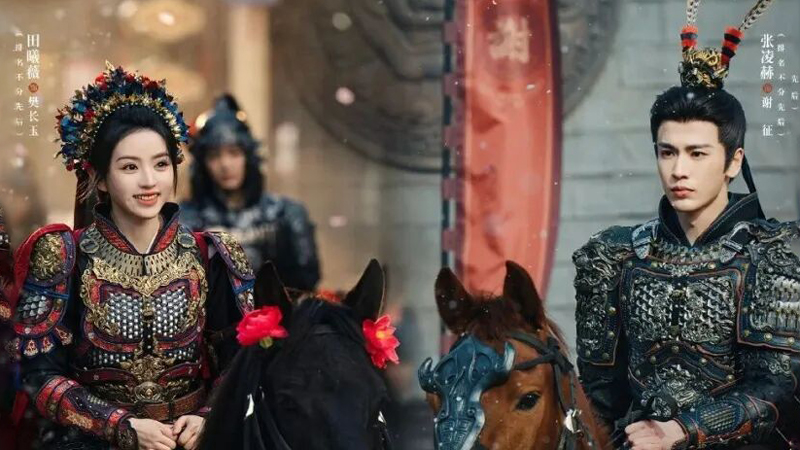
What if the bride is a butcher’s daughter and the groom is a marquis in hiding? Zhang Linghe (张凌赫) and Tian Xiwei (田曦薇) star in this 2026 hit, where Fan Changyu (樊长玉) marries Xie Zheng (谢征) to protect her family’s business. She does not know he is a noble. He does not expect her to be his equal.
The early episodes are drenched in street-level life—meat stalls, haggling, smoky kitchens. Then the contract shifts. They become partners against a corrupt court. The famous “candlelit fake wedding night” scene is not about lust; it is about hesitation. They stand inches apart, both afraid to cross a line. That restraint is the show’s soul. It proves that intimacy is not about touching. It is about the space between two people that slowly disappears.
4. The First Jasmine (莫离)—the crippled prince and the orphan spy
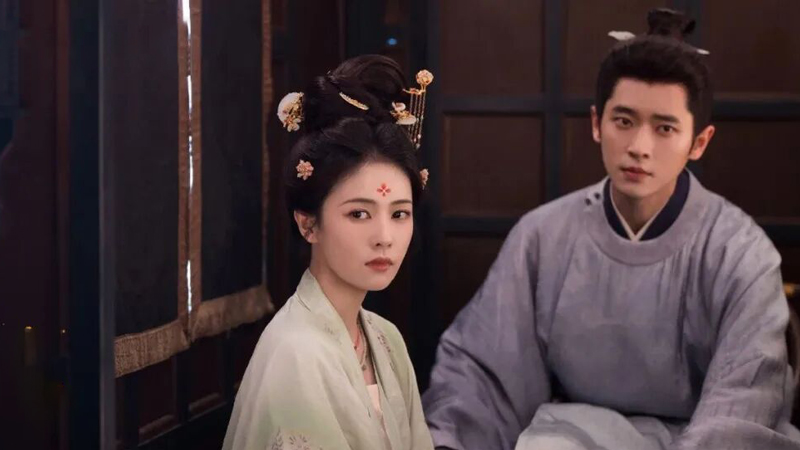
This one leans into the dark. Bai Lu (白鹿) plays Ye Li (叶璃), the sole survivor of a massacre, who marries a wheelchair-bound prince, Mo Xiuyao (墨修尧), played by Cheng Lei (丞磊). He pretends to care nothing for politics. She pretends to be meek. Both are lying through their teeth.
The show is a chess match. Each episode reveals a new gambit. She feigns weakness; he feigns indifference. But their schemes align against a common enemy. The dual-perspective narration lets us see both their inner calculations, and the praise for its plotting is deserved. Yet the heart of it is not the revenge. It is the moment they stop playing against each other and start playing for each other. That is when the marriage becomes a partnership.
5. Key to the Phoenix Heart (雀骨)—the quietest fire
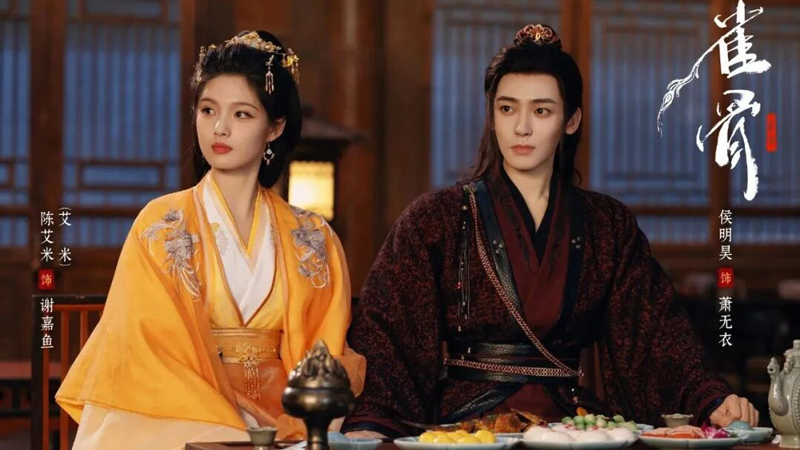
The newest of the five, it stars Hou Minghao (侯明昊) and Amy (艾米)as a madcap prince and a minister’s daughter in a divided empire. Their contract is for investigation, not love. He is wild; she is composed. But they do not clash. They listen.
This show is the outlier because it has no abduction, no forced kisses, no “dark romance” clichés. Instead, it builds romance through eye contact and shared purpose. The “blindfolded red-silk fight” sequence went viral—not for its choreography, but for the trust it showed. He cannot see; she guides him. That metaphor runs through the entire series. Their love is not a storm. It is a slow sunrise. Viewers called it the “pure love ceiling” of recent years, because it proves that consent and equality can be just as thrilling as power struggles.
Five shows, five couples, one truth. The “marriage first, love later” trope works because it mirrors our own fears. We marry strangers every day—not in law, but in life. We sign contracts with colleagues, neighbors, even friends. Love comes later, if we are lucky. These dramas give us that luck in costume and swordplay. They remind us that the best relationships are not found. They are built. Brick by brick, glance by glance. And sometimes, they start with a lie—but end with the only truth that matters.