

When the final credits roll on Blossoms of Power (百花杀), the audience is left pondering not just the fate of the Empress Dowager, but the intricate web of choices that defines the lives of those around her. While the protagonist ascends to the ultimate seat of power, it is the supporting women who deliver the most resonant, and often heartbreaking, lessons.
Their stories are not mere subplots; they are cautionary tales and triumphs of the human spirit, exploring what it truly means to find happiness, or lose oneself entirely, in a world where every move is a calculation for survival. The series leaves us with a burning question: in the face of ambition and adversity, what is the real price of a happy ending?
1. Shen Yingruo (沈璎婼): The Clarity of Conviction
Shen Yingruo was dealt a complex hand from the moment of her birth. As the second daughter of the Prince of the Northwest, her life was a paradox. She was a noble, a childhood companion to princesses, yet she was also a living reminder of her mother’s manipulation, forbidden from ever setting foot in her father’s domain. Her mother’s disappointment that she was not a son could have easily poisoned her spirit, yet she emerged with a remarkably untainted worldview. It is this foundational resilience that becomes her greatest asset.
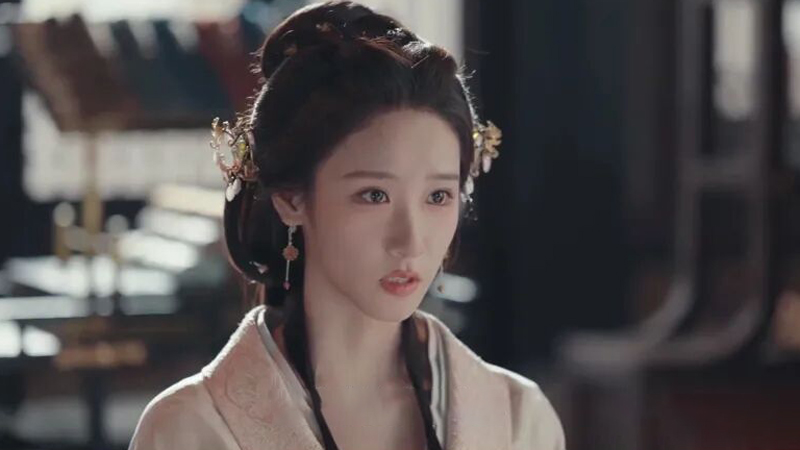
Her defining moment of clarity arrives when she is offered a marriage that would make her a princess. Her sister, Shen Xihe (沈汐和), is the intended first wife, and the proposal is for her to be the second. For many, this would be an acceptable, even enviable, position. But for her, it is an affront to her core values. She is clear-sighted enough to see that her happiness cannot be built on the misfortune of another. She articulates a profound truth: marriage is a union of two hearts, and if that is absent, the only correct path is to remain unwed, regardless of the title that awaits her.
It is this self-awareness that ultimately secures her future. Her refusal of a lavish life is not an act of defiance, but of deep self-respect. Her sister, seeing her integrity, offers her a blessing to live a life of her own making. The series suggests that her future is bright, not because fate has favored her, but because she has the courage to define happiness on her own terms. She understands that a life of clarity and purpose, even without a traditional partner, is a victory far greater than a marriage born of obligation or ambition.
2. Bu Shulin (步疏林): The Masquerade of a Heart
In the bustling capital, Bu Shulin plays a dangerous game. As the only child of the Marquis of Shunan (蜀南), her family’s survival depends on her. To protect them, she adopts a male identity, becoming the heir to the marquisate and a political hostage in the city. Her performance as a dissolute and carefree nobleman is a masterful shield, designed to disarm the Emperor’s suspicions. This life of pretense is a lonely one, forcing her to bear the weight of her family’s fate on her shoulders in isolation.
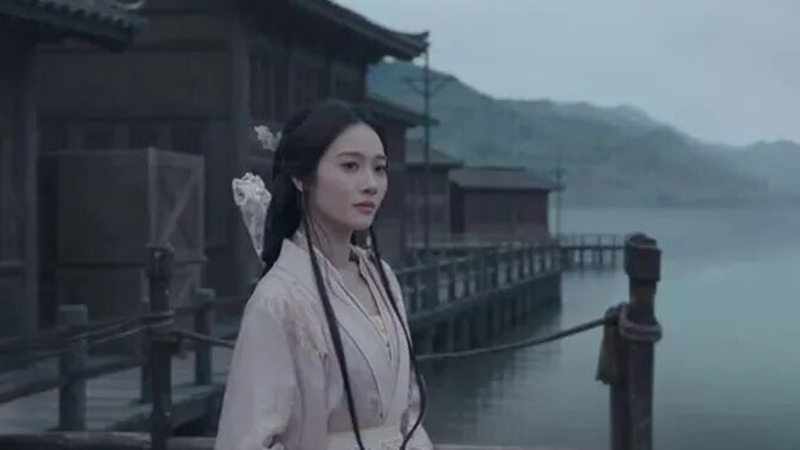
Her world begins to shift when she forms an unlikely friendship with Shen Xihe. In her, she finds a confidante and an ally. However, it is her desperate scheme to avoid an unwelcome marriage that leads her to her true destiny. She deliberately entangles herself with Cui Jinbai (崔晋百), a calculated move that backfires spectacularly when he sees through her disguise. The moment of revelation is transformative; instead of betrayal, she finds acceptance and ultimately, love. His choice to see the woman behind the mask is what liberates her.
Her path to happiness is not without peril. When she is attacked on her journey home, pregnant and vulnerable, it is his arrival that signifies a definitive shift. He offers her a life beyond the political games, a future where she is no longer a pawn or a performer. This is where her story finds its reward. The subversion of her own initial plan—to manipulate—leads her to a partner who values her for who she truly is. Her story proves that happiness can be found in the most unexpected of places, and that true connection can dismantle even the most elaborate of facades.
Gu Qingshu (顾青姝): The Consuming Fire of Ambition
Perhaps the most tragic figure in Blossoms of Power is Shen Qingshu. Her story is a stark reminder that a life consumed by comparison is a life already forfeit. Saved from a family tragedy and hidden away for three years by Xiao Changqing (萧长卿), she should have been grateful for her survival and the brotherly protection he offered. Yet, her heart was not content with safety; it was poisoned by a relentless need to compete with her own sister. The kindness shown to her was not a gift, but a wound to her pride.
Her logic was a twisted spiral of jealousy. If her sister could marry into the royal family, then she, too, deserved that status. Any other future was an insult. When Xiao Changqing attempted to arrange a stable, peaceful marriage for her, her response was to threaten her own life. This was not the act of a passionate soul, but of one blinded by her own toxic obsession. He wisely observed that she had already missed her best path, a prescient warning she chose to ignore, seeing it instead as a challenge to overcome.
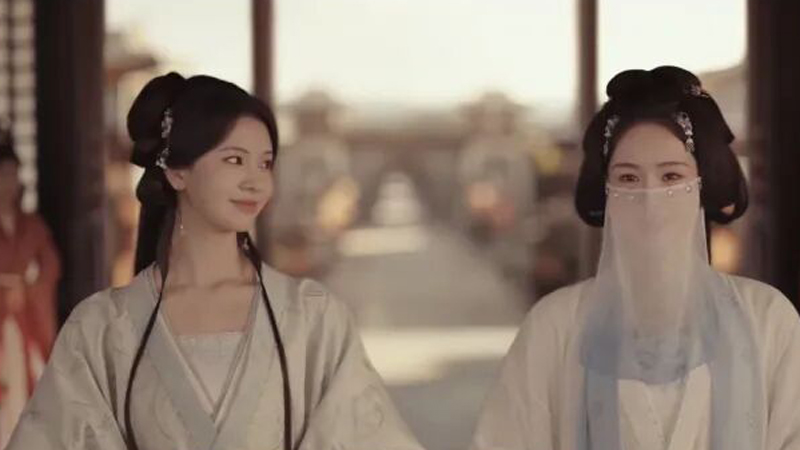
Her “victories” were all illusions. She manipulated her way into a new family and a marriage, only to weaponize her own pregnancy in a final, desperate act of destruction. When she turned her schemes against Shen Xihe, it was her undoing. Her story concludes with her own actions being turned back upon her. She saw every relationship as a rung on a ladder, every act of goodwill as a resource to be exploited. Her fate is the ultimate indictment of a life built on empty ambition and devoid of genuine human connection. In her relentless pursuit to surpass others, she lost everything she had, ending up with a life as hollow as her own schemes.
The three women of Blossoms of Power demonstrate that happiness is never a guaranteed outcome of status or privilege. Shen Yingruo and Bu Shulin find fulfillment through clarity and authentic connection, proving that agency and self-awareness are the strongest shields. Conversely, Gu Qingshu embodies the perils of shallow ambition, her story a powerful caution against a life lived in the shadow of envy. Their intertwined fates remind us that the most dangerous battles are not fought with swords against enemies, but with our own choices against our inner selves.