
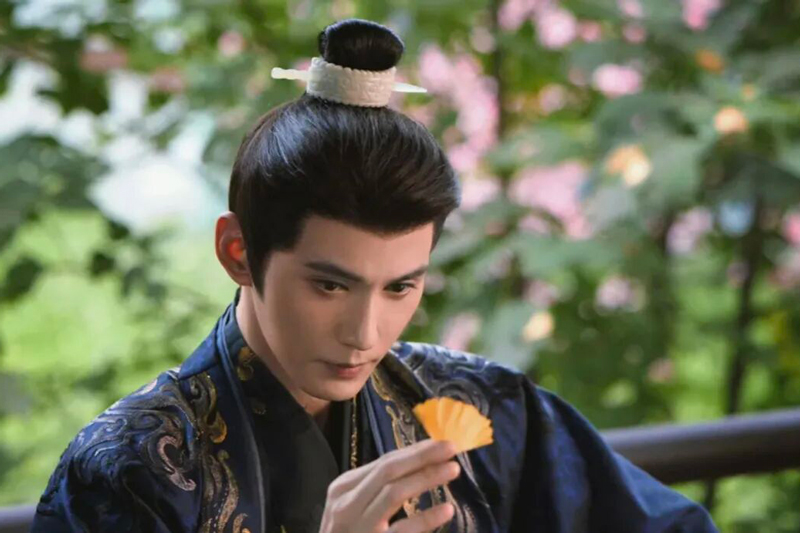
Xu Zhengxi (徐正溪) wears a jade crown in the historical fantasy drama Blossoms of Power (百花杀). Fans call it his most stunning look ever. But did ancient Chinese men really walk around with bare jade hoops on their heads? Or is this just another case of costume drama magic that bends history for the sake of eye candy? The answer might surprise you—because while the show gets the material right, it gets the social rules completely wrong. And that tension between truth and beauty is exactly what makes period dramas so deliciously complicated.
The Bare Hoop Myth
Let’s cut to the chase. In the drama, the character Xiao Changqing (萧长卿) wears a single jade hairband—a cylindrical ring that holds his topknot—during court meetings, private moments, and even battle strategizing. It looks sleek, minimal, and deeply cool. But historically, this was a huge fashion faux pas. That hoop is what scholars call a Shu Fa Guan (束发冠), a small binding crown meant for casual indoor wear or as an under-layer beneath formal hats. You never, ever showed it off in public unless you were lounging at home or taking a nap. Think of it like walking into a board meeting in your undershirt—comfortable, but deeply inappropriate.
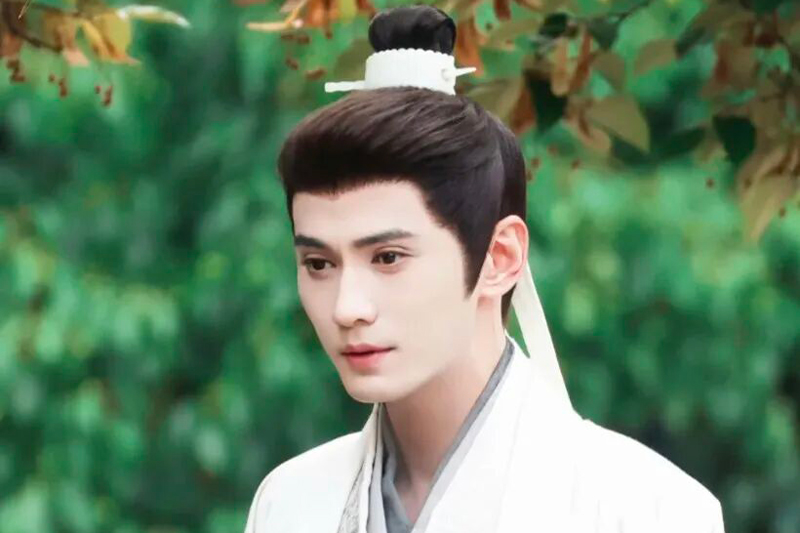
The show’s costume designer took creative liberty, prioritizing visual impact over accuracy. And for a fantasy-romance genre that targets modern aesthetic sensibilities, that’s perfectly acceptable. But it does raise an interesting question: if this crown was so private, why did ancient craftsmen bother making it from expensive jadeite and nephrite in the first place? The answer lies in ritual and symbolism, not everyday wear.
Sacred Origins, Lost Meanings
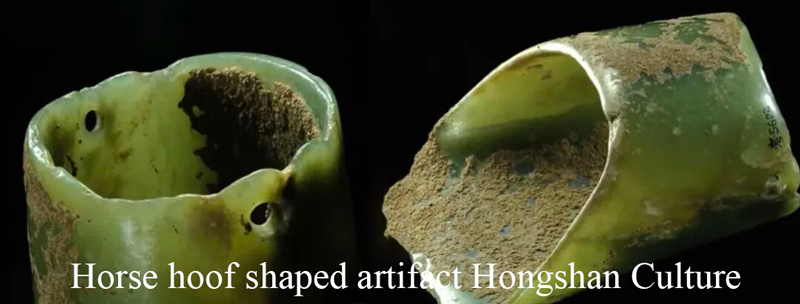
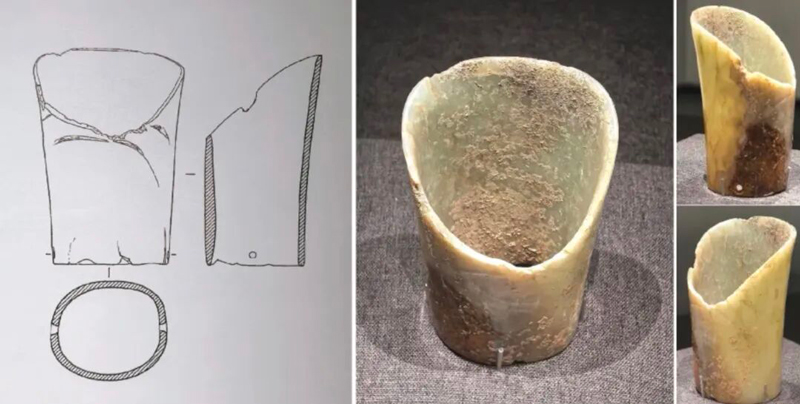
The earliest ring-shaped hair binders date back to the Hongshan Culture (红山文化), over five thousand years ago. Archaeologists have found two types: one with small holes on both sides for inserting a single hairpin, used by shamans during sacrifices; the other without holes, likely worn as bracelets or arm rings. These were ceremonial objects, not daily accessories. They carried spiritual weight, connecting the wearer to heaven and earth. Fast-forward to the Han Dynasty (汉代), and scattered folk artifacts appear, but their authenticity and usage remain hotly debated among experts.
Why did this change? The Book of Rites (礼记) states: “The crown is the beginning of propriety. Therefore the sage kings of old valued the crown.” Combined with the Confucian ideal that “a gentleman never parts with his jade,” the jade crown became a moral compass. Confucius compared noble character to jade—smooth, warm, and flawless. So wearing jade wasn’t about looking rich; it was about reminding yourself to act right. But here’s the catch: that inner virtue didn’t need to be broadcasted. In fact, modesty was the whole point. Exposing your expensive jade crown in public would have been seen as boastful, almost vulgar.
Between the Han and the Song (宋) and Ming (明) dynasties, evidence of these hoops nearly vanishes. Most men preferred cloth turbans, which were lighter and easier to manage. Cloth decays, so we find fewer relics. But when the hoop reappears in the Song-Ming era, it has evolved. Now it often features a solid top—no longer a hollow ring—and is decorated with gold, silver, agate, amber, or hardwood, sometimes inlaid with pearls and gems.
Excavations from noble tombs in Nanjing (南京) and other regions show incredible variety: some have raised beams, others are crescent-shaped, and a few mimic lotus flowers. But they all share one rule: they were worn under a square scarf or a Dongpo turban (东坡巾) for formal occasions. For grand ceremonies, officials had to wear their ranked futou (幞头) hats—no bare crowns allowed.
Drama vs. Reality
So why does Blossoms of Power ignore all this? Because it’s an alternate-history fantasy, not a documentary. The show freely mixes elements from different eras to create a dreamy, cohesive visual language. And that jade hoop perfectly suits Xiao Changqing’s character—quiet, introspective, hiding sharpness behind a gentle facade. The costume department understood the ancient saying: “Jade equals gentleman, hiding sharpness within warmth.” They translated that philosophy into a single, striking accessory. For actor Xu Zhengxi (徐正溪), who has played similar roles in The Legend of Dugu (独孤天下), and The Ingenious On (花琉璃轶闻), this crown feels like a farewell gift to his Wuxia (武侠) career. It’s his last period drama, and he goes out with a glittering headpiece.
But let’s give credit where it’s due. The show’s designers didn’t just invent nonsense. They took a real artifact—the Shu Fa Guan—and elevated it to a signature look. They knew that modern audiences, raised on sleek minimalism, would respond to its clean lines. They also knew that jade carries instant cultural cachet. In doing so, they sparked curiosity. Viewers started googling ancient Chinese hairstyles, digging into museum collections, and debating history on social media. That’s a win for cultural education, even if the history is slightly bent.
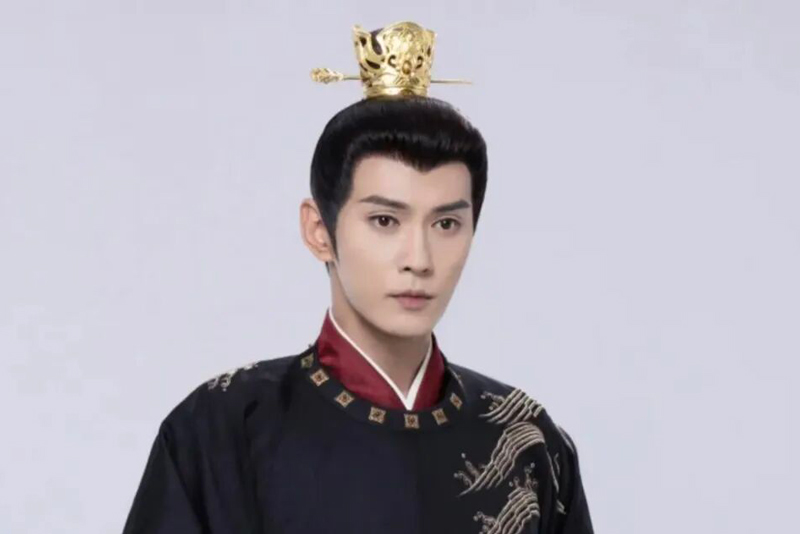
And let’s be honest—would we really want Xiao Changqing to walk around in a bulky official hat during romantic scenes? The hoop lets us see his face, his expressions, his micro-emotions. It becomes a window into his soul, not just a piece of jewelry. So while it fails the historical accuracy test, it passes the emotional storytelling test with flying colors. After all, drama is about feeling, not fact-checking. And if a jade hoop makes us feel something—admiration, curiosity, even a little envy—then it has done its job perfectly.
Next time you watch a period drama, ask yourself: does this costume serve the character or the history? Often, it serves both in unexpected ways. And that’s the real magic of costume design—it doesn’t replicate the past; it reimagines it for the present. So yes, Xu Zhengxi’s jade crown might not be historically accurate. But it is historically inspired, artistically compelling, and undeniably memorable. And isn’t that exactly what we want from a fantasy romance?