
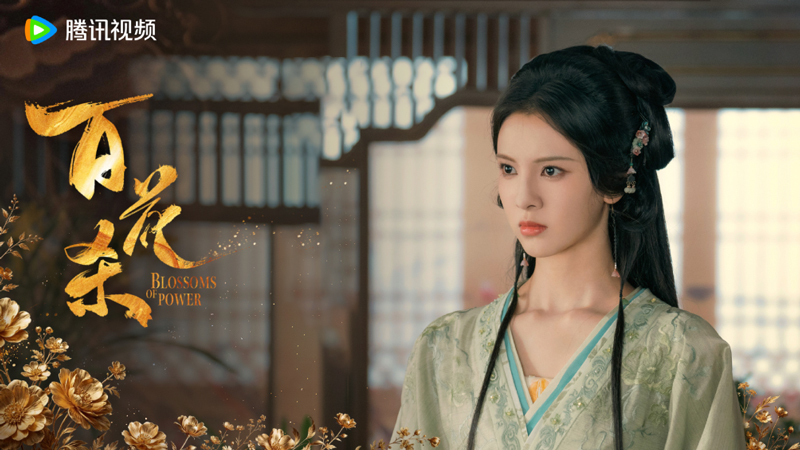
Blossoms of Power (百花杀) ends not with a bang but with a whimper—for one woman who had everything and threw it all away for a crown that was never hers. Did she really need to die for that throne? Or more cruelly, did she even need to live? This is the story of a survivor who mistook luck for leverage, and in doing so, traded a quiet life for a collar of servitude.
The drama’s final frames leave her kneeling, a palace slave serving the very woman she once tried to destroy. It’s a fall so complete that it forces us to ask: was it fate, or was it simply her own two hands that pushed her off the cliff? Let’s unpack the wreckage of her choices—because in this world of schemes and swords, survival is never the same as winning.
Lucky to Be Alive
When we first meet her, she is already a ghost—a dead woman walking in hiding. She had been rescued by the Xin Prince (信王) and tucked away in his private estate for three whole years. By all rights, she should have been executed alongside her entire clan. But he saved her. That act alone made her the luckiest person in the entire capital. Yet she never once looked at that gift with gratitude. Instead, she looked past his protection and stared directly at his empty bedchamber—coveting the title of his late wife, her own sister. While the world saw a fugitive, she saw a future princess. That was her first fatal miscalculation: mistaking a lifeline for a ladder.
When the Crown Prince tried to use her existence as a weapon against the Xin Prince, her protector did something unexpected—he brought her straight to the Emperor. And the Emperor, instead of ordering her head, pardoned her and gave her the title of county mistress.
Most would have wept with relief. She sneered. She began poking at the wives of powerful nobles, trying to start fires she could warm her hands on. She refused an honorable marriage offer from the Xin Prince, threatening suicide to escape it. When she finally realized that her rescuer would never love her, she didn’t mourn—she merely switched targets. This is the defining pattern of her life: never look back, never settle, always reach higher. But reaching without roots is just falling in slow motion.
The Chessboard of Ambition
Her next move was a masterpiece of manipulation, if you admire poison. She set her sights on the Ning Prince (宁王), the Emperor’s second son. The problem? The Empress Dowager and the Emperor had already chosen another bride for him: a gentle woman named Hu Yingrao (胡潆绕).
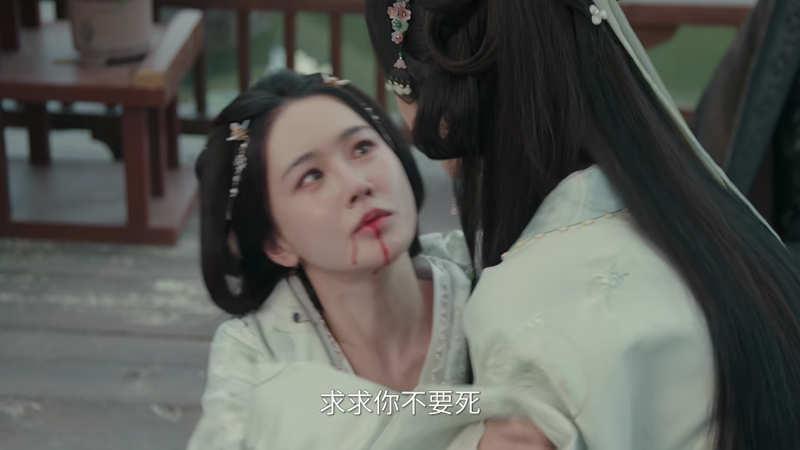
So she did what any ambitious survivor would do—she became Hu Yingrao’s best friend. She listened to her secrets, held her hand, and then systematically destroyed her. She sabotaged the woman’s dance performance by causing facial blemishes, then arranged a scandal that robbed Hu Yingrao of her virtue before her wedding night. Finally, she offered a fake death pill, promising freedom, and watched her friend drink poison thinking it was escape. She stepped into the wedding dress still warm from the corpse.
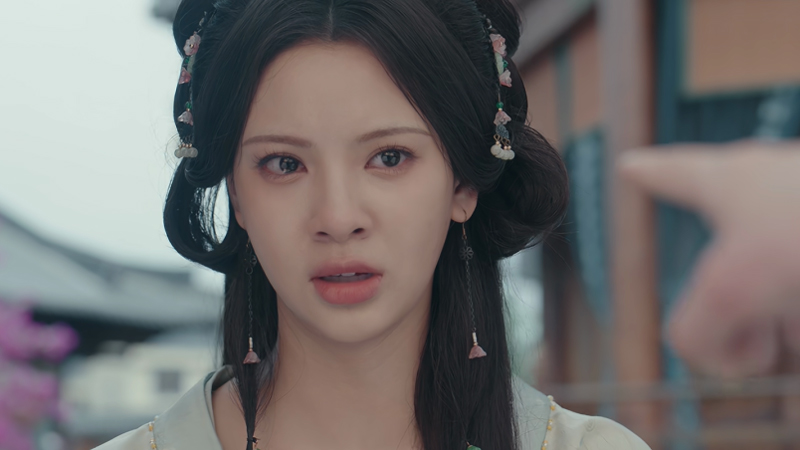
But here is the brutal irony: the Ning Prince never saw her as a partner. He saw a tool. He was ambitious, ruthless, and deeply misogynistic. He listened to her advice with one ear and let it fall out the other. When his schemes against the Crown Prince began to sour, she alone saw the ship taking on water.
So she did what she did best—she abandoned him. She faked a miscarriage, staged a public scene of spousal abuse at the palace gates, and secured a divorce. The crowd cheered for her. She thought she had outplayed every man in the room. But she had forgotten that the Empress Dowager was also a player, and that old women with long memories never lose. Her freedom was merely a leash in disguise, and the Dowager was already pulling.
The Gilded Cage Cracks
Blackmailed by the Dowager, she was forced to become a pawn against Shen Xihe—a woman far sharper and far more dangerous than she ever anticipated. She tried one last trick: swallow both antidote and poison before a planned confession, hoping to fake her own death. But Shen Xihe (沈汐和) saw through the ruse with a single glance and had her dragged into a secret palace tunnel.
The coup came and went. The Empress Dowager was confined to her quarters, lost in dream-inducing incense, waking each day to an empty hall. And it was our anti-heroine who was assigned to tend to her—empty chamber pots, pour tea, and watch the old woman drift in and out of madness. Two women, one prisoner and one slave, locked in a cycle of mutual torment. The Xin Prince had once offered her a simple marriage to the Chu family—a quiet, honorable exit from the game. She scoffed at it. Now she scrubs floors.
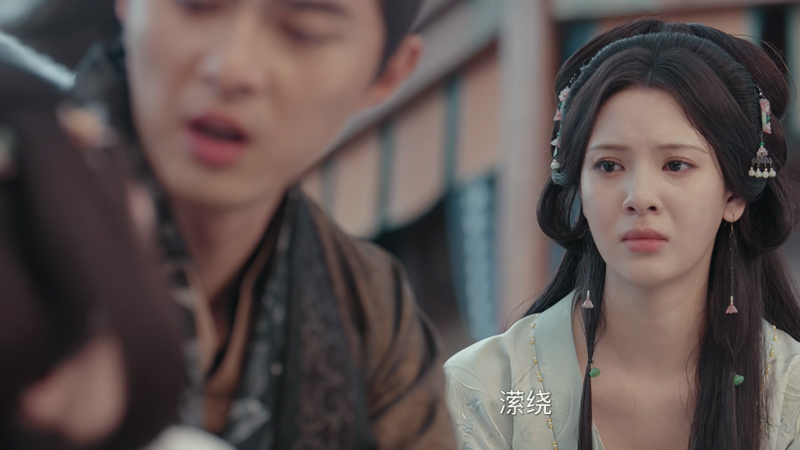
What makes this ending so devastating is not the cruelty of the world—it is the clarity of her own agency. She was never a victim of fate. She was a victim of her own hunger. Every step toward the throne was a step away from the peace that had been handed to her. She could have married into the Chu family, lived a modest life, raised children who would never know the stench of a palace dungeon.
But she wanted more. She wanted the crown, the power, the recognition. And in the end, all she got was a front-row seat to someone else’s tragedy, with a mop in her hand. The drama does not ask us to pity her. It asks us to recognize the mirror: how many of us, given a second chance, would still reach for the one thing that will burn us alive?
So here she kneels, in the cold stone corridors of a forgotten palace, serving the very woman she once tried to defeat. The woman who outlasted her, outthought her, and outlived her ambition. It is a fitting end—not because she was evil, but because she was so painfully ordinary in her greed. She wanted to be extraordinary. And that wanting, more than any crime, became her prison. In a world where survival is a privilege, she turned survival into a weapon—and it cut her own throat. The final shot of Blossoms of Power is not of a villain vanquished. It is of a woman who forgot that being alive is already a victory. And for that, she will never forgive herself.