
She is a ruthless social climber who manipulates her way to becoming the Crown Prince’s wife, only to discover that her greatest scheme is merely a move in someone else’s game. Is Gu Qingshu (顾青姝) the master of her own fate, or has she been a puppet all along?
The latest hit drama Blossoms of Power (百花杀) serves up a thrilling tale of ambition, betrayal, and a revenge plot that spans decades. The story is set against the glittering but treacherous backdrop of a fictional imperial court. It begins with a simple boast and spirals into a complex web of deceit where every character, from the lowliest servant to the Empress Dowager herself, is playing a role in a grand, deadly performance.
The action takes place in the palace’s extravagant halls and secret gardens, but the real battleground is the human heart, driven by desire, fear, and an insatiable thirst for power. What makes this narrative so compelling is not just the main character’s cunning, but the shocking revelation that she is not the architect of her own rise, but a well-placed piece on a board controlled by a most unexpected player.
Cunning Schemer
Gu Qingshu’s path to the palace is paved with the ruin of others. She is not merely ambitious; she is methodical. When she learns that the Empress Dowager favors the virtuous Hu Yingrao (胡滢绕) as a match for Prince Ning (宁), she doesn’t just compete; she eliminates. Her strategy is a three-pronged attack: first, she insinuates herself into Hu Yingrao’s confidence, posing as a childhood friend and confidant. She carefully orchestrates a minor medical incident during a critical banquet, ensuring her rival performs while ill, and then graciously hands over all the credit for a beautiful performance to her. This act of “selfless” friendship disarms Hu Yingrao completely.

The second phase of her plan is more sinister. Gu Qingshu arranges for a handsome scholar to “accidentally” meet Hu Yingrao at a poetry gathering, engineering a passionate affair that leads to the loss of the young woman’s virtue. This isn’t a crime of passion; it’s a calculated move to make her rival ineligible for marriage to the prince. Her thinking is precise: a woman in Hu Yingrao’s position cannot marry the prince if she is not a virgin.
In her third and final act, Gu Qingshu dons the mask of a savior. She whispers to the desperate Hu Yingrao, offering a “solution” to her predicament: a staged death. She convinces the girl to fake her own demise and flee with her lover, offering to marry Prince Ning in her place to protect the family’s honor. It is a perfect, poisonous plan, and Hu Yingrao, believing she has no other option, swallows the “fake death” pill, a choice that proves fatal.
The Pawn’s Place
Having successfully orchestrated her rival’s death and taken her place as the future Princess Ning, Gu Qingshu believes she has won. She has even outmaneuvered the Empress Dowager, curing her insomnia and securing a personal endorsement for the marriage. She sees herself as a mastermind, a woman who has defied her lowly origins as a concubine’s daughter to claim a crown. But her victory is hollow, and her self-perception is dangerously flawed. She is a classic example of a person who can see the moves on the board directly in front of her but is blind to the larger game being played.
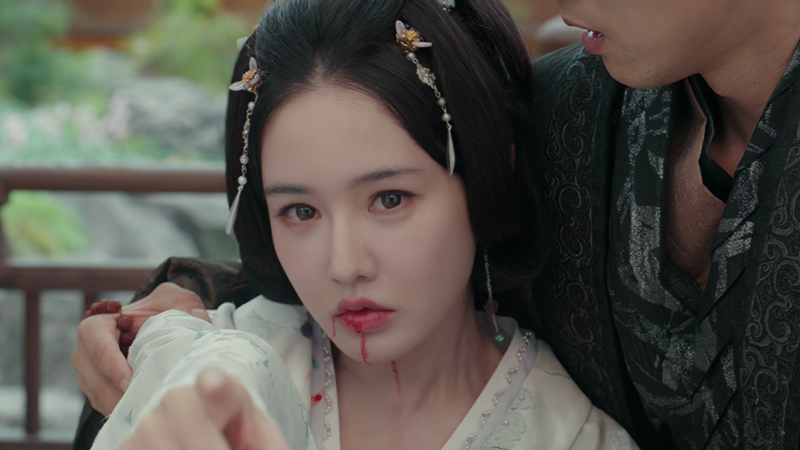
Her greatest miscalculation is in assuming that her ambition is the primary engine of the plot. She does not realize that she was chosen precisely because of her ruthlessness. Prince Ning, the man she has manipulated her way to, is not the passive prize he appears to be. From the very beginning, her marriage to him was part of a larger plan. It is a devastating twist: Gu Qingshu, the woman who believes she is the most cunning player in the palace, is merely a tool. She has been placed next to Prince Ning not to be his partner, but to be a destabilizing force, a viper in his chamber. Her scheming nature, which she thought was her greatest asset, is the very reason she was selected for her current role.
The Grand Matriarch’s Game
As Gu Qingshu revels in her newly acquired status, the true mastermind steps out of the shadows. It is the very woman she thought she had fooled: the Empress Dowager. This is no frail, elderly figure who is “beyond caring” about palace affairs. Her frailty is an act, a perfect disguise that allows her to observe and manipulate from a distance. While the younger generation, including the Crown Princess Shen Xihe (沈汐和) and Consort Rong (荣), fight over the right to manage the harem, the Empress Dowager is pulling the strings. She has seen and orchestrated far more than anyone suspects.
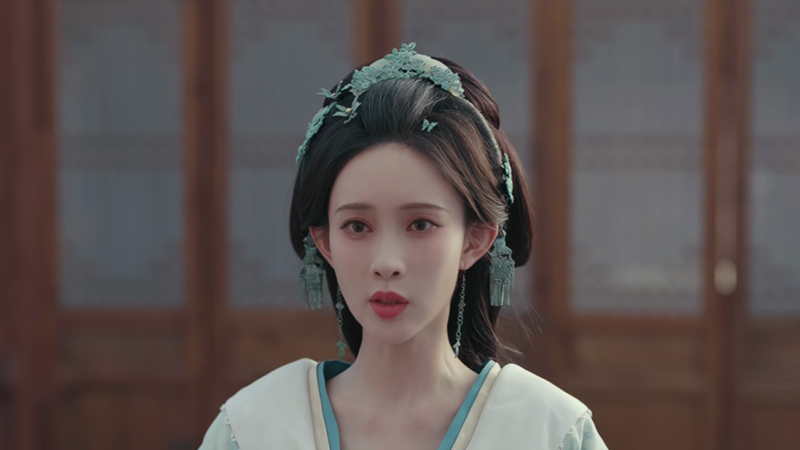
Her motivation is ancient and deeply personal: revenge. She harbors a burning hatred for the Xiao family, who she believes destroyed her life. Her plan is not just to destabilize the court but to dismantle the entire dynasty. She places Gu Qingshu, her “poisonous” pawn, beside Prince Ning to foment discord among the brothers. She even sent Shen Xihe to host palace banquets, knowing it would ignite Consort Rong’s jealousy and lead to conflict. Every event, from the poisoning of her own grandson the Crown Prince, was a calculated step. She is no longer the benevolent grandmother; she is a vengeful empress, single-mindedly focused on a single, destructive goal. Gu Qingshu is not the “insect” catching the “cicada”; she is just another insect in the Empress Dowager’s web.
The drama is a powerful exploration of the idea that the most dangerous players are not always the loudest or most ambitious, but the quiet ones who have mastered the art of patience. Gu Qingshu’s story serves as a cautionary tale: ambition unchecked by wisdom leads to a gilded cage, and believing you are the puppeteer is the surest way to become the puppet. The true tragedy of Blossoms of Power isn’t the death of the innocent, but the hollow victory of a woman who never knew she was defeated from the start.