
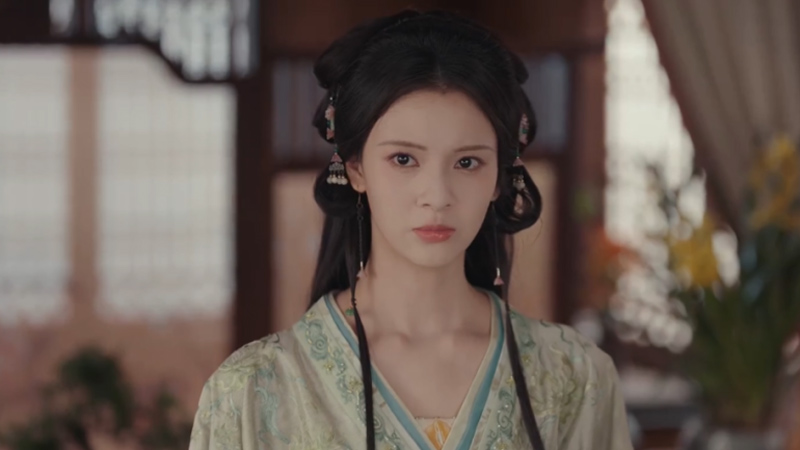
In the tangled web of court intrigue and personal vendettas, Blossoms of Power (百花杀) presents a moment that leaves every viewer scratching their head. Gu Qingshu (顾青姝), a jealous and petty schemer, has twice tried to murder Shen Xihe (沈汐和)—once by provoking a furious princess into throwing a heavy cup, and again by hiring assassins in a forest ambush. Yet when Gu Qingshu’s own carriage careens toward a cliff edge, it is Shen Xihe who orders her rescue. No, this is not a sudden burst of sisterly affection. The two women share no blood, no childhood bond, and certainly no love. So why does the victim extend a hand to her tormentor? The answer lies not in kindness, but in cold calculation, hidden identity, and a debt that transcends life itself.
A Hollow Threat
Gu Qingshu is, by every measure, a minor nuisance. She survives only because Prince Xin (信) secretly pulled her from the ruins of her family’s massacre in the nineteenth year of Youning. That massacre—the Gu clan’s defeat at the hands of the Fan family—left sixty-odd corpses and one orphan. But Prince Xin did not save her out of charity; he saved her because she was the younger sister of Gu Qingzhi (顾青栀), the woman he once wronged. His protection comes with a leash. The moment Gu Qingshu’s reckless schemes threaten his interests, he will cut her loose without a second thought.
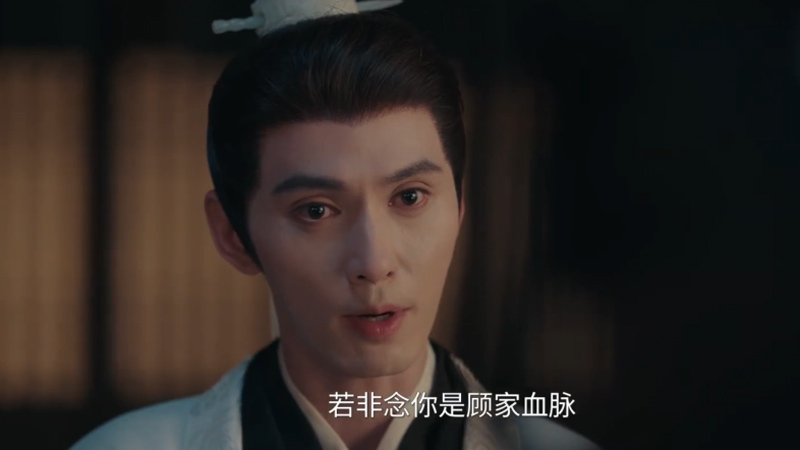
And she knows it. Her attacks on Shen Xihe are clumsy, transparent—the work of a panicked amateur. She bribes killers who fail, sets traps that backfire, and relies on luck more than skill. Shen Xihe, having grown up alongside Gu Qingzhi, recognises every petty trick in the book. To her, Gu Qingshu is not a wolf in sheep’s clothing; she is a yapping dog whose bark exceeds its bite. There is no strategic value in eliminating such a creature, only the mess of cleaning up a corpse that might attract unwanted questions.
Moreover, Prince Xin’s paranoia ensures that Gu Qingshu will be reined in after this fiasco. He cannot afford a loose cannon threatening his own precarious position against the Crown Prince. He will warn her, confine her, or worse. Shen Xihe understands that the real danger is not the girl herself, but the prince’s reaction. Let him discipline his own ward—that saves energy and keeps hands clean.
The Politics of Mercy
Timing is everything in the imperial court. Just days before the cliff incident, the Emperor had bestowed upon Gu Qingshu the title of Liyang (笠阳) County Mistress and returned a portion of the Gu family’s former estates. The girl was riding a wave of royal favour, however undeserved. To strike her down immediately after such an honour would invite a storm of speculation. Courtiers would whisper that Shen Xihe envied the new favourite, that she could not stomach another woman’s rise. The Emperor himself might frown upon such jealousy—a dangerous stain on any noble’s reputation.
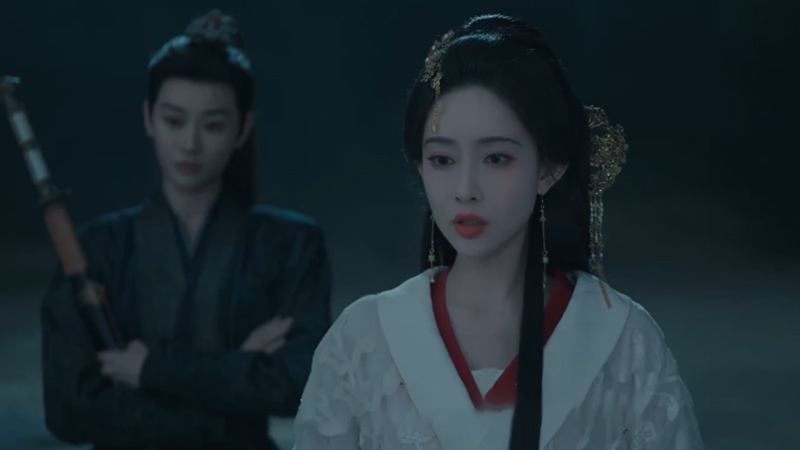
By sparing Gu Qingshu, Shen Xihe flips the narrative. She appears magnanimous, forgiving, above petty squabbles. The court gossips will turn their sharp tongues toward the real culprit—the ungrateful wretch who bit the hand that saved her. Gu Qingshu’s attempted murder becomes public knowledge, but Shen Xihe’s clemency transforms her from a victim into a paragon of virtue. In a world where reputation is currency, this is a far more valuable asset than a dead rival.
And there is a deeper layer: Shen Xihe is not merely playing politics for herself. She carries within her the soul of Gu Qingzhi, the eldest daughter of the fallen Gu house. That soul, merged with Shen Xihe’s own, remembers the massacre, remembers the grief, and remembers the duty that lingers beyond the grave. Killing Gu Qingshu would not only tarnish Shen Xihe’s public image—it would erase the last visible thread of the Gu family’s existence in this world.
The Last Heir
Gu Qingzhi did not die peacefully. When the Gu clan was annihilated, she chose poison over survival, unwilling to live alone in a world that had taken everyone she loved. But fate twisted that choice. As twin moons hung in the sky and a celestial gate opened, her spirit crossed into Shen Xihe’s body, fusing two souls into one. From that moment on, Shen Xihe was no longer just herself—she was also a ghost carrying the weight of a hundred dead relatives. Yet she could never reveal this truth. No one would believe it; worse, they would fear it.
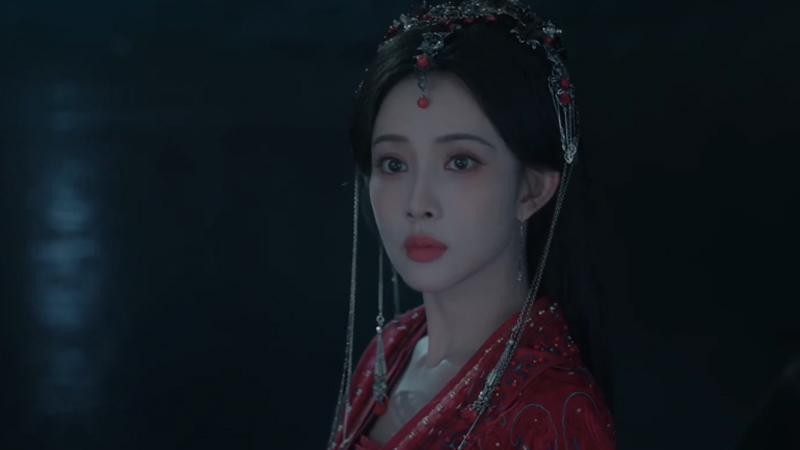
Gu Qingshu, on the other hand, walks in daylight without disguise. She is the only surviving member of the Gu family whose identity is acknowledged by the realm. She bears the name, the title, and the public recognition that Gu Qingzhi can never reclaim. To Shen Xihe—or rather, to the Gu Qingzhi within her—this girl is not an enemy. She is a fragile relic, the sole vessel of her family’s continuity. Every breath Gu Qingshu takes is a testament that the Gu bloodline has not been entirely snuffed out.
That is why Shen Xihe orders the rescue. Not because she forgives the assassination attempts, not because she fears the prince, and certainly not out of sisterly warmth. She acts because the soul inside her screams for preservation—not of a rival, but of a legacy. Gu Qingshu’s life is a living gravestone, and as long as she stands, the Gu family still has a face in the world of the living. So Shen Xihe pulls her back from the cliff, shields her from the consequences, and lets her live. Mercy, in this case, is not a gift to the enemy. It is a debt paid to the dead.