
A Silk Road Wardrobe Arrives in Xi’an
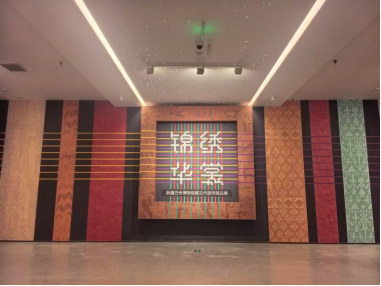
On July 6, 2026, the “Splendid Garments — Xinjiang Bayingholin Museum Ancient Costume Exhibition” opened at the Fifth Gallery of the Shaanxi History Museum in Xi’an. Clothing and accessories excavated from Xinjiang’s Bayingholin Mongol Autonomous Prefecture — spanning from pre-Qin through Wei-Jin periods — crossed thousands of kilometers to reach the ancient capital of Chang’an, vividly reconstructing the textile aesthetics of the Western Regions along the Silk Road.
Why Xinjiang Preserves Garments So Well
Bayingholin sits at the geographic crossroads of the Silk Road, where multiple cultures converged over centuries. The region’s arid climate and dry desert environment created exceptional conditions for organic textile preservation. Unlike central China, where humidity and soil acidity decompose fabrics within decades, Xinjiang’s sand-sealed tombs have kept wool, silk, and cotton textiles intact for over two millennia — making these finds among the oldest surviving garments anywhere in China. The dry air, minimal rainfall, and stable underground temperatures of the Tarim Basin and Lop Nur area essentially freeze-dried organic materials, preserving not just the textile structure but also dye colors, stitching patterns, and even skin and hair on buried individuals.
Xiaohe Cemetery: Wool Textiles From 3,000 Years Ago
The Xiaohe (Small River) cemetery, located in the Lop Nur desert, yielded some of the earliest textiles on display. Excavated wool fabrics from this site date back to approximately 1800 BCE, featuring simple woven structures that reveal the weaving capabilities of early Xinjiang inhabitants. These fragments demonstrate how pastoral communities along the Tarim Basin produced durable woolen clothing suited to both desert heat and highland cold. The Xiaohe burial culture — known for its distinctive boat-shaped coffins and wooden posts marking each grave — also produced felt hats, leather boots, and woven wool shawls that represent the earliest documented garment system in the Tarim Basin region.
Textiles from the Zhagunluq cemetery in Qiemo County showcase a significant leap in craftsmanship. Dyed wool fabrics in red, blue, and yellow tones appear alongside woven belts and decorated hats, suggesting that by the early Iron Age, Xinjiang communities had developed sophisticated dyeing techniques and pattern weaving. The Zhagunluq site in particular contains garments with geometric patterns woven directly into the fabric — not painted or embroidered afterward — indicating that pattern weaving technology had already matured in the Western Regions centuries before Han dynasty silk arrived via the Silk Road. This evidence challenges the common assumption that advanced textile patterning originated exclusively in central China and spread outward.

Loulan and Yingpan
Garments from the Loulan tomb groups and Yingpan cemetery represent the exhibition’s visual peak. A well-known Yingpan burial — sometimes referred to in academic literature as the “Golden Man” — was discovered wearing a full-length robe of deep-red silk with gold-leaf decoration, paired with a felt hat and leather boots. This single outfit illustrates how imported Chinese silk was combined with locally produced felt and leather, blending Han weaving technology with Western Regions tailoring traditions. The Yingpan robe also features a decorative border technique that wraps gold thread around a core fiber, then couches it onto the silk surface — a method that predates similar gold-thread embroidery seen in Tang dynasty garments from central China, suggesting possible west-to-east technical transmission.
Silk Road Cultural Exchange in Garments
The exhibition makes a deliberate argument: these are not simply “foreign” or “minority” costumes. Every piece on display — from early wool wraps to later silk robes — carries evidence of multi-directional cultural exchange. Chinese silk appears in Xinjiang tombs as early as the Han dynasty, while Xinjiang-patterned textiles influenced central Chinese fashion during the Tang dynasty. The garments prove that the Silk Road was not a one-way export corridor for Chinese silk, but a two-way channel where design motifs, dye recipes, and garment construction techniques circulated freely across ethnic and geographic boundaries. A particular striking example is a Wei-Jin period jacket from the Loulan area that combines Chinese-style lapel construction with Western Regions fabric and embroidery patterns — a garment that physically embodies cultural synthesis in its stitching.
This exhibition results from a deepening partnership between the Shaanxi History Museum and Bayingholin cultural institutions. The two regions previously collaborated on metal artifact conservation, and this garment exhibition marks a shift from technical cooperation to full cultural co-curation. The Shaanxi History Museum has positioned itself as a hub for northwest Chinese museum networks, using its research capacity and exhibition design expertise to help regional museums bring local collections to wider audiences. The collaboration also reflects a broader national policy direction: the central government’s “cultural confidence” initiative encourages major museums to actively present regional heritage narratives that demonstrate the multi-ethnic, multi-directional character of Chinese civilization, rather than centering exclusively on Han dynasty imperial culture.
What Visitors Can Expect This Summer
The exhibition occupies the Fifth Gallery through the summer season, aligning with the museum’s expanded programming for student research tours and vacation visitors. Alongside the Xinjiang garment exhibition, the Shaanxi History Museum has opened multiple thematic galleries simultaneously, making a single visit far more comprehensive than usual. The venue encourages visitors to compare these Western Region garments with the Tang dynasty silk paintings and Han dynasty jade burial suits in permanent collection galleries, tracing a continuous narrative of Chinese textile civilization across both geography and time. A free educational guide pamphlet connecting the Xinjiang exhibition to the permanent Silk Road gallery is available at the museum entrance desk.
For anyone interested in the origins of Chinese silk culture, this exhibition reframes the story. Instead of beginning in a central Chinese imperial workshop, the narrative starts in the desert — where survival demanded ingenuity, where wool preceded silk, and where local weavers created the technical foundation that later enabled the Silk Road to function. The Bayingholin garments are not peripheral artifacts; they are essential primary sources that explain how textile technology, artistic design, and cultural identity merged on the Silk Road over three thousand years. The exhibition ultimately argues that Chinese textile heritage cannot be fully understood without Xinjiang — and that the future of Silk Road scholarship depends on making these desert-preserved garments as accessible and well-known as the silk paintings of Dunhuang.