

The fashion world recently stumbled upon a peculiar sight: a high heel that looks like a cloven hoof. Valentino’s latest design, a shoe with a long central seam and a single thin strap, forces the toes into two distinct, distorted halves. It was immediately dubbed the “pig trotter shoe” by netizens, who drew a shocked parallel to the historical practice of foot binding. The question isn’t just about ugly design; it’s about why a global brand would appropriate a symbol of deep historical trauma while completely missing its meaning.
The internet’s reaction was swift and brutal. Many pointed out the uncanny resemblance to the “Three-Inch Golden Lotus”, the ideal of bound feet in feudal China. It isn’t just a fashion faux pas; it’s a cultural and historical insult. The brand seemed to cherry-pick a visually striking, albeit grotesque, aesthetic from Chinese history, ignoring the horrific human cost and the patriarchal oppression it represented. This incident serves as a masterclass in what happens when cultural borrowing goes wrong—it becomes a form of ignorance on display.
The Reality of a Twisted History
The first step to understanding this blunder is to separate myth from historical fact. The popular narrative often pins the start of foot binding to the Northern Song dynasty, citing scholars like Zhang Bangji (张邦基) who noted in his writings, Mo Zhuang Man Lu (墨庄漫录), that the practice was on the rise. However, the reality is much more nuanced. The binding of the Song dynasty was a far cry from the brutal, bone-shattering procedure that would become the norm in the Qing dynasty. It was more akin to cosmetic shaping or a slight constriction, a far cry from the horrific “waist-cutting” method that came later.

Historical evidence from tombs paints a surprisingly different picture. Archaeological finds, such as the shoes from the tomb of Huang Sheng (黄昇), a woman from the Southern Song, show soles measuring 13-14 cm. While this sounds tiny, it’s crucial to note that these were “Qiaotou” (翘头) or upturned-toe shoes. The actual footprint, excluding the decorative tip, was closer to a modern size. In fact, the lengths of shoes found from the Song and Ming dynasties vary wildly, from 10.5 cm to 23 cm, often within the same tomb. This suggests the shoe’s length had less to do with the bound foot and more to do with the style of the shoe itself.
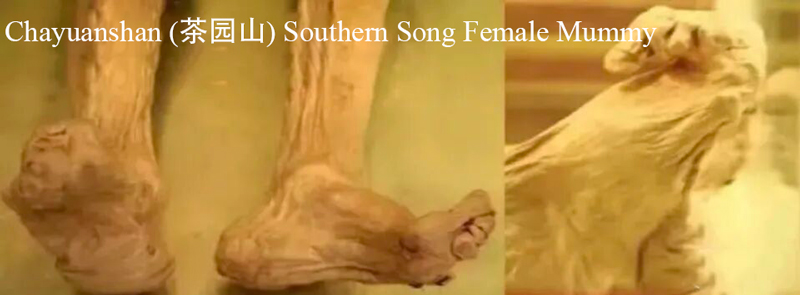
This challenges the common perception that foot binding was a monolithic, universally practiced horror from its inception. The data suggests a gradual evolution. The practice was not as widespread as later propaganda suggested. It wasn’t until the late Ming and early Qing dynasties, fueled by a shift in elite aesthetic preferences, that the practice became the extreme, crippling norm we remember today. The “Three-Inch Golden Lotus” as a symbol of ultimate desirability was a later, more dangerous invention.
Hypocrisy and the Western Gaze
When the West encountered foot binding, its reaction was a study in pure hypocrisy. Missionaries like Mrs. Archibald Little, who founded the Natural Foot Society, were genuinely appalled by the suffering and campaigned against it. They saw the broken bones and the resulting dependence of women and correctly identified it as a brutal system of control. This was a humanitarian critique.
Yet, simultaneously, a different, more insidious perspective was also at play. Western audiences, driven by a grotesque curiosity, consumed the “exotic” image of the bound foot as a spectacle. Women with bound feet were put on display in circuses and “freak shows” across Europe and America. These same Westerners who clucked their tongues at China’s “backwardness” were paying to gawk at its victims. They consumed the physical embodiment of the oppression they supposedly condemned.
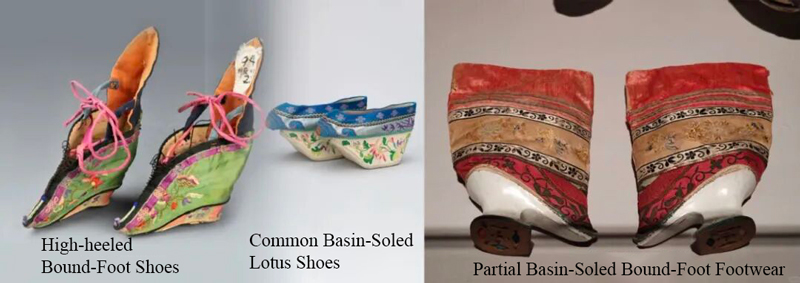
This double standard is glaring. The same culture that was horrified by the practice was also deeply fascinated by the aesthetic it produced. This is the same cultural schizophrenia that allows a designer to criticize the politics of foot binding in one breath and in the next, design a shoe that replicates its most superficial and damaging features. It’s the ultimate act of cultural appropriation: taking the symbol while ignoring the context, and profiting from the very thing they once used to demonize another culture.
This hypocritical gaze extended directly into the fashion world. As early as 1919, The New York Times pointed out the staggering similarity between Western pointed, narrow high heels and the skeletal damage caused by foot binding. They even termed it “American-style foot binding.” The shared principle was a brutal one: sacrificing the natural health and function of the body for a rigid, patriarchal definition of beauty.
Learning to Distinguish Essence from Trash
The long road to abolishing foot binding in China was arduous. It took intellectuals, activists, and finally the force of law to end the practice. Kang Youwei (康有为) and Liang Qichao (梁启超) launched the Anti-Footbinding Society in 1897, challenging the tradition head-on. The republic banned it in 1912, but it wasn’t until the 1950s that the new government’s comprehensive ban finally ended the millennium-old practice. The “last small-foot village” in Tonghai, Yunnan, still had a handful of elderly survivors as late as 2004, a stark reminder that this history is not ancient, but living memory.

The Valentino “pig trotter” shoe is a contemporary echo of this historical tragedy. It is not about honoring Chinese culture; it is about consuming a visual shorthand. It represents the same dangerous mindset: that beauty, or in this case, high fashion, can and should be achieved through the distortion of the natural human form. Western designers have repeatedly copied this “deformed aesthetic,” from the excruciatingly pointed heels of the past to the cloven shapes of today. They are, in essence, elevating a form of body horror to the status of art.
The core problem remains: a cultural filter that can’t tell the difference between essence and trash. When we look at our own histories, we must do so with objectivity and a resolve to learn. When we engage with foreign cultures, we must learn to discern. Fashion should embrace comfort, health, and diversity, not pain and distortion. To copy the worst aspects of any culture is not fashion; it is a failure of understanding. And that is a look that never goes out of style.