Stephen Chow’s new film Kung Fu Soccer (功夫女足) has smashed box office records, crossing the 100 million yuan mark in just two hours. Yet, a storm is brewing not over the plot or the visual effects, but over a single, puzzling costume detail.
The team’s uniforms prominently feature “centipede buttons”, a type of frog closure more commonly associated with modern Qipao, rather than the traditional cross-collar design that has been the gold standard for martial arts attire for millennia. The heated debate has forced fans and critics alike to question: why did a master of comedy, who got it so right 25 years ago, get it so wrong today?
The Legacy of Shaolin Soccer
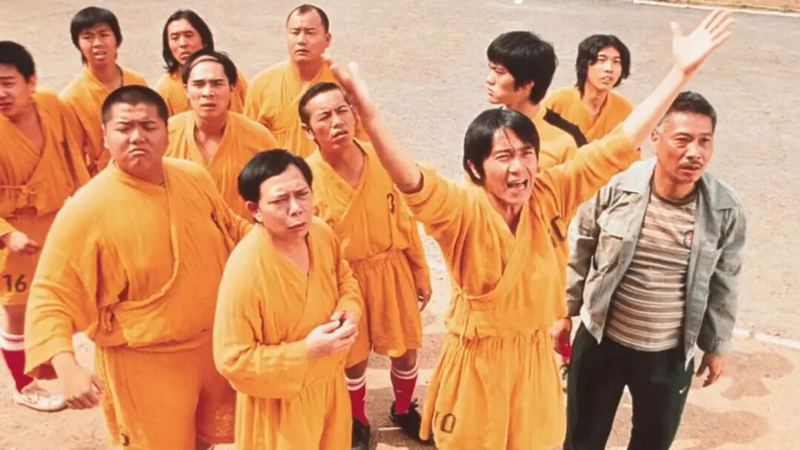
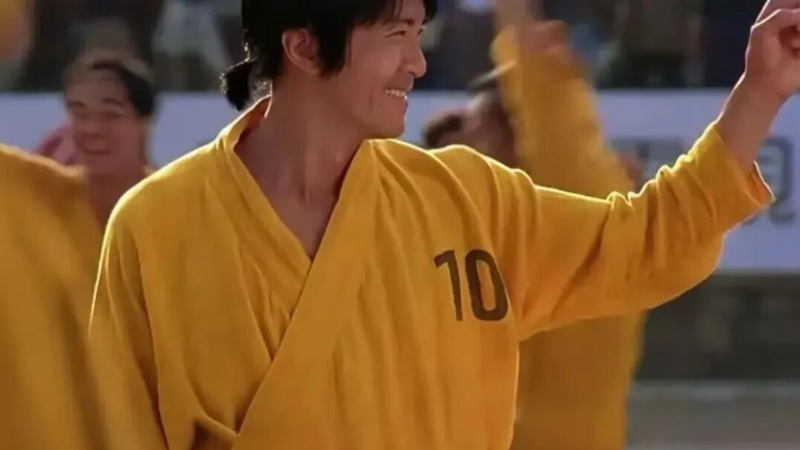
To understand the outrage, one must look back at Chow’s own masterpiece from a quarter-century ago, Shaolin Soccer (少林足球). In that film, the uniforms were a masterclass in functional design. They strictly adhered to the Jiaoling Youren (交领右衽) structure, where the left lapel crosses over the right, secured simply by a sash or tie. This is not a stylistic whim; it is the fundamental logic of traditional Chinese attire. For actors performing high-intensity kicks, somersaults, and sliding tackles, the Jiaoling system offered unparalleled freedom. The absence of rigid buttons or hooks meant no snagging on opponents, no fumbling with complex fastenings during a match, and a silhouette that remained streamlined and logical during movement.
Contrast this with the new design. The “centipede” button is a later decorative element, often born from the need for tight-fitting, upright collars seen in the Qing dynasty and later modern fashion. It prioritizes aesthetics and a sleek profile over the dynamic, unrestrained motion required for martial arts. When players in Kung Fu Soccer lunge or kick, the visual dissonance is jarring. It feels like the actors are wearing heavy costumes rather than functional athletic wear. Chow’s earlier work proved that tradition and action are not adversaries; they are perfect partners. By abandoning that proven formula, he has created a rift between the film’s fantasy and its visual reality, making the action feel staged rather than organic.
Form vs. Function: The Practicality of the Cross-Collar
Why is the Jiaoling system so deeply embedded in martial arts culture? It comes down to the golden rule of uniform design: service to the action. For centuries, from the humble brown short garments of ancient peasants to the flowing robes of Shaolin monks, the cross-collar has been the undisputed champion of workwear. In a traditional monk’s robe or training uniform, there are no buttons to lose, no stiff collars to choke, and no clasps to break. The flat, planar cutting method allows the fabric to drape naturally, moving with the body. Whether a fighter is performing a split, executing a high kick, or flipping through the air, the garment simply shifts without creating tension or pull.

This is why even today, major martial arts schools and Shaolin temples across China distribute training uniforms that strictly follow the Jiaoling structure. It is a design that has survived because it works, not just because it looks “ancient.” The “centipede” button, conversely, belongs to a system of stiff, upright collars that restrict neck movement and are prone to popping open or snagging during intense physical activity. By ignoring the practicality of the uniform, the new film’s design team has inadvertently prioritized a superficial “cool” factor over the immersive reality of the sport, a misstep that dedicated fans and martial artists find difficult to ignore.
The Peril of “Pseudo-Chinese Style”
The controversy extends beyond Stephen Chow‘s film; it highlights a systemic issue in modern Chinese period dramas and cinematic costume design. The industry is increasingly falling into a trap of “element piling.” Designers often lack a foundational understanding of historical clothing development and, under tight deadlines, resort to mashing up disparate elements. They see an intricate “centipede” button or a decorative coiled knot from a Qing dynasty Changshan (长衫) and casually graft it onto a Hanfu cross-collar, ignoring the 3,000-year evolution of garment systems.
This results in “neither-fish-nor-fowl” costumes that look impressive in static posters but fail under the scrutiny of movement or historical logic. The truth is, the rich heritage of Chinese clothing—from the straight-lapel robes of the Qin dynasty to the round-collared gowns of the Tang—offers a vast, largely untapped vocabulary of styles. Chow’s team likely used the centipede button because it’s a highly visible “marker” of “Chineseness” in modern social media aesthetics. However, this lazy approach is a disservice to the culture. It turns a vibrant, living history into a mere visual gimmick. For a filmmaker known for his meticulous attention to detail, relying on such superficial signifiers is a significant betrayal of the directorial craft.
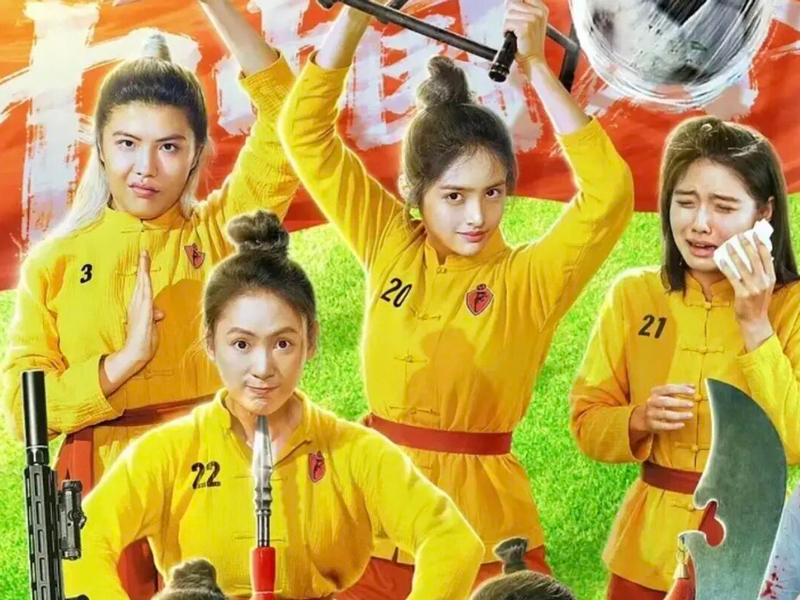
The costume in Kung Fu Soccer is a classic case of form failing to follow function. The cross-collar, or Jiaoling Youren, is not just a fashion statement; it is the structural backbone of traditional martial arts and monastic attire. It allows for the extreme range of motion necessary for the stunts that define Chow’s action-comedy genre. The “centipede” button, on the other hand, belongs to a different world entirely—one of streetwear and restrictive formalwear. The resulting garments feel like they belong in a photoshoot rather than a high-stakes soccer match, creating a cognitive dissonance that pulls the audience out of the story.
The anger from fans is not about gatekeeping or cultural purity; it’s about logic and respect for the craft. If we hope to see truly compelling “national style” designs on screen, the industry must go back to the books—or better yet, to the temples and training halls. By studying the actual uniforms that real martial artists wear, and by recalling the functional designs of earlier classics like Shaolin Soccer, designers can finally break the cycle of shallow appropriation and create costumes that not only look stunning but also enhance the story and the action, ensuring that the future of Chinese cinema fashion is as rich as its past.