
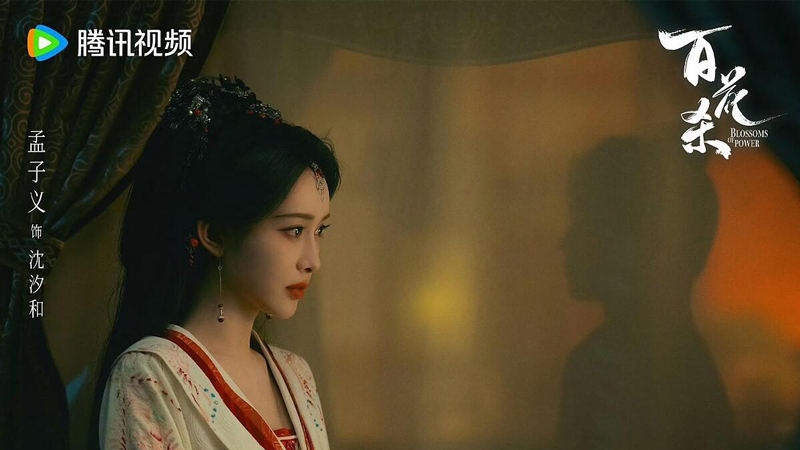
Why is Crown Prince Xiao Huayong (萧华雍) Faking Illness and Luring His Wife in Blossoms of Power?
In the latest episodes of the hit historical drama Blossoms of Power (百花杀), the carefully constructed facade of the sickly crown prince comes crashing down—and it’s absolutely glorious. One moment, Xiao Huayong is draped in a black cloak, galloping across the Beidi (北翟) battlefield, cutting down enemy soldiers to rescue his father-in-law, the Duke of Ying (英).
The next, he’s back in the Eastern Palace, tugging at his wife’s sleeve with the pitiful whimper of a man who can barely lift a teacup. This isn’t just a character switching faces; it’s a masterclass in strategic vulnerability. The scene where he pulls Shen Xihe (沈汐和) onto the bed, only for them to get literally tangled in the tassel of his jade pendant, has sent the internet into a frenzy. Was it an accident? Or was the “invalid” prince’s trap set from the very start?
The Three Faces of the Prince
Xiao Huayong is the epitome of a modern “three-faced” character, and it’s this complexity that makes him so compelling. In the imperial court, he is the consummate invalid, coughing into his sleeve, requiring assistance to stand, a fragile figure who poses no threat to his political rivals. This is the image that Shen Xihe chose when she selected him for marriage, believing she had secured a “short-lived, weak” husband who wouldn’t interfere with her own family’s power. She thought she was getting a chess piece, but she actually married the player.
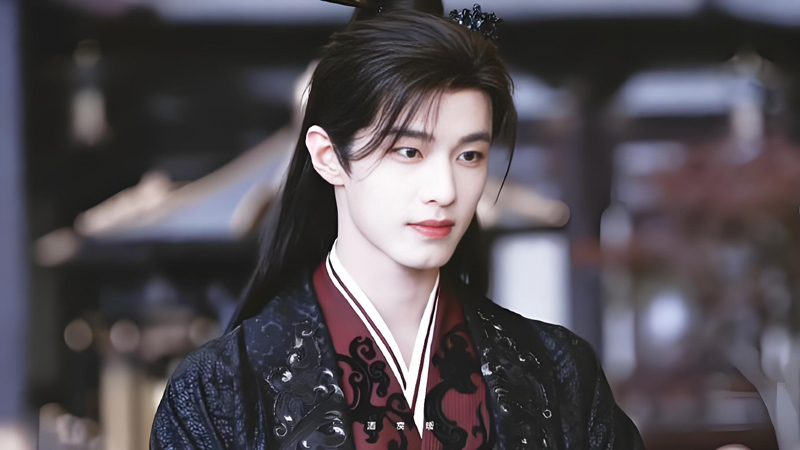
Strip away the silk robes and the pallid makeup, and you find the “Seven Lang” (七郎) of the Northwest battlefield. When his father-in-law, the Duke of Ying, is in peril, Xiao doesn’t hesitate. He draws his sword and carves a bloody path through the Beidi forces. His words are refreshingly direct: he promised to protect the Duke from the northern tribe’s harassment, and he has delivered. This “skin” he wears is one of raw, unadulterated power. It is a stark contrast to the man who later complains of a headache, and it completely shatters his wife’s initial “sickly” hypothesis.
His final face is reserved for the privacy of his chambers with Shen Xihe. This version of the prince is needy, playful, and unashamedly lovesick. He throws out the entire manual of princely dignity to drag out an excuse for her to stay, claiming her departure will trigger his collapse. It’s a brilliant, albeit manipulative, tactic. This “sickly” prince proves he is more concerned with securing his wife’s attention than maintaining his courtly reputation. The shift from a cold-blooded killer to a whining husband is so seamless that it feels less like a disguise and more like a carefully curated selection of truths.
The Tassel Trap: An Accident or Design?
The highlight of the episode is undoubtedly the intimate tangle in the Eastern Palace. After rescuing the Duke, Xiao uses the shared experience to probe his wife’s mind, praising their natural teamwork and undeniable chemistry. Shen, ever the pragmatist, deflects by attributing their success to “precise calculation.” But Xiao is relentless, insisting that the foundation of a true partnership is understanding and tacit agreement. The man is not just looking for a political ally; he’s courting his wife.
When she tries to leave, the scene takes a comedic turn. He tugs her sleeve, whining about a potential relapse. As she hesitates, he pulls her back onto the bed, gallantly handing her a pillow and promising not to “offend” her. Shen’s retort is fire: “You’ve read all the classics and don’t know what offense is? If I had my father’s martial skills, I would have taught you a lesson!” It’s a sharp, funny moment that highlights their balanced power dynamic. He may be physically stronger, but she is intellectually his equal, and she isn’t afraid to call him out.
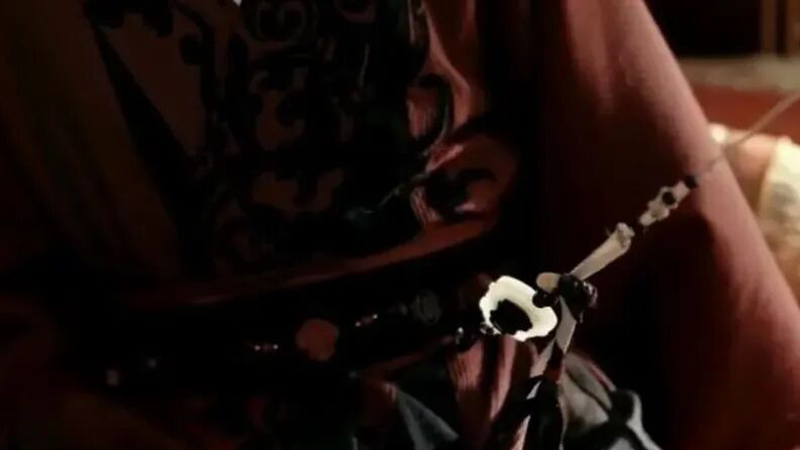
Then, the real magic happens. As she tries to flee, she finds herself tethered to him. The tassel from Xiao’s jade pendant has hooked onto her dress. The pair fumble, both pretending to be unable to untangle it. The internet has since noted that Xiao wasn’t wearing this particular pendant in previous scenes—it was introduced specifically for this episode. This detail transforms the “accident” into a premeditated act of affection. It’s the ultimate “Oops, my jewelry caught you” ruse, a delightful twist that proves his “sickly” prince persona is just a cover for a meticulous and romantic schemer.
Parallel Romances and the Rise of a Power Couple
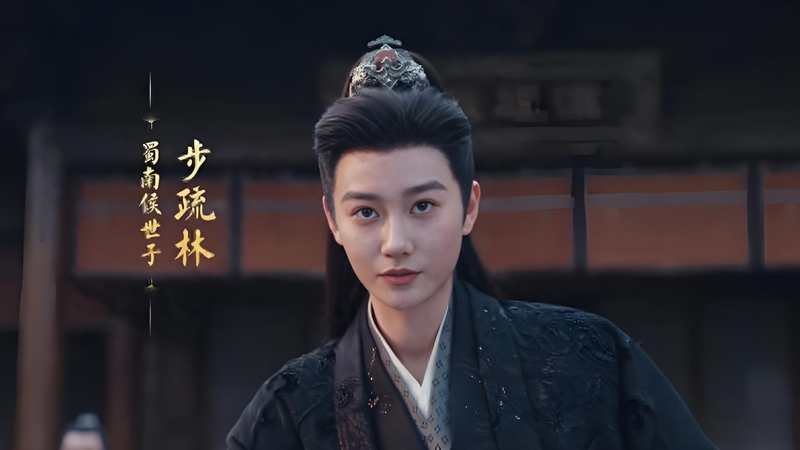
While the leads are all tangled up in each other, the secondary couple, Cui Shaoqing (崔少卿) and Bu Shulin (疏林整), is serving a different flavor of romance—the “serious professional versus flustered rookie.” Cui, a stern judge from the Dali Temple (大理寺), uses the excuse of teaching Bu how to organize case files to make a bold move. He grabs her hand, interlocking their fingers to guide her writing. It’s a moment of textbook, breath-stealing workplace tension that reduces the usually composed female officer to a blushing mess.
Bu’s retreat is hilariously desperate—pleading a sudden heart and hand injury, claiming she needs weeks to recover—but Cui is relentless. He corners her against the wall, their faces inches apart, and calls her bluff. This cold, logic-driven man becomes a flirtatious menace when it comes to her. This subplot demonstrates that the show is committed to delivering high-quality romantic tension on all fronts, offering a counterpoint to the political scheming of the main couple.
Ultimately, the show’s success lies in the central partnership of Xiao and Shen. They are both “double strong”—intelligent, capable, and self-aware. There is no damsel in distress here. Xiao Huayong is a man who can win a battle and still win his wife’s affection by playing the fool. Shen Xihe isn’t just a passive object of his schemes; she’s sharp enough to see through them, even when she ends up tangled in his tassel. As the previews hint at them riding together and the plot involving a poisoned Duke and an investigation into the Yan Zhi Lu (胭脂录), it’s clear that their power lies in their alliance. This is a drama where “accidental” entanglements are the most calculated acts of love, and it’s pure, unadulterated fun to watch.