
Blossoms of Power (百花杀) – a drama set in the imperial capital during an unspecified dynasty – throws us a fiery female lead who doesn’t bow, doesn’t flinch, and doesn’t seem to care who she offends. But after watching her shatter a princess’s nose and march straight into a concubine’s chamber with a poison-scented sachet, one question gnaws at every sensible viewer: is she fearless, or just recklessly blind to the rules of the game? The show sells her as a strategist, yet what we actually see feels less like court chess and more like a bar brawl in silk robes.
The Horse, The Fall, The Fury
She is Shen Xihe (沈汐和), daughter of the Duke of Weiguo (卫国), sent to the capital with a political marriage on her shoulders. Before she even unpacks, her horse is slapped on the rump by Princess Pingling (平陵) during a royal hunt – and down a cliff she goes. Surviving that, she later witnesses a servant tumble off a rooftop while fetching the princess’s kite. Their next encounter is explosive. Shen refuses to curtsy.
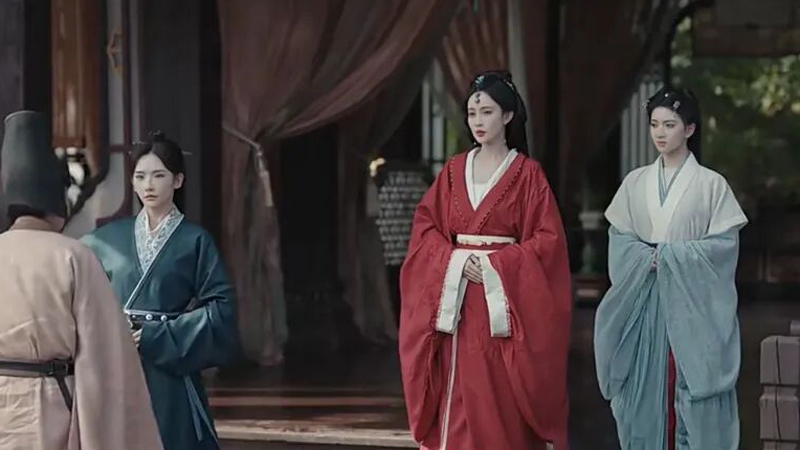
The princess lunges to slap her. Shen sidesteps, and Her Highness crashes face-first, breaking her own nasal bridge. It is a scene designed for cheers – the bully gets her due – but pause right there. What about the fallen servant? That poor soul likely faced the princess’s wrath later, because someone had to absorb that humiliation. Shen saved no one; she merely redirected the anger. That is not strategy. That is dumping fuel on a fire and walking away.
Poison, Confrontation, And Zero Backup
When she discovers that Concubine Liang ordered her own poisoning via a scented pouch, Shen does not gather evidence, build allies, or wait for the right moment. She walks straight to the concubine’s palace, pouch in hand, and demands answers. It is breathtaking – but not in a clever way. In any real court, a duke’s daughter confronting a royal consort without imperial backing is suicide. The show frames it as bravery, but bravery without leverage is just stupidity dressed in a dramatic score. She has no spy network, no secret letters, no trading of favors. Her only weapon is sheer audacity, and audacity does not win against eunuchs, guards, and poisoned wine.

Power, Privilege, And A Missing Chessboard
Let us talk about her father. The Duke guards the northwest, holds armies, and enjoys the emperor’s trust. That gives her a shield – but shields have cracks. She is still a subject’s daughter, not a royal herself. Yet she openly humiliates a princess, talks back to an imperial consort, and executes enemies in broad daylight. The show wants us to cheer each slap and each arrest, but where is the tension? Where is the careful maneuvering that makes court dramas addictive? Instead, we get a heroine who behaves like she owns the city, and the story hands her victories with little cost. It feels like watching someone play chess by knocking over all the pieces and calling it checkmate.
Compare her to classic anti-heroines in Empresses in the Palace or The Story of Yanxi Palace – those women smiled while poisoning, wept while plotting, and never let their enemies see the knife coming. Shen Xihe wears her knife on her sleeve, and her enemies still fall. That is not political cunning; that is plot armor so thick it blocks out any real conflict. The drama mistakes loudness for strength and confrontation for intelligence. But true power in a harem or a court lies in patience, in whispers, in knowing when to kneel so you can rise later. Shen never kneels – and somehow, she never pays the price. That breaks the very logic of the world the show builds.

Perhaps the series intends to critique feudal hierarchies by having a rebellious heroine tear them down. Yet rebellion without consequence is fantasy, not drama. Every time she escapes punishment, the stakes drop. Every time she shouts down a superior, the danger evaporates. By episode ten, we stop fearing for her, and without fear, there is no investment. The writers gave her all the fire but forgot the smoke – the subtle threats, the whispered deals, the long game. What remains is a gorgeous, furious woman storming through a palace that should have devoured her in act one.
So, is she fearless or foolish? The honest answer: she is whatever the script needs her to be in that moment, consistency be damned. But for viewers craving genuine power games, she offers only noise. Noise is entertaining for an hour. It does not linger. What lingers is the ghost of what this show could have been – if only its heroine had learned to pause, to calculate, and to strike when no one was watching. Instead, she strikes with all eyes upon her, and the court gasps, but never bites back. That is not a revolution. That is a tantrum with a magnificent wardrobe.