
Two Museums, One Vision
From May 17 to July 20, 2026, the Datong Museum in Shanxi Province hosts “Splendid Splendors of a Golden Age,” a landmark Ming Dynasty costume exhibition co-organized with the Taizhou Museum in Jiangsu Province. The exhibition occupies the first-floor temporary gallery and brings together curated selections from both museum collections, offering visitors a rare side-by-side comparison of Ming-era garments from two culturally distinct regions of China.
Taizhou, historically known as Hailing, thrived during the Ming Dynasty on the wealth of the Lianghuai salt trade. Datong, anciently called Pingcheng, sat at the crossroads of agrarian and nomadic civilizations and served as one of the nine military garrison towns along the northern frontier. By uniting artifacts from a prosperous southern commercial hub with those from a strategic northern military stronghold, the exhibition reveals how geography, economy, and warfare shaped Ming textile culture in profoundly different ways.
Four Thematic Units
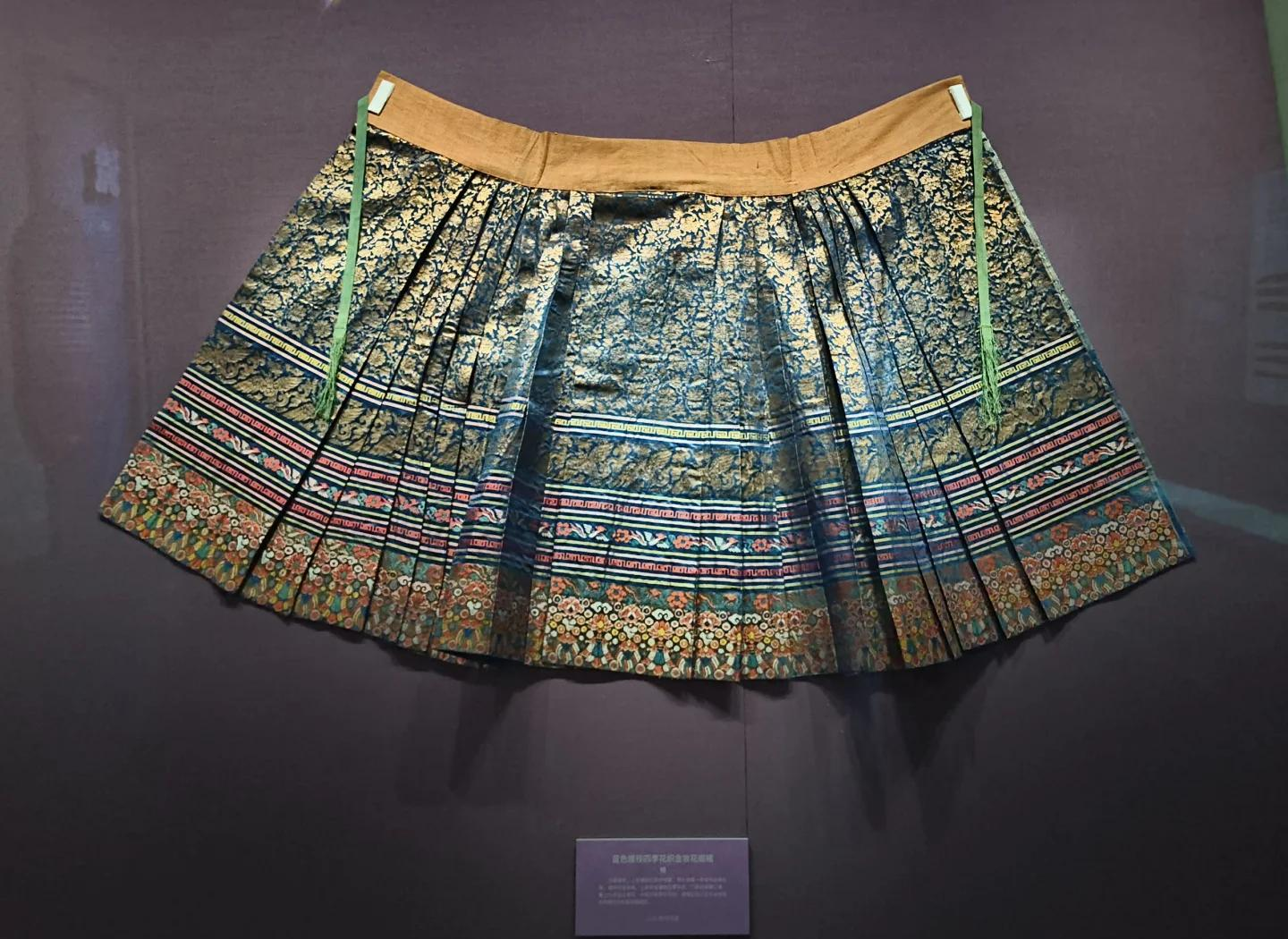
The exhibition unfolds across four thematic sections, each anchored in poetic phrases drawn from classical Chinese literature. “Garments from Ancient Tombs” opens the show with silk textiles excavated from lime-paste tombs in Taizhou, where the unique burial environment preserved fragile fabrics that rarely survive centuries underground. These include official robes, long shirts, mamianqun (horse-face skirts), knee socks, sachets, hairpins, and jade belt buckles, offering a comprehensive survey of Ming personal adornment.
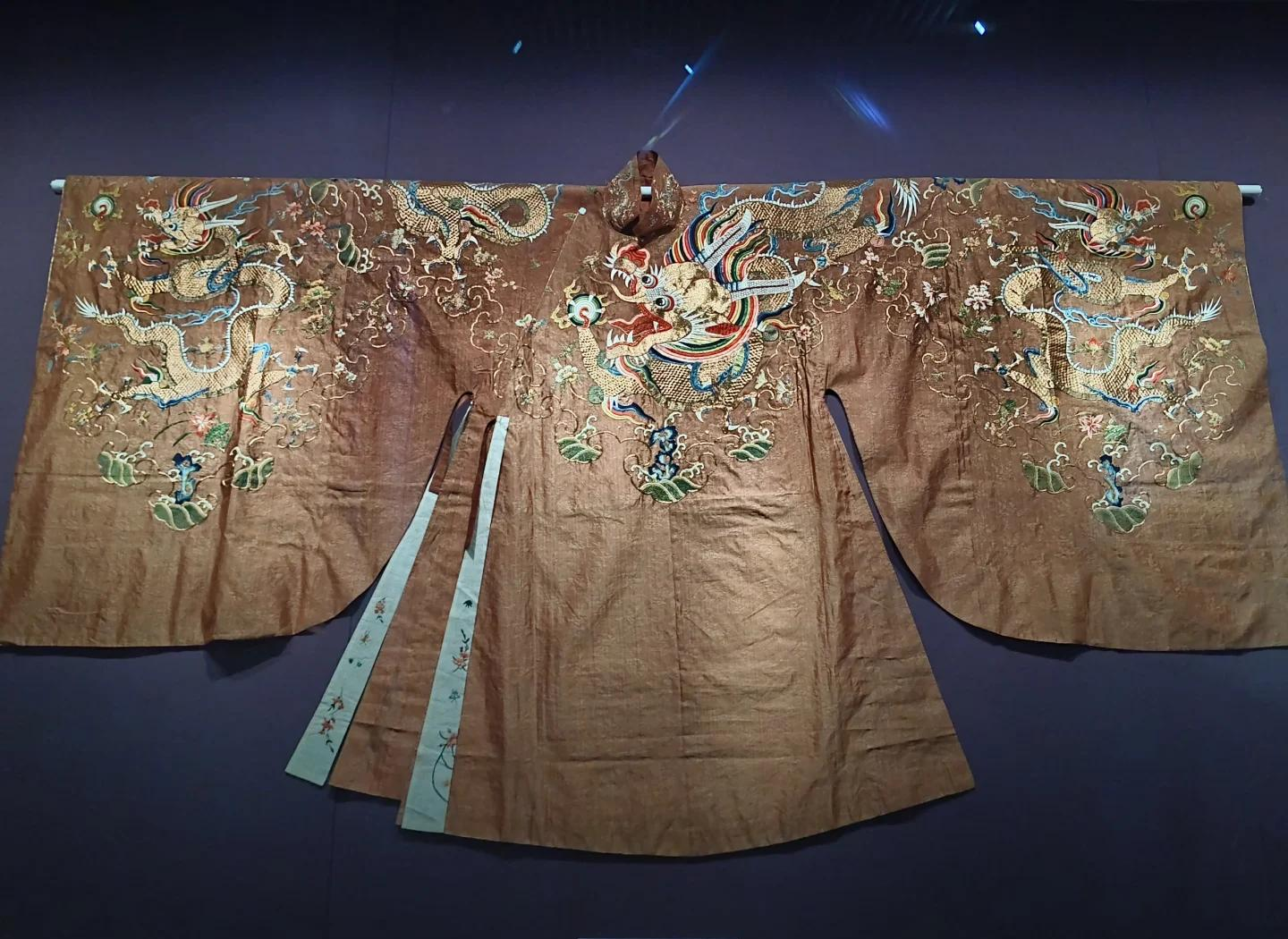
“Red Ribbons of Office” shifts the focus to the rank-defining elements of Ming court dress. The Ming Dynasty enforced a rigid hierarchy of garment colors, sleeve widths, and decorative motifs to signal official position. Visitors can trace this system through actual surviving examples, including the exhibition’s centerpiece: a Ming plain-silk lion rank badge robe from the Taizhou Museum collection.
“Towering Crowns of Literary Splendor” explores the headwear and accessories that completed the Ming scholar-official’s wardrobe, while “Cloud Tresses Combed” turns to women’s fashion, presenting hair ornaments, jewelry, and the elaborate styling conventions that defined feminine beauty in the Ming era.
Star Artifact: The Lion Rank Badge Robe from Taizhou
Among the most significant pieces on display is a second-class national cultural relic: a Ming plain-silk lion rank badge robe (ming su chou shizi bufu) excavated from the joint burial tomb of Liu Xiang and his wife in Taizhou. The garment was worn by Liu Xiang’s wife, Qiu Shuxian, at the time of her interment. Measuring 135 centimeters in body length with a sleeve span of 229 centimeters and a waist width of 70 centimeters, the robe features a round collar with a right-side overlap (yuanling youren) and wide sleeves.
The front and back each bear a crouching lion rank badge, surrounded by cloud motifs, ocean waves, and mountain ranges. In the Ming ranking system, the lion badge corresponded to a specific official grade for noblewomen, making this garment a critical physical reference for the study of Ming dress regulations. The survival of both the robe and its original rank badges, intact and legible after four centuries underground, represents an extraordinary case in Chinese textile archaeology.

Gilded Dragon Crown: Northern Frontier Craftsmanship
From the Datong Museum’s own collection comes the other marquee artifact: a Ming gilded dragon-pattern silver hair crown (ming dujin longwen yin shufaguan), also classified as a second-class cultural relic. The crown is fully gilded and crafted using the hammering technique (chongye), with a single-line raised band dividing the body into upper and lower sections. The upper portion is covered in dragon motifs, while the lower section features bo-mountain patterns and clouds.
This crown exemplifies the opulence and technical sophistication of Ming-era frontier aristocracy. Unlike the silk garments from Taizhou, which reflect the refined aesthetic of Jiangnan literati society, the gilded crown speaks to the martial prestige and cross-cultural influences that defined Datong’s position as a northern garrison town. Together, these two artifacts encapsulate the exhibition’s central narrative: that Ming textile culture was not monolithic but regionally diverse, shaped by local resources, social structures, and geopolitical realities.
For the growing hanfu community, this exhibition offers far more than historical curiosity. The Ming Dynasty has become one of the most popular reference periods for contemporary hanfu design, with garments like the mamianqun, aoqun (jacket-and-skirt combination), and yuanlingpao (round-collar robe) dominating both everyday wear and formal occasions. Yet much of the commercially available Ming-style hanfu draws from a limited pool of surviving examples, often reproduced from paintings or tomb murals rather than actual textiles.
The Datong-Taizhou exhibition provides an opportunity to see authentic Ming garments with their original construction details, fabric weights, and decorative techniques. The lime-paste tomb preservation method used in Taizhou is particularly valuable, as it has protected silk fibers, seam structures, and even color traces that would otherwise have decomposed. Designers and enthusiasts studying these artifacts can gain insights into period-accurate tailoring, badge placement, and the relationship between garment form and social rank that no painting can fully convey.
The Broader Context: Ming Textile Production and Trade
The Ming Dynasty (1368-1644) represents a peak in Chinese textile production. The imperial court maintained dedicated weaving bureaus in Nanjing, Suzhou, and Hangzhou, producing court silks, brocades, and rank badges to specification. Meanwhile, regional textile centers like Taizhou supplied prosperous merchant families who sought to emulate court fashion within the bounds of sumptuary law.
Datong’s role was different. As a military garrison on the northern frontier, it received shipments of court-manufactured goods as part of the military supply system, while also developing its own craft traditions influenced by trade with Mongol and Central Asian communities. The exhibition subtly traces these supply chains through the artifacts themselves: the southern silk garments with their fine weave and embroidered badges, the northern metalwork with its bold dragon imagery and gilded surfaces.
By placing these two collections in dialogue, the exhibition organizers have created a rare opportunity to understand Ming textile culture not as a single imperial narrative but as a network of regional practices, each contributing to the richness of what we now recognize as traditional Chinese dress.
Information for Visitors
The exhibition runs through July 20, 2026, at the Datong Museum, located at 506 Taihe Road, Pingcheng District, Datong, Shanxi Province. Admission is free. The museum is open Tuesday through Sunday, 9:00 AM to 5:00 PM, with last entry at 4:00 PM. Visitors interested in Ming textile history, hanfu design, or Chinese cultural heritage should not miss this opportunity to see these rare garments before the exhibition closes and the artifacts return to their respective museum storage.