
A delegation of nearly 20 Taiwan hanfu enthusiasts embarked on a multi-city cultural exchange tour across Shandong Province from June 27 through early July 2026, visiting Zibo, Tai’an, Qufu, Zoucheng, and Caoxian under the banner “Han Garments, Elegant Charm: Inheriting the Wisdom of Confucius and Mencius.” The program, organized as part of the 2026 Cross-Strait (Xiamen) Hanfu Carnival, immersed participants in Confucian ritual culture, traditional textile craftsmanship, and the booming hanfu industry of Caoxian.
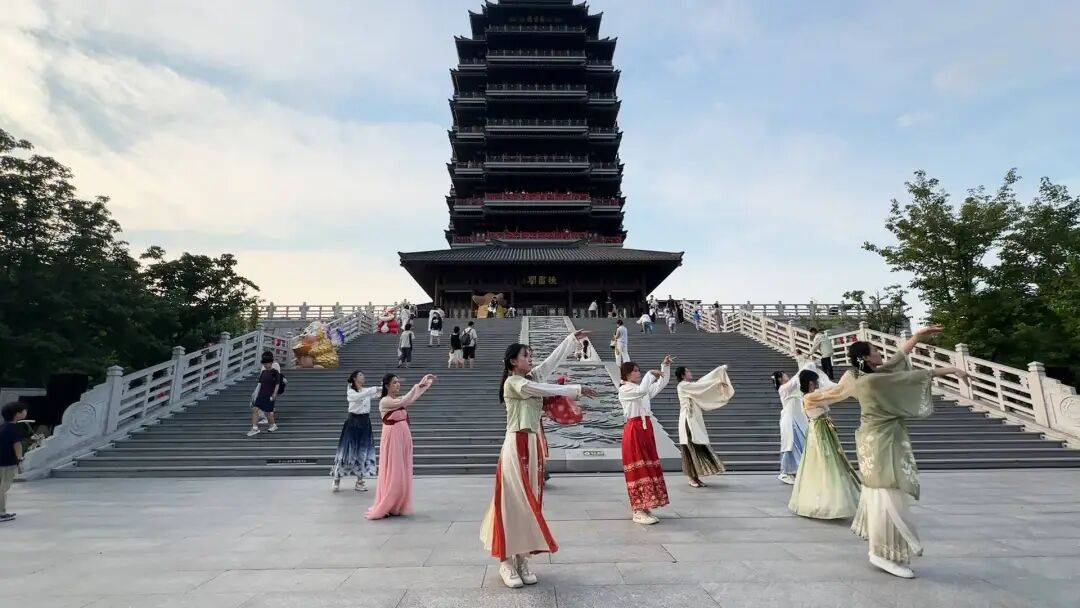
Zibo: Hanfu Parade at Haidailou
The tour opened in Zibo, where Taiwan delegates joined students from Shandong University of Technology for a hanfu parade through the Badaju Historic Cultural Street. Participants wore garments spanning multiple dynasties, including quju shenyi (curved-hem deep robes) and qixiong ruqun (high-waisted skirt sets). At Qisheng Lake, university students performed a classical dance with flowing water sleeves, blending ritual elegance with the lakeside landscape.
A cross-strait hanfu culture forum followed, where delegates discussed garment construction, historical accuracy, and the modern hanfu revival movement. Six Taiwan youth were appointed as “Costume Aesthetics Ambassadors” and aesthetic consultants. At the Zibo Ceramics and Glaze Museum, the delegation traced the history of Chinese ceramics, with Taiwan hanfu blogger Tutu noting that cross-strait glaze craftsmanship shares common roots despite evolving distinct regional styles.
Qufu: Warring States Robes at the Confucius Temple
In Qufu, the birthplace of Confucius, several Taiwan delegates changed into zhanguo pao (Warring States robes) before entering the Confucius Temple. The choice was deliberate: by wearing garments from the same era as Confucius himself, participants sought to feel a closer temporal and spiritual connection to the sage. Inside the temple, they witnessed a traditional sacrifice ceremony, experiencing Confucian ritual culture as a living practice rather than a museum exhibit.
At the Confucius Museum, the delegation examined artifacts from the Kong family collection, including a Warring States yellow jade horse and the “Ten Offerings of Shang and Zhou” ritual vessels. These treasures, passed down through generations of the Confucius family, offered a tangible link to the material culture that shaped Chinese ritual dress codes.
Zoucheng: Mencius Heritage and Motherly Virtue
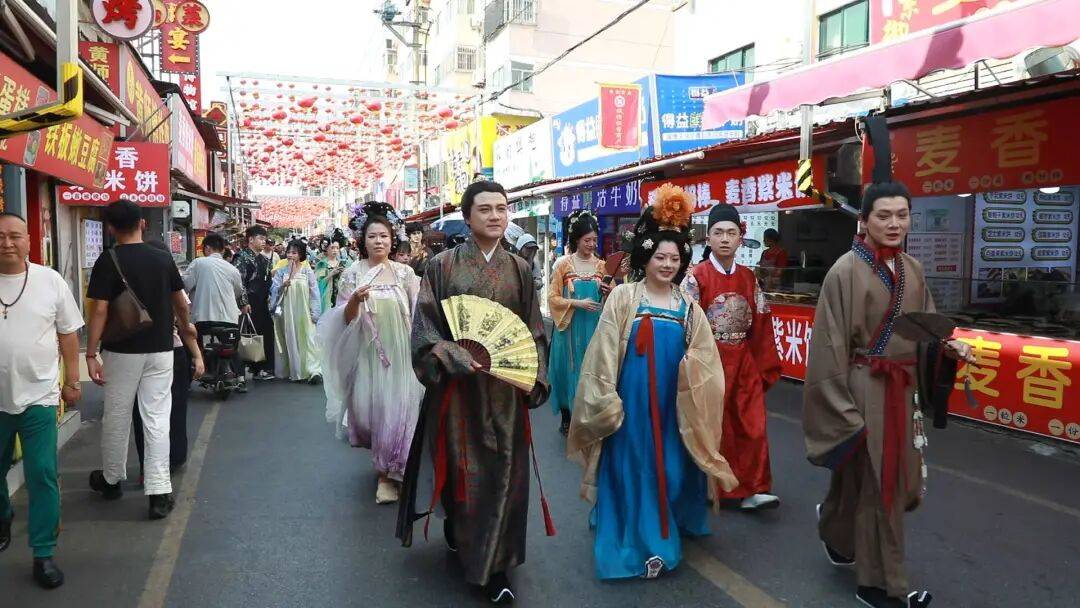
The tour continued to Zoucheng, hometown of Mencius, where delegates visited the Meng Temple and Meng Residence. Here the focus shifted from ritual philosophy to family education, as guides recounted the famous story of Mencius’s mother moving three times to find the right environment for her son’s upbringing. For the Taiwan delegation, the stop underscored how traditional Chinese values of education and moral cultivation extend beyond clothing into daily life.
Caoxian: The Hanfu Manufacturing Hub
The final stop brought the delegation to Caoxian, the county in southwestern Shandong that has become China’s largest hanfu production base. Taiwan delegates toured the E-Shang Town Digital Economy Industrial Park and the Caoxian You-Ai Co-Entrepreneurship Live Streaming Base, where they examined finished garments featuring complex brocade patterns, gold-thread embroidery, and innovative silhouette cuts.
For many delegates, the Caoxian visit was a revelation. The industrial scale of hanfu production, combined with the quality of craftsmanship on display, demonstrated how a traditional garment form has been revitalized through modern manufacturing and e-commerce. Several delegates purchased garments to bring home, bridging the gap between industrial production and personal cultural practice.
The Shandong tour represents a growing trend of cross-strait cultural exchange centered on hanfu. By connecting Confucian heritage sites with the contemporary hanfu industry, the program demonstrated that traditional Chinese clothing is not merely a nostalgic costume but an active cultural medium capable of fostering dialogue across communities and generations.