
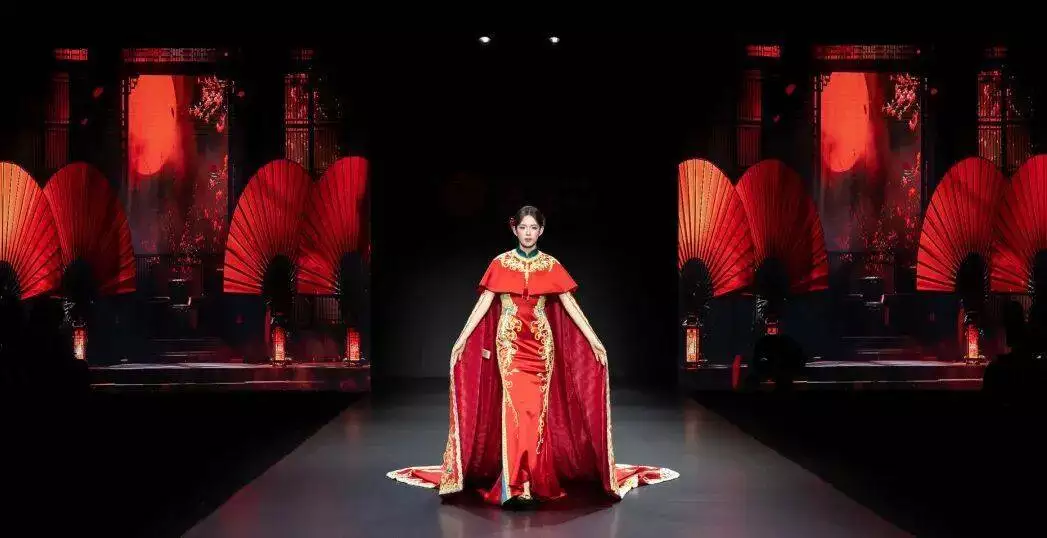
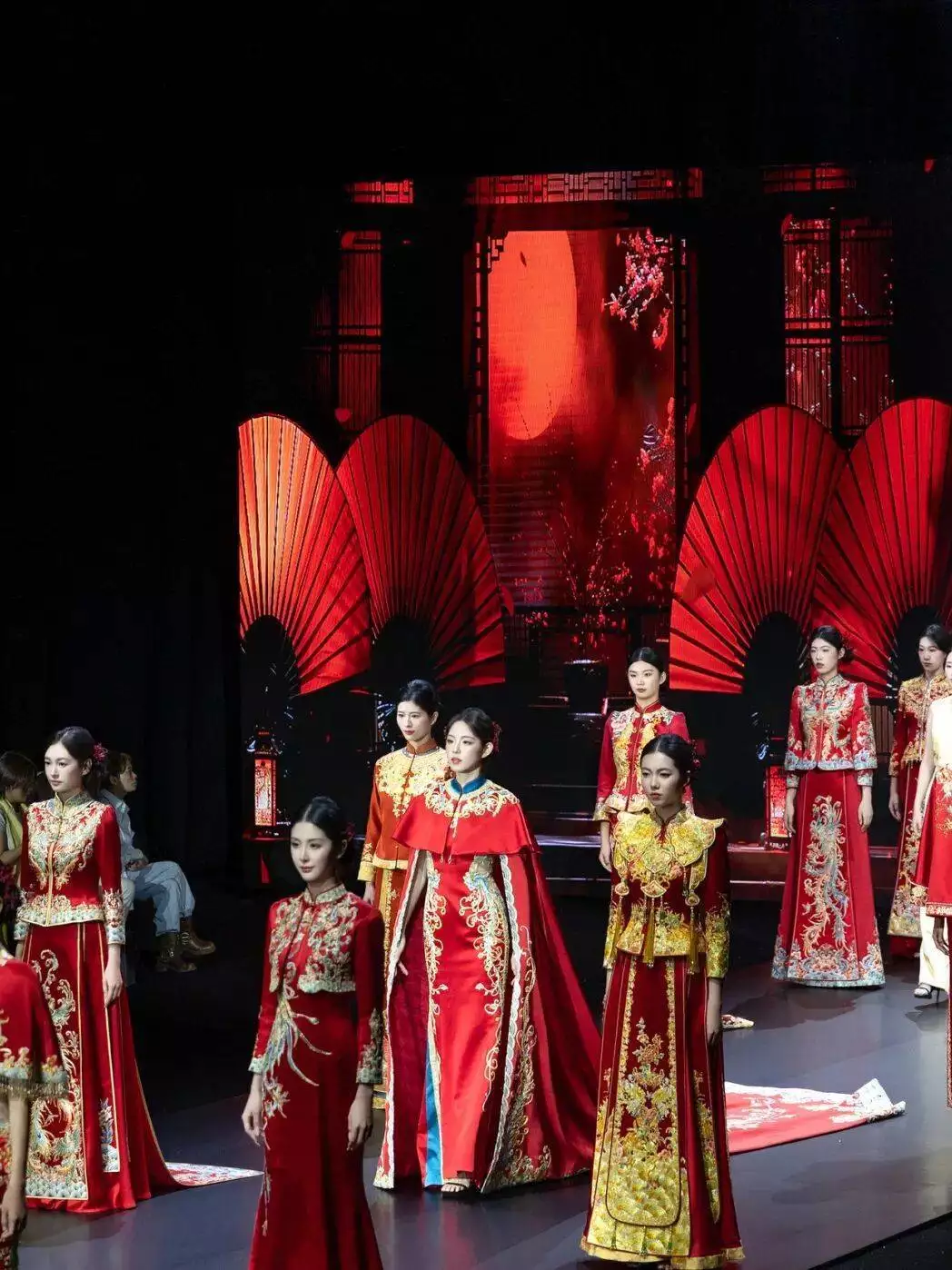
Chinese wedding dress brand Jinbao Zhongshi unveiled its 2026 spring-summer collection at the Sanya International Bridal Fashion Week, held at the Poly Rosewood Hotel in Sanya’s Haitang Bay. Titled “Breaking Boundaries — New Narrative,” the show presented a fusion of traditional Chinese garment elements with contemporary bridal wear design, featuring hanfu-inspired silhouettes, neo-Chinese tailoring, and xiuhe-style wedding gowns.
The collection’s central design philosophy combines traditional structural elements — standing collars, pankou closures, and cloud-collar embroidery panels — with lightweight silk fabrics and modern pattern adjustments. A highlight piece features a phoenix-feather motif rendered in gold thread and gradient-colored embroidery, creating a flowing, luminous effect as the wearer moves. The garment retains the ceremonial grandeur of traditional Chinese bridal wear while reducing weight and improving wearability.
Brand Background and Market Reach
Founded in 1994, Jinbao Garment Group operates two core brands — Jinbao and Xilan — covering research, production, and sales of Chinese-style wedding attire. The group positions itself as a “translator of Chinese wedding aesthetics,” preserving traditional auspicious patterns and craft techniques while reinterpreting them through contemporary silhouettes and fabrics. The brand targets brides aged 25 to 35 who value cultural heritage alongside comfort and individuality.
According to the company, Jinbao’s business now covers over 550 cities, partners with more than 10,000 bridal gown shops, and has served over 300,000 brides. The group releases four new collections annually, encompassing hand-embroidered bridal gowns and modified hanfu wedding garments.
Craft Technique: Blending ICH with Modern Methods
Jinbao’s production approach merges ICH-listed techniques including Su embroidery, pankin embroidery, and dazi embroidery with modern methods such as 3D beadwork and French-style embroidery. Core decorative patterns are hand-embroidered to preserve texture and craftsmanship, while secondary details use machine embroidery to control cost and production time — a strategy the brand describes as keeping ICH techniques accessible without diluting their essence.
The brand’s chief designer explained that the collection aims to make traditional aesthetics functional for modern weddings: “We want traditional elements to become a warm, new celebratory aesthetic — with the formality of Chinese bridal wear and the refined lightness that modern women prefer.” The phoenix motif on the signature piece uses a “centripetal convergence” arrangement, with feathers pointing inward to symbolize mutual devotion — a contemporary reinterpretation of traditional auspicious symbolism.
Industry Context: Neo-Chinese Bridal Wear Market Growth
The show at Sanya Bridal Fashion Week marks Jinbao’s continued effort to position neo-Chinese wedding wear as a mainstream alternative to Western-style wedding gowns. The Chinese bridal market has seen growing demand for culturally rooted wedding attire, driven by younger generations’ interest in traditional aesthetics and the broader guochao trend. Jinbao’s strategy of combining hand-crafted ICH elements with machine-assisted production addresses a key industry challenge: making traditionally expensive hand-embroidered garments accessible to middle-market consumers without sacrificing craft authenticity.
By releasing four collections per year and maintaining partnerships with over 10,000 bridal shops, Jinbao has built a distribution network that bridges the gap between traditional ateliers and mass-market bridal retail. The Sanya show signals the brand’s ambition to elevate neo-Chinese bridal wear from a niche cultural product to a standard category in the Chinese wedding industry.