
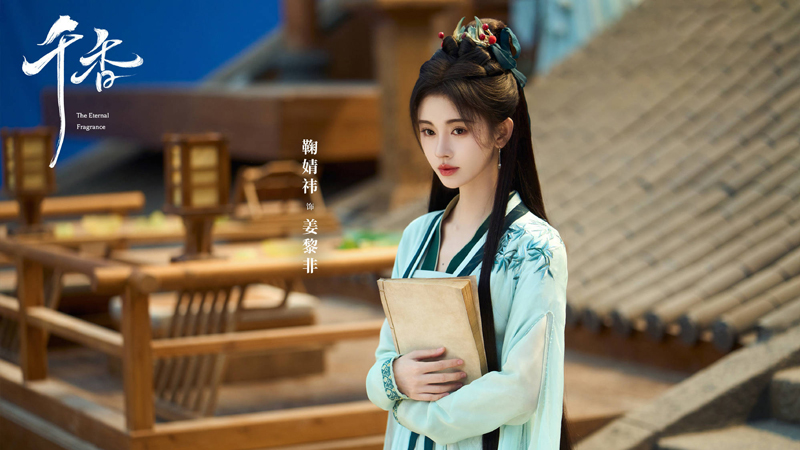
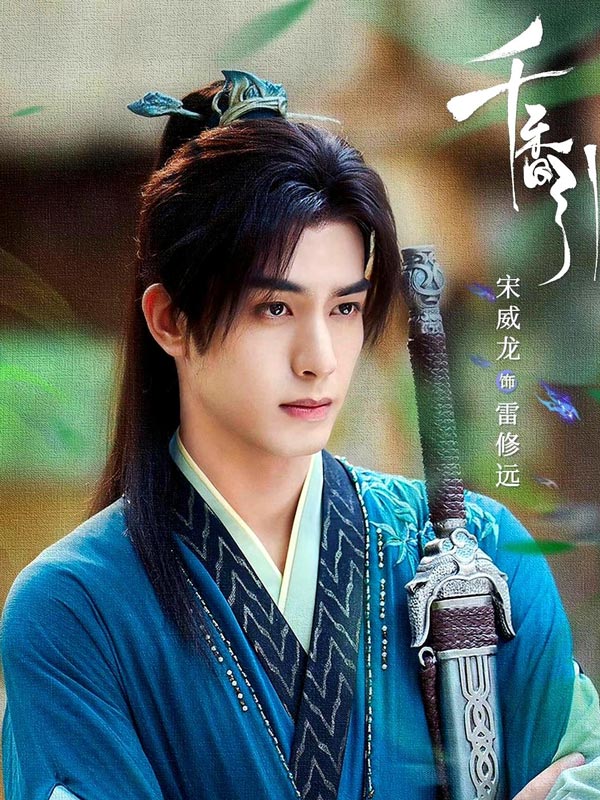
The Eternal Fragrance (千香) has been sitting on the shelf for three years. Its costumes, makeup, and visual effects still shine. But the first eleven episodes? A slog. A prince fakes love to steal a sun-fire creature hidden in a girl’s hair. He bleeds, he coughs up blood, he plays the wounded hero. She stays blissfully ignorant.
Yet I kept clicking “next episode.” Not for the plot. Not for the romance. I stayed for one burning question: what happens when a lazy, noodle-obsessed master, a fiercely independent heroine, and a hidden demon lord’s past all collide on Wuyue Ting (无月廷) mountain? That question, plus a glimpse of the heroine in divine-white robes, turned a mediocre drama into my daily ritual. Let me tell you why.
The Master Who Refuses to Teach
Episode twelve changes everything. The academy scatters, and our heroine lands at Wuyue Ting. She knocks on a master’s door—only to find him napping, dismissive, and utterly uninterested in taking disciples. He claims he cannot accept students. She cooks for him. She feeds him. She wins his stomach, then his reluctant nod. At the formal ceremony, he asks her bluntly: why do you truly want to join this sect? Her answer is practical—safety, resources, a future—but also startlingly grand. She wants to stand on her own feet. That moment defines her.
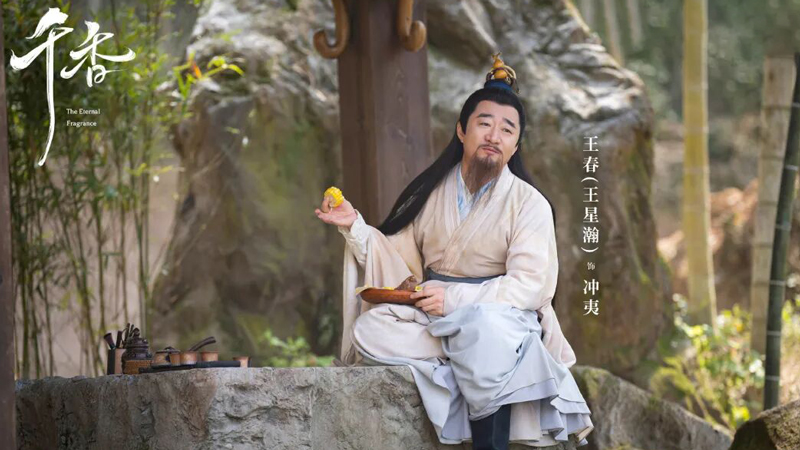
He takes her to Zhuiyu Feng (坠玉峰), his private peak. It is quiet, almost empty. Just a handful of senior brothers and sisters who tease each other mercilessly but close ranks like wolves when outsiders threaten. During a competition, she wins a match without lifting a sword—she uses bugs. Her master beams with pride. “That’s my student,” he says, as if she had just conquered a kingdom. He notices the strange seal on her body, the unusual energy pulsing under her skin. His curiosity burns, but he silences it. When his own senior brother tries to probe her secret, he blocks him firmly.
He does not stop her when she volunteers for a dangerous mission to the Yimin Mu (异民墓)—the graveyard of alien tribes. Instead, he hands her his personal protective sword. “Come back to Zhuiyu Feng,” he tells her, “and no one will harm you.” No lectures. No fear-mongering. Just trust. This master is not lazy; he is deliberate. He sees her potential and chooses to nurture it without smothering. That rare parenting style—fierce protection wrapped in casual indifference—makes me root for every single person on that peak.
She Walks Away—and Stays Away
Here is where the drama earns my respect. When our heroine finally learns the truth—that the prince approached her only to steal the sun-fire creature hidden in her hair—she does not weep or waver. She draws a line. “You did not hurt me physically,” she says coldly, “but you used me. You harmed my friends. That is unforgivable.” He begs. He grovels. He offers grand gestures and tearful confessions. She refuses every single one. For episodes on end, she does not soften. That clarity feels like fresh air in a genre drowning in doormat heroines.
She does not act out of spite. She acts out of self-respect. She knows his original mission was betrayal, even if genuine feelings later crept in. She does not deny his current sincerity, but she refuses to reward past deception with instant forgiveness. Her independence is not performative; it is practical. She has a master to protect, a peak to call home, and a sealed power she does not yet understand. Romance can wait. Trust must be rebuilt stone by stone.
Eventually, of course, his persistent sincerity wears down her walls. They do reconcile. But the show makes her earn that reconciliation on her own terms, not his. She does not forget; she chooses to move forward. That distinction matters. In a sea of dramas where love conquers all logic, this heroine holds her ground long enough for the audience to believe her journey. She is not a prize to be won. She is a person learning to love without losing herself.
The Demon Lord and the Flower Fairy
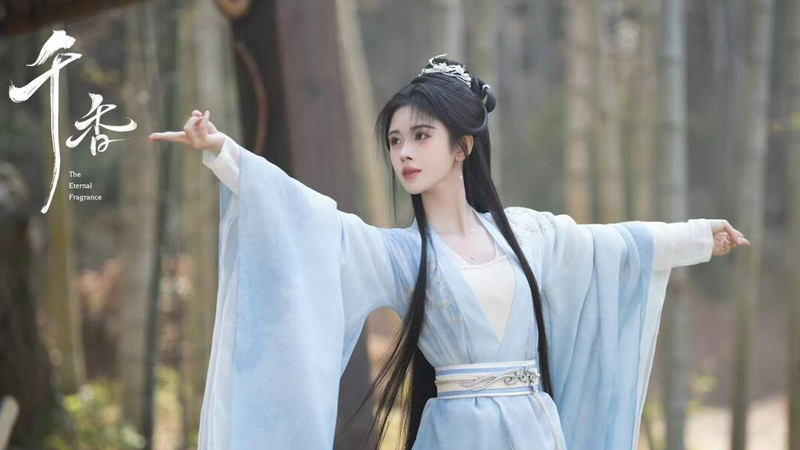
Let us address the elephant in the room. The main reason I have not abandoned this show is the Mozun (魔尊)—the Demon Lord—and Shennü (神女)—the Divine Maiden—reincarnation setup. Every time our heroine appears in her celestial white costume, with flowing sleeves and floral accents, she looks like a living Hua Jing Ling (花精灵)—a flower sprite. Ju Jingyi (鞠婧祎) embodies that ethereal, almost cartoonishly adorable image. She is vivid, lively, and genuinely fun to watch. That visual alone pulls me through sluggish dialogue.
But the deeper hook is the mystery of Wu Gen (吴艮). He works at Wuyue Ting, but his true identity remains hidden. Why did he change his name? What is his connection to the Demon Lord from the previous life? The show drops cryptic hints—a tattoo, a forbidden archive, a whispered conversation cut short. I find myself fast-forwarding through mundane scenes just to catch another crumb of that past-life saga. The present-day plot may be average, but the promise of a tragic, epic backstory keeps me glued.
I want to see how the Demon Lord fell. I want to know why the Divine Maiden chose to seal him—or save him. The drama doles out these flashbacks in stingy portions, but each one is visually stunning and emotionally charged. That is my daily reward. I do not watch for the prince’s cough or the academy’s politics. I watch for the ghost of a romance that predates time itself. And every night, when the episode ends on a cliffhanger about that ancient war, I tell myself: just one more day. Tomorrow, they will show the past. Tomorrow, I will understand.