
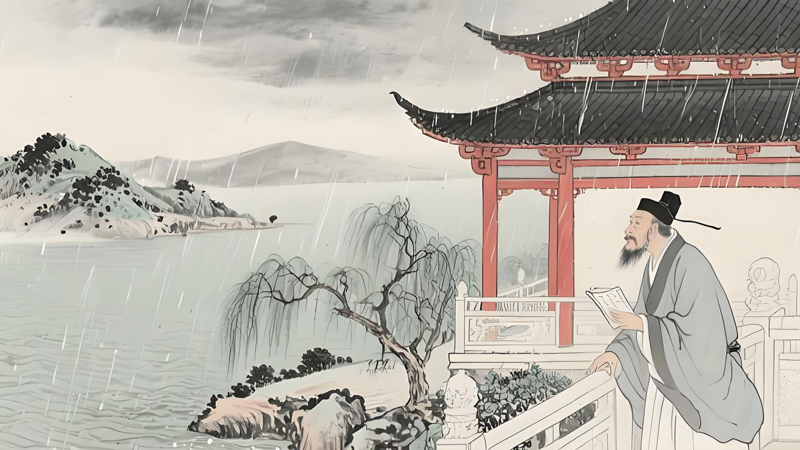
Modern commuters know the dread of a rainy morning—splashed trousers, squelching socks, and a damp chill that lingers all day. We rely on rubber boots and synthetic raincoats. But what did people do two thousand years ago, before these inventions? Ancient Chinese developed ingenious solutions: woven grass raincoats, oil-silk coats, wooden clogs, and nailed shoes. Each addressed a specific challenge, from keeping the torso dry to preventing slips on muddy roads. Let’s dive into their rainy-day wardrobe—a mix of practicality and creativity that still impresses.
1. Straw Hat & Woven Raincoat

The most iconic and enduring rain gear is the Suoyi (蓑衣, woven raincoat) and Ruoli (箬笠, straw hat). Already in the pre-Qin period, these were standard for laborers. The Book of Songs (诗经) records shepherds wearing both, proving a history of over 2,000 years. Originally called Boshi (袯襫), the raincoat was woven from sedge, palm, and rushes—plants with natural water-repellent properties.
Raindrops slid along the woven texture without penetrating, keeping the wearer dry. More importantly, it left both hands free—perfect for farming, fishing, or long journeys. The matching Ruoli, made from bamboo strips and grass, worked as a dual-purpose accessory: rain shield and sunshade. From peasants to scholars, everyone appreciated its versatility.
The Tang poet Zhang Zhihe (张志和) captured its charm: “Green straw hat, green raincoat—no need to return in slanting wind and drizzle.” His leisurely fishing scene relied entirely on this classic set. For centuries, the Suoyi-Ruoli combo symbolized self-reliance and harmony with nature.
2. Oil-Silk Garments
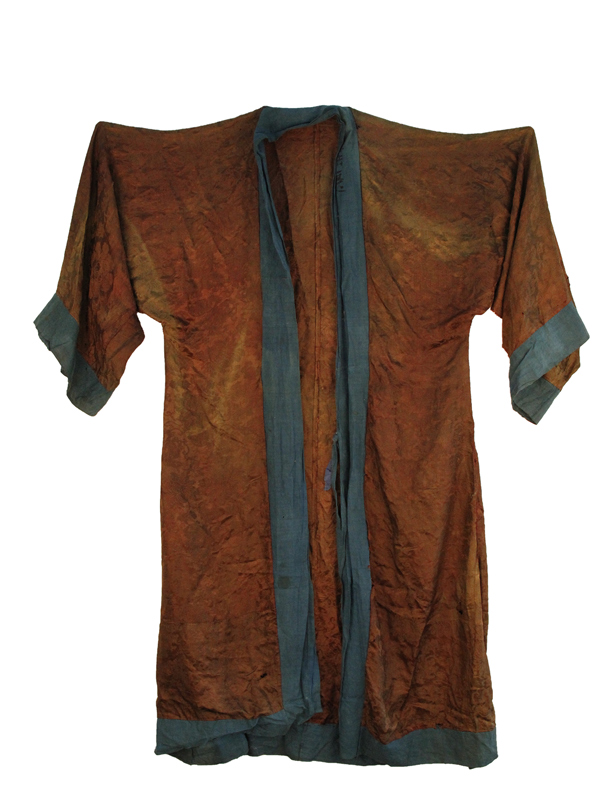
But the coarse Suoyi wasn’t for the elite. Aristocrats and officials sought something lighter and more refined—the Youyi (油衣, oil-silk coat). Made from fine silk fabric, it was coated with multiple layers of tung oil, forming a waterproof film that repelled rain without adding bulk. Think of it as an ancient lightweight shell jacket.
Historical records confirm its early use. The Monthly Instructions for Four Classes of People (四民月令) from the Eastern Han mentions “hanging oil coats on poles.” By the Jin Dynasty, the military adopted oil-silk capes—called You Pei (油帔)—for mountain campaigns. The Book of Jin (晋书) describes soldiers wearing them to scale Jiangshan and deploy banners in heavy rain.
By the Ming and Qing dynasties, oil coats had entered ordinary homes. Beijing’s famous brand “Dou’s (窦) Oil Coat” became so popular that counterfeit versions flooded the market—proof of its everyday necessity. The Youyi offered the perfect balance of protection and elegance, making rainy commutes less of a chore for the city dweller.
3. Clogs & Nailed Shoes
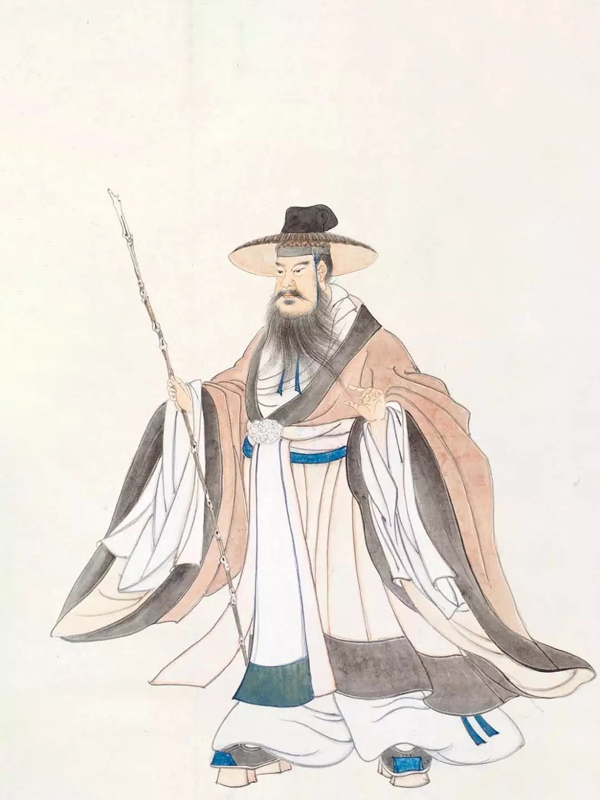
Keeping the upper body dry meant little if your feet sank into mud. Ancient roads turned into treacherous sludge, so footwear was critical. The most widespread rain shoe was the Muji (木屐, wooden clog). Its predecessor, the xi (舄), appeared in the pre-Qin era as a double-layered wooden sole that elevated the foot above damp ground.
Typical clogs featured two wooden teeth (strips) under the sole—flat, square, or cylindrical—that raised the heel and toe. This design prevented moisture from seeping up and allowed walking on muddy paths without dirtying the foot. The Song poet Su Shi (苏轼) once borrowed a straw hat and clogs from a farmer on Hainan Island during a downpour. Villagers and even dogs watched him with curiosity, birthing the humorous tale “Su Shi in Hat and Clogs.”
For steep or extra-slippery terrain, the Dingxie (钉鞋, nailed shoe) provided grip. Made of leather coated with oil and wax—the same waterproofing as the Youyi—the sole was studded with round iron nails. The 13th-century commentator Hu Sanxing (胡三省) described this design in his notes to the Comprehensive Mirror for Aid in Government (资治通鉴). A Southern Song football boot had a leather upper, iron nails, and tung-oil coating—serving both sports and rainy-day walks.
Rainy-day woes are timeless. Ancient farmers, scholars, and couriers all grumbled about mud and wet hems, yet they pressed on. Today, we mutter about soaked cuffs, but we still grab our umbrellas and head out. Back home, a warm ginger soup waits—much like the fires our ancestors dried themselves by. The rain always stops, and life continues. That shared resilience connects us, century after century.