

Is July 10, 2026, the Date Chinese Animation Finally Conquers Its Past? On that day, The Great Sage Rises (大圣崛起) arrives, promising not just a sequel but a cultural reckoning. This is not merely another retelling of the legendary Monkey King’s tale. It is a cinematic event born from over 30,000 hours of meticulous work, helmed by a creative team known for the groundbreaking Kui Ba (魁拔) and the beloved Monkey King: Hero Is Back (大圣归来). The film ambitiously weaves a narrative of rebellion with the very fabric of ancient Chinese folk life, creating a world that feels both epic and intimately grounded in history.
The film’s core is a bold paradox: a supernatural hero navigating a hyper-realistic human world. The trailer reveals a stunningly detailed urban landscape from the Song Dynasty, a bustling marketplace teeming with life. This is not a distant, mythical realm, but a vivid recreation of a historical reality, complete with the thunder of drums, the energy of Yangge (秧歌), and the storytelling of Shan Bei (陕北) storytelling. The hero, a figure of immense power, is not scaling a celestial mountain but walking among the people, and it is from this human environment that he must draw his strength.
A World Built on Paper and Wood
The film’s ambition is visible in its production design, which is a profound act of architectural and artistic preservation. The creative team did not rely on imagination alone. They turned to Along the River During the Qingming Festival (清明上河图), the iconic 12th-century scroll, as the blueprint for the city’s bustling streets and commercial life, ensuring every detail—from shop signs to bridge structures—is historically coherent.
At the heart of this world stands the ancient opera stage, a structure that serves as the narrative and cultural anchor of the story. This is no ordinary set piece. Its construction is based on the architectural principles found in the Yingzao Fashi (营造法式), a seminal 12th-century Chinese building manual. The team recreated it using traditional painting techniques, ensuring that every bracket, beam, and ceiling mural reflects the color and spirit of classical Chinese art.
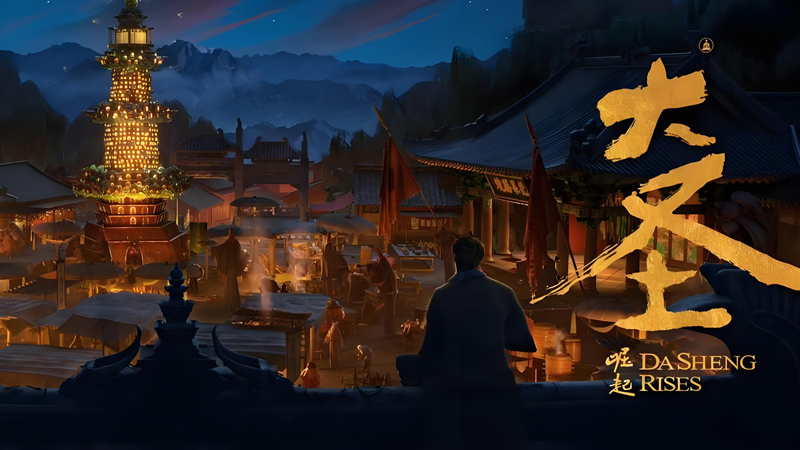
This commitment extends to the grand Temple of Ten Thousand Gods, a pivotal location in the film. It is a precise, 1:1 scale recreation of the East Hall of the Foguang Temple (佛光寺), a surviving Tang Dynasty masterpiece. By grounding its fantasy in such tangible history, the film allows viewers to inhabit a world that feels not just imagined, but remembered. The architecture itself becomes a silent character, bearing witness to the drama unfolding within its walls.
Folk Art as Narrative Fuel
This film avoids the common trap of using cultural elements as mere decoration. Instead, it ingeniously integrates them into the plot’s machinery and emotional core. The story unfolds during the vibrant Shehuo (社火) festival, a traditional spring celebration. The energetic parades and folk performances are not just spectacle; they are the very context in which the hero’s journey begins. The narrative voice comes not from a narrator, but from the lively rhythm of Tianjin clapper talk, which sketches the town’s daily life and colorful characters.
The soundscape is dominated by the sharp, soaring notes of the suona (唢呐), an instrument known for its piercing, passionate sound. It does not just accompany the action; it becomes the audible heartbeat of the hero’s struggle and the film’s defiant spirit. These traditional elements are deeply intertwined with the story, creating a world where culture is not a backdrop but the very language of the people and their conflict. The hero must navigate a society structured by these ancient traditions and their accompanying belief systems.
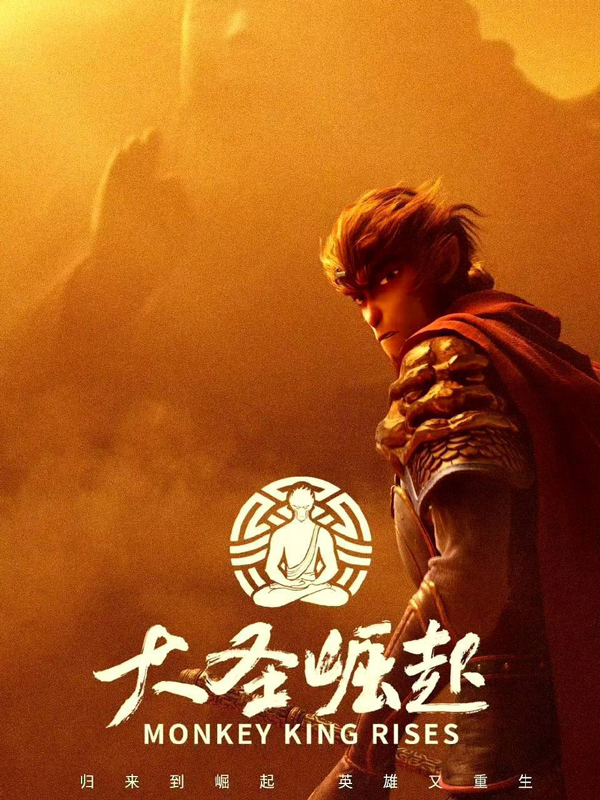
This integration is a deliberate departure from the didactic approach often seen in historical dramas. Instead of pausing to explain a custom or an object, the film allows it to exist organically, trusting the audience to absorb the cultural texture through context and emotion. The viewer experiences the story as a participant in this world, not as a student in a classroom, which makes the cultural immersion feel both genuine and profound.
A Struggle Between Earth and Heaven
Beyond the visual spectacle and intricate world-building, the film offers a compelling philosophical core. The conflict is not a simple battle against external demons. The trailer hints at a deeper, more personal struggle. The hero finds himself trapped in a cosmic chess match, a game between celestial powers and earthly forces. The bustling human city becomes a stage for a hidden war, where the fate of both the divine and the mortal hangs in the balance.
At its heart, the film explores the ancient concept of the Way follows nature. The hero’s journey is not about gaining more power, but about breaking free from predetermined destinies and external controls. He must forge his own path, balancing his responsibilities to his own kind and his connection to the human world he inhabits. His rebellion is a quest for autonomy, a fight to stay true to his own heart against the celestial order.
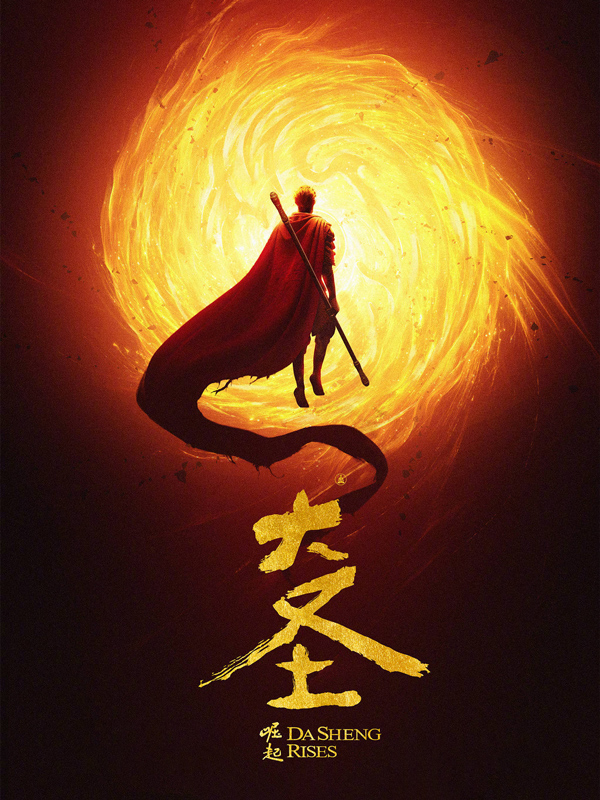
This theme resonates powerfully in a modern context, making the ancient myth feel contemporary. The hero’s struggle is a universal one: the challenge of staying true to oneself amid pressure from powerful institutions and societal expectations. By embedding this timeless philosophical quandary within a story about ancient folk traditions and revolutionary animation, The Great Sage Rises positions itself not just as a blockbuster, but as a significant cultural statement. It asks whether true power comes from adherence to the old rules or from the courage to write new ones.