
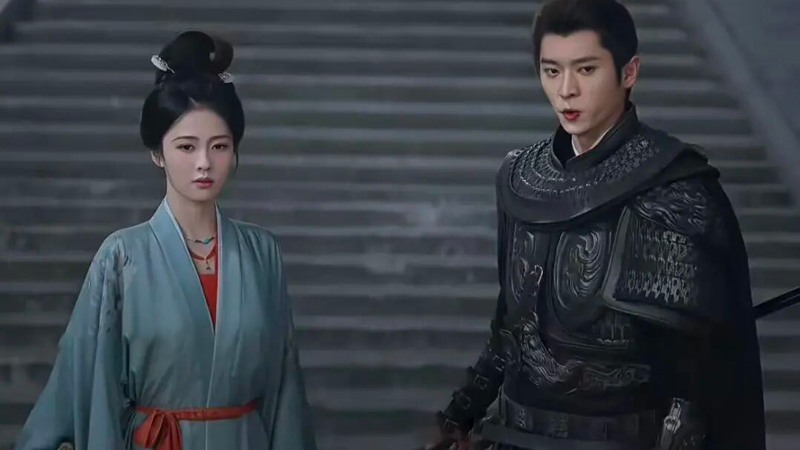
The First Jasmine (莫离) ends not with a whisper, but with a storm of arrows and a throne stained by regret. The final five episodes deliver fire: the Dowager Empress dies of a broken spirit, the rebel general falls under a hail of crossbow bolts, and the couple who fought for peace must now rule over ashes.
Yet beneath the clashing swords lies a quieter, more painful question—how many women still choke on the same gilded chains that killed Guo Jin (郭妗)? And how many men, like Mo Jingli (墨景黎), trade love for a crown they were never meant to wear? This is not just a period drama; it is a mirror held up to our own ambitions, our own prisons, and our own unwillingness to see what we already have.
The Empress Who Built Her Own Cage
Guo Taihou (郭太后) was once the brightest scholar of Lishan Academy (离山书院). She dreamed of painting rivers and mountains with the same bold strokes as any man. Instead, she spent decades inside the Forbidden City’s silk-walled maze, where every smile was a weapon and every eunuch’s whisper could end a bloodline. She refused to be a pawn. So she became the player. She purged rivals, fabricated cases, and bent the empire’s laws until they fit her fists. Even the academy’s headmaster praised her—”She can hold the realm’s scepter,” he said.
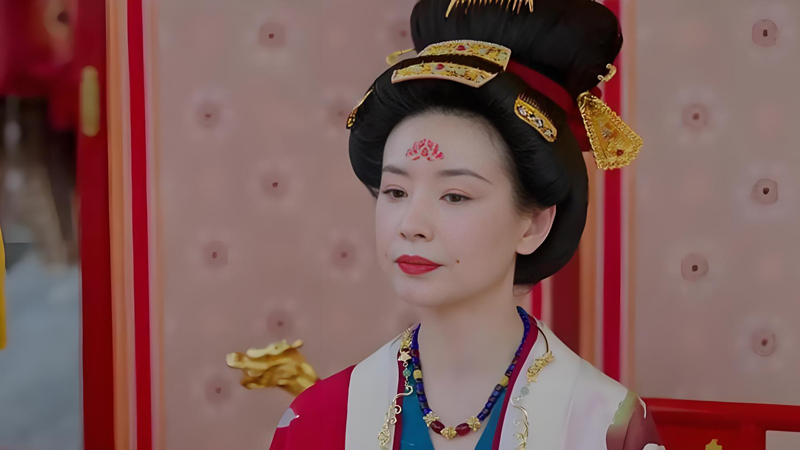
But power has a taste that never washes out. She never admitted regret, not aloud. Yet when she learned that Xu Wanzhou (徐挽舟), her former comrade, had died in exile, and that the academy’s scholars had perished from plague, she slipped out at midnight to burn paper offerings at his grave. That guilt did not fade; it festered. It ate her bones faster than any poison. On her deathbed, she grabbed her son’s hand and said only: “Be clear-minded. Be honest. Be safe.” She knew her crimes would be judged—but she also knew she had no other way to survive.
Her tragedy is not about good or evil. It is about a world that gave women only two roles—victim or tyrant. She chose the latter, and it killed her just the same. What stings today is that many of those old shackles still rattle. In boardrooms, in homes, in the quiet expectations whispered to daughters—”Be smart, but not too smart; be strong, but not too strong.” Guo Jin’s ghost haunts not the palace, but our own reflections.
Arrows That Missed the Heart
Mo Jingli was the rightful heir—firstborn of the Eastern Palace, raised to wear the dragon robe. But politics stole his birthright. He spent years bowing lower than his station, swallowing insults like bitter medicine. His genius for strategy and poetry found no outlet except in secret maps of rebellion. He loved Ye Li (叶璃) with a fierceness that could have moved mountains, but he let her go because he thought the throne would warm him more.
When he finally raised his banners, he won battles—until Luoxia Pass (落霞关), where Mo Xiuyao (墨修尧) crushed his vanguard. But Mo Jingli was not defeated; he was cunning. He split his forces, sent a decoy to hold Mo Xiuyao in the west, and raced back to the capital with a hundred elite riders. His plan was to kill the child-emperor and seize the throne in one midnight stroke. He nearly succeeded.
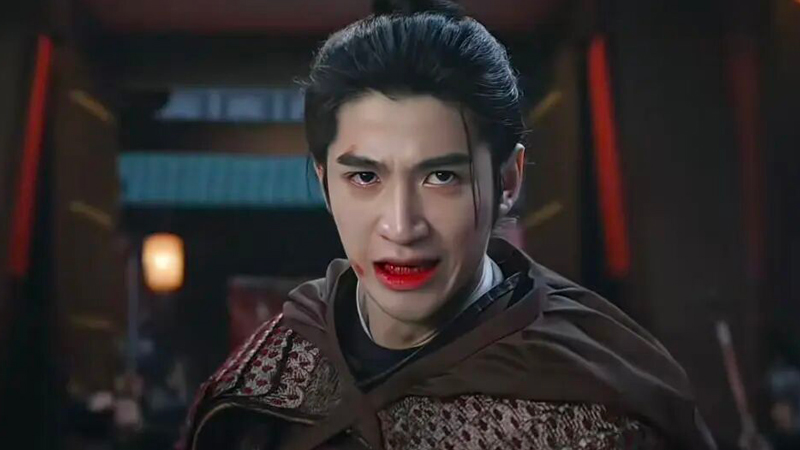
Ye Li saw through the ruse. She met him at the palace gates—not with tears, but with a blade. Their duel was brutal. He slashed her shoulder, blood soaking her silver armor. Just as he raised his sword for the final blow, Mo Xiuyao arrived with his cavalry. Surrounded, outnumbered, Mo Jingli had a choice: surrender or die. He chose the latter. He charged forward, alone, into a wall of crossbowmen. The bolts came like rain. His body fell pierced a hundred times—but his eyes, they say, never closed. They still stared at the throne he could almost touch.
What He Forgot to Count
Watching Mo Jingli’s end, I felt no triumph—only a hollow ache. He had everything a man could want: genius, lineage, the love of two remarkable women. Ye Li adored him once. Ye Ying (叶莹) gave him her pure heart without condition. He ignored both. He saw them as stepping stones, not as souls. He convinced himself that only the crown could validate his existence. Every slight he suffered, every whisper of “usurper,” he stored in a vault of rage—and that vault became his entire world.
What if he had stopped? What if, after losing the succession, he had retired to a quiet province, painted landscapes, raised children, and let Ye Li’s laughter fill his evenings? He would have been happier. He would have lived longer. But he could not see that. His vision was a single point—the dragon chair—and everything else faded to grey. That is the curse of ambition without wisdom. It turns a man into a moth that flies straight into the candle, believing the flame is the sun.
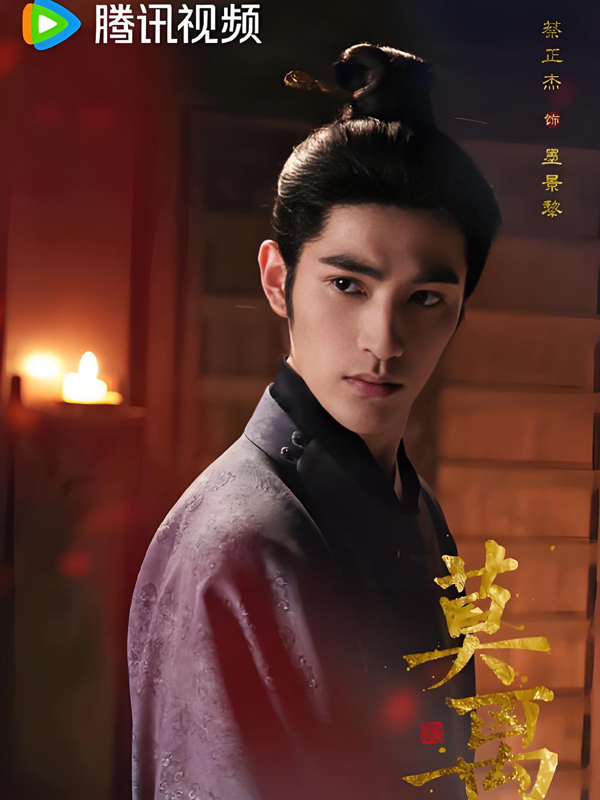
I want to ask him, across the screen, across centuries: “Was it worth it?” He cannot answer. But we can answer for ourselves. Every day, we choose between what we crave and what we already hold. Mo Jingli’s thousand arrows are a warning—not about war, but about the blindness that makes us throw away real gold for fool’s glitter. His ghost asks us: what are you charging toward, and what are you leaving behind in the dark?
The finale of The First Jasmine is bloody, but its real wound is philosophical. Guo Taihou dies knowing she became the monster she fought. Mo Jingli dies reaching for a shadow. And Ye Li and Mo Xiuyao—they survive, but they inherit a court full of suspicion, a people scarred by civil war, and the weight of rebuilding trust from rubble. The drama does not offer easy justice. It offers recognition: that our prisons are often self-built, and our freedoms are often mirages. Yet the final shot—Ye Li standing on the city wall, dawn breaking behind her—suggests a fragile hope. She does not smile. But she does not look away. And sometimes, that is the bravest thing a woman can do in any era.