
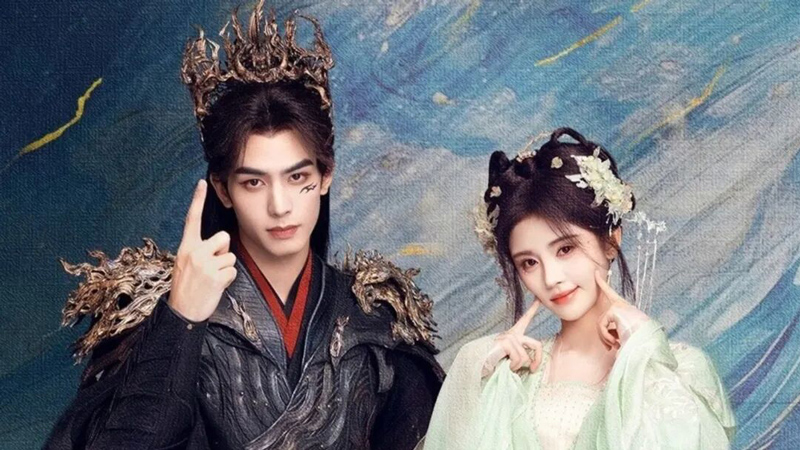
It dropped without warning. Four episodes aired yesterday on Youku, and the forty-episode costume Xianxia (仙侠) fantasy is already causing a stir. Starring Ju Jingyi (鞠婧祎) and Song Weilong (宋威龙), this one landed with zero prior fanfare after months of postponed dates. Three episodes in, and the laughter hasn’t stopped. It feels like a genuine summer dark horse—the kind that grows on you scene by scene until you cannot look away.
With the college entrance exam results freshly released, there is a collective sigh of relief in the air, as if a heavy boat has finally passed through endless mountains. This is the perfect time to sink into a series that does not take itself too seriously, yet delivers surprisingly rich emotional twists. So what exactly makes this show tick, and why has it captured attention so fast? Let us break it down without the usual promotional fluff.
The story offers familiar Xianxia tropes but reworks them with a lighter touch, sharper dialogue, and a cast that seems genuinely invested in making the absurd feel heartfelt. This is not your typical high-stakes cultivation drama; it thrives on its character dynamics and the unexpected humor woven into every crisis. The result is a viewing experience that feels both fresh and oddly comforting, a true palate cleanser in a genre often weighed down by its own lore and melodrama.
The Tree That Started It All
The setup is deceptively simple. A strange celestial phenomenon shakes the world, and a massive meteorite known as Haiyun (海陨) crashes into the earth, leaving a deep crater. From that very spot, a sacred tree called Jianmu (建木) sprouts, carrying with it a terrifying legend: it supposedly holds the source power of heaven and earth. Whoever controls it effectively commands the life force of all beings.
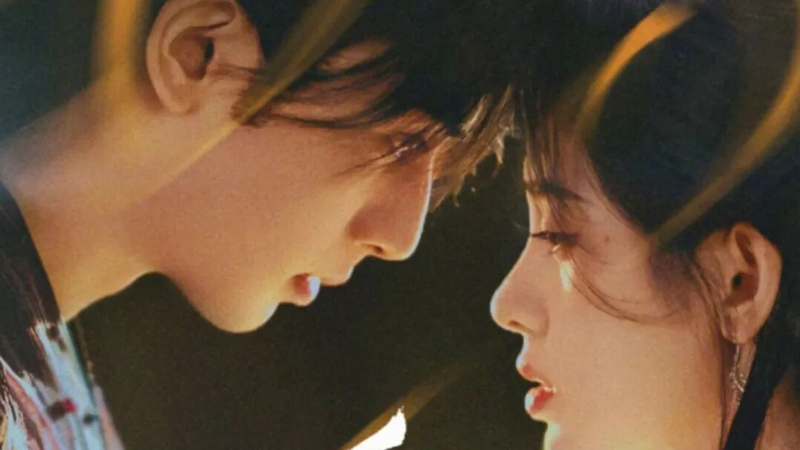
This, of course, attracts greedy eyes from every corner—immortals, demons, and monsters all wage a century-long war over it. Ordinary people suffer most, caught in the crossfire of divine arrogance. It is here that our female lead, Jiang Lifei (姜黎非, played by Ju Jingyi), enters the scene as an orphan from Qingqiu (青丘). She is not your typical cultivation prodigy. While everyone else obsesses over spells and spiritual energy, she unknowingly is the treasure itself—a walking, talking artifact of immense power. This irony fuels much of the early comedy.
Raised by a master who later vanishes, she is sent to Wuyue Court (无月廷) to find her senior brother. But fate has other plans. The narrative does not waste time with overlong exposition; instead, it throws her into a chaotic world where her very existence threatens the balance of power.
Two Strangers, One Dangerous Game
At Wuyue Court, Jiang Lifei crosses paths with Lei Xiuyuan (雷修远), played by Song Weilong. He is not just any disciple—he is the young master of the Yecha (夜叉) clan, a group naturally born to counter the power of the Jianmu (建木) tree. This is where the drama earns its sharpest edge. Lei Xiuyuan approaches her with clear, calculated intent. He is there to exploit her connection to the tree’s power, but the more time he spends with her, the more his resolve weakens. Their early interactions are filled with mutual suspicion and playful banter, and he finds himself stepping in to protect her whenever trouble arises. She, in turn, slowly lowers her guard. This push-and-pull is handled with a refreshing lack of melodrama.

The show cleverly balances their growing attraction with the underlying threat of betrayal. You can feel the tension building not through grand speeches but through small gestures—a hand held a moment too long, a glance that betrays too much. It is this quiet chemistry that keeps viewers invested, making every scene between them charged with unspoken possibilities. Yet, the show never lets you forget his original mission, planting seeds of inevitable conflict that will resurface with devastating effect later.
Laughter Before the Tears
A significant portion of the early episodes takes place at Chufeng Academy (雏凤书院), where Jiang Lifei and Lei Xiuyuan study alongside other disciples. Here, the tone shifts to something lighter, almost slice-of-life. There are classes, quarrels, and silly pranks that feel like a warm respite from the cosmic war brewing outside. It is arguably the most heartwarming segment of the entire series. During this time, their bond deepens without the heavy weight of destiny constantly pressing down on them. He grows fiercely protective; she becomes his unexpected moral compass. But as with all good Xianxia tales, the calm is merely the prelude to a storm.

Once her true origins are revealed, the story pivots hard. “I will protect you for life, yet you will hate me for eternity”—this line cuts deep for a reason. The drama shifts from lighthearted camaraderie to a painful test of loyalties. He must choose between his clan’s duty and his feelings for her; she must decide whether to trust someone who was never entirely honest. The sweetness is still there, but now it carries a bitter aftertaste, like honey laced with ash. This emotional whiplash is precisely what makes the series addictive. It does not shy away from cruelty, but it also never abandons the humor that made the beginning so enjoyable. The final episodes promise a reckoning that will leave no one unscathed. So, is it worth your summer nights? Absolutely—but keep a tissue box nearby.