
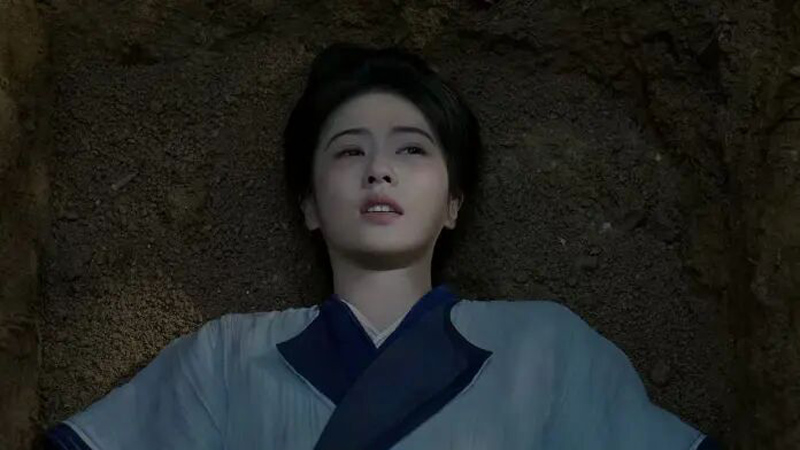
The First Jasmine (莫离) presents a haunting question: when the mind shatters under unbearable grief, is it madness or a desperate will to survive that rebuilds reality? The drama’s protagonist, Ye Li (叶璃), returns to her mountain home only to find it a tomb of memories, where the ghosts she conjures are not signs of a broken mind, but the very architecture of her sanity. The story forces us to confront a brutal truth: sometimes, the only way to bear the unbearable is to not bear it at all.
The Truth Behind the Ruins
When Ye Li returned to Li Mountain alone, her former husband, Mo Xiuyao (墨修尧), sensed something was deeply wrong. He petitioned the emperor for permission to travel there, only to uncover a devastation he never expected. The mountain, once home to a thriving academy, was completely deserted. His attendant, Shunxi (顺喜), revealed the chilling reality: everyone was gone. The truth crashed over Ye Li like a wave of ice water, and she collapsed into unconsciousness, her mind refusing to accept the evidence of her own eyes.
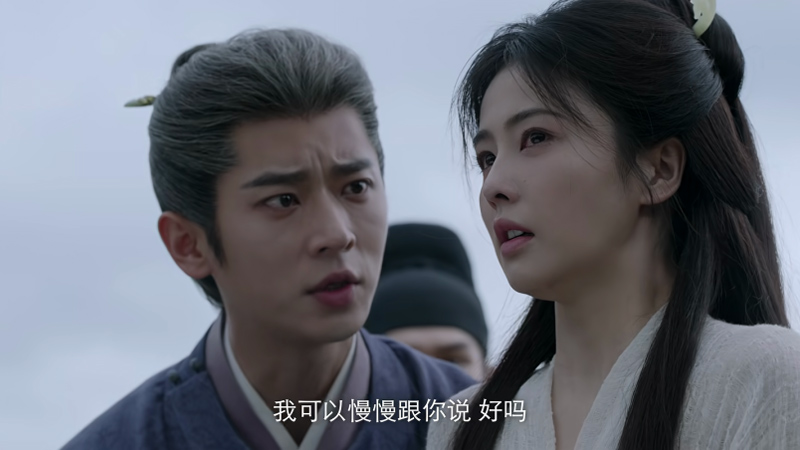
The next morning, Ye Li woke as if from a long sleep. She looked at Mo Xiuyao and asked, with genuine confusion, why his hair had turned white overnight. She had no memory of the previous day’s revelations. Mo Xiuyao, understanding her fragile state, chose to play along with her new reality. He fabricated a story about a late-night arrival and accompanied her as she greeted the phantom inhabitants of the academy, pretending they were still alive. He helped her repair furniture and clean the halls, all the while reassuring her that he would never leave her alone again.
It was a gentle deception, a tactic Mo Xiuyao employed to allow her mind to process the trauma slowly. He hoped that by surrounding her with familiarity and support, she could eventually face the truth on her own terms. But the truth was a beast that could not be caged forever. The moment Ye Li stumbled upon the graves of her fellow disciples, the carefully constructed dam of her memory broke. She remembered it was she who had buried them. The scream that tore from her was not just a cry of grief, but a primal sound of a soul realizing it had been orphaned from its entire world.
The Psychology of Forgetting
How did such a tragedy unfold? The story goes back to a dark time when Li Mountain was sealed off from the outside world. A plague swept through the academy, and desperate, the inhabitants dug up every medicinal herb on the mountain. Ye Li, still a young girl with a child’s heart, begged to be allowed down the mountain to find more medicine. Her senior brothers and sisters, trying to protect her, refused and locked her away for her own safety. It was this act of kindness that inadvertently saved her life, but it also condemned her to be the sole survivor.
This is where the mind’s most powerful defense mechanism takes center stage. In psychology, we recognize a phenomenon called “selective amnesia” – the process where the brain isolates specific, traumatic memories and tucks them away in the unconscious. It’s not a conscious choice to forget, but an automatic, biological reaction designed to shield the psyche from catastrophic pain. The trauma of watching everyone she loved die, one by one, was simply too immense for a young girl to process. Her mind did what it had to do to survive: it erased the horror, allowing her to continue living in a world that no longer existed.
For years, Ye Li lived alone on that barren mountain, a solitary guardian of a graveyard she didn’t even remember she was tending. The loneliness and the latent grief must have been a constant, gnawing pressure. The human psyche is resilient, but it also has its limits. Faced with such immense psychological pressure, her mind constructed a parallel reality. It replaced the horrifying truth with a bearable fiction, a protective bubble where her loved ones were still alive, and she was not the last of her kind. This wasn’t a breakdown; it was a lifeline thrown by her own consciousness to a drowning girl.
Self-Preservation in Madness
We are often told to face our difficulties head-on, to embrace the pain and conquer it. This advice, however, fails to account for the moments when the pain is so vast it threatens to consume us entirely. When the weight of grief exceeds our capacity to bear it, “escaping” is not an act of cowardice; it is the highest form of self-preservation. The tragedy that befell Ye Li—losing her entire family and being trapped with their memory—is a burden that would break even the strongest spirit. The thought of it is enough to induce despair.
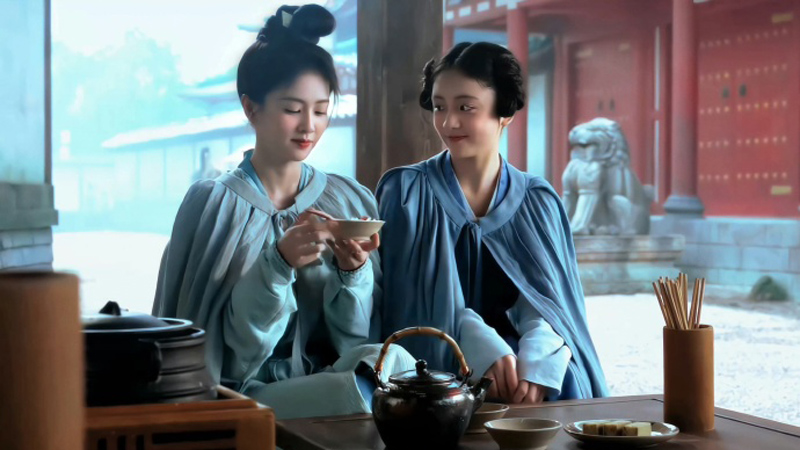
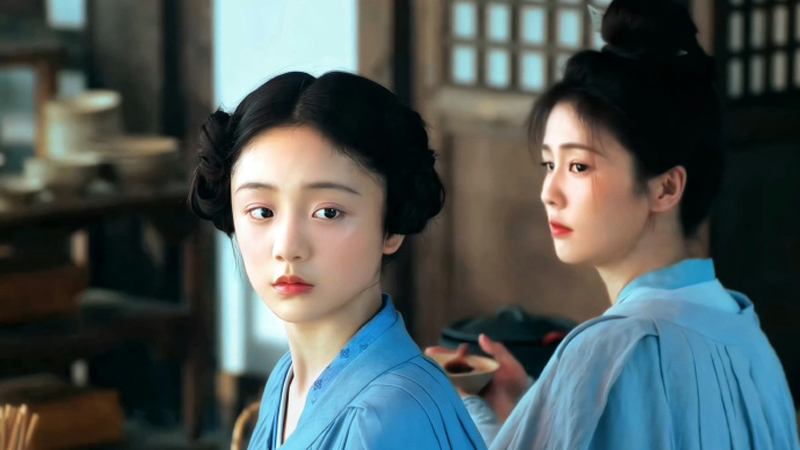
Ye Li’s mind did not just erase the pain; it actively created a new ecosystem for her to inhabit. She manifested two distinct beings: Qing Shuang (青霜) and Master Zhu (朱夫子). These were not random hallucinations, but carefully crafted pieces of her own shattered identity. Qing Shuang represented her own vulnerability. By soothing Qing Shuang’s fears, Ye Li was unconsciously soothing her own, wrapping her arms around the frightened girl inside her. Master Zhu, on the other hand, was the manifestation of her strength and wisdom. Every time he rescued her from a perilous situation, it was her own subconscious pushing her to overcome obstacles and fight for her survival.
In this light, Ye Li was not losing her mind; she was engaging in the most rational act of self-preservation possible. She was talking to the parts of herself that needed comfort and finding hope in the guise of a protector. She refused to let herself die of a broken heart. This story reminds us that the human mind is a strange and wonderful organ, capable of incredible creativity, even in its destruction. It will rewrite the world to ensure its own survival, proving that the instinct to live is the most powerful force of all.