
On June 16, 2026, the Changchun Confucian Temple in Jilin Province hosted an immersive hanfu experience event that drew international students from multiple countries. Participants donned traditional Chinese garments, filmed short videos, studied classical etiquette, and read historical inscriptions inside the centuries-old temple compound — turning a cultural landmark into a cross-cultural dialogue space.
Chinanews photographer Zhang Yao documented the event: students from diverse backgrounds stood side by side in flowing silk sleeves, practicing ritual bowing, examining stone steles, and recording their transformed appearance on camera. The activity illustrated how hanfu’s appeal has expanded beyond Chinese youth circles to attract a global audience seeking tactile engagement with Chinese heritage.

The Changchun Confucian Temple — one of the few surviving Qing-era temple-school complexes in northeast China — provided an architecturally authentic backdrop. Its carved gateways, ceremonial halls, and scholarly steles matched the garments’ historical context far more convincingly than a modern convention hall or shopping mall. Students moved through the same corridors where imperial examinations were once conducted, bridging a thousand-year gap between the site’s original purpose and its contemporary cultural function.
China’s hanfu movement has accelerated international outreach over the past two years. CCTV reported in June 2026 that hanfu sewing and pan-kou button-making techniques have already been inscribed in provincial-level intangible heritage lists in Hebei, Shandong, and Jiangsu. The Changchun event adds a hands-on dimension: foreigners who previously only watched hanfu from a screen now physically wear it, handle its fabric weight, and learn the etiquette code that accompanies the garments — a much deeper cultural encounter than a photo opportunity.
The event organizers positioned hanfu as an entry point rather than an endpoint. Learning traditional ritual gestures and reading stele texts pushed participants past visual admiration toward functional understanding: how the garments were meant to be worn, when they were appropriate, and what behavioral norms they implied. For students unfamiliar with Chinese history, the combined garment-plus-site experience compressed what would normally require months of textbook study into a single afternoon of embodied learning.
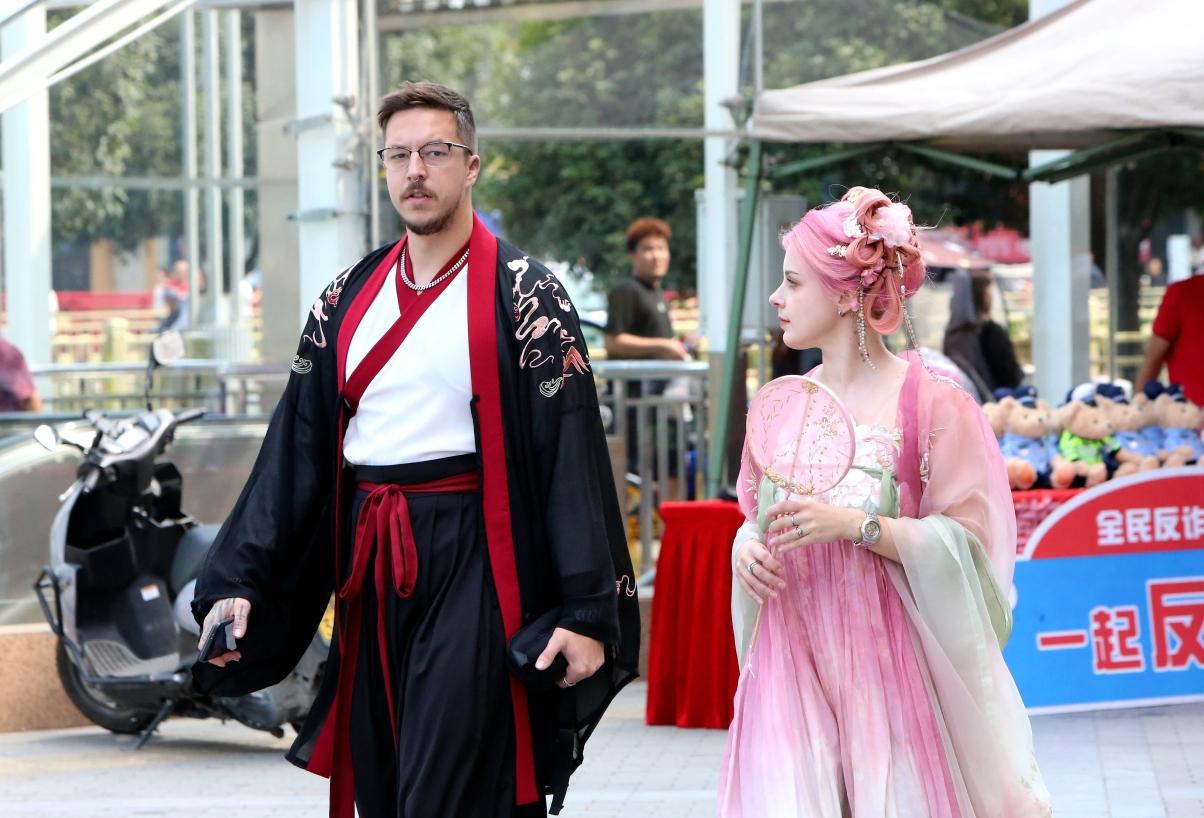
The video-recording component served a dual purpose. Students produced short clips for their own social channels, generating organic international exposure for hanfu without relying on official tourism marketing budgets. Each video carried the Changchun Confucian Temple as a visual anchor — a specific, identifiable location rather than an abstract “Chinese traditional clothing” backdrop. This geographic specificity matters: it ties hanfu to an actual historical site rather than a generic studio, making the cultural claim more concrete and harder to dismiss as costume-play.
The event also highlighted a practical challenge for international hanfu engagement. Most rental shops and online retailers cater to domestic sizing and language, leaving foreign participants dependent on event-organized garment access. The Changchun program supplied pre-selected hanfu sets with on-site fitting assistance, removing the logistical barrier that prevents many international visitors from trying hanfu independently. As hanfu’s global audience grows, the gap between interest and access — no rental inventory in foreign cities, no English-language sizing guides — remains the biggest obstacle to sustained international participation beyond one-time event experiences.