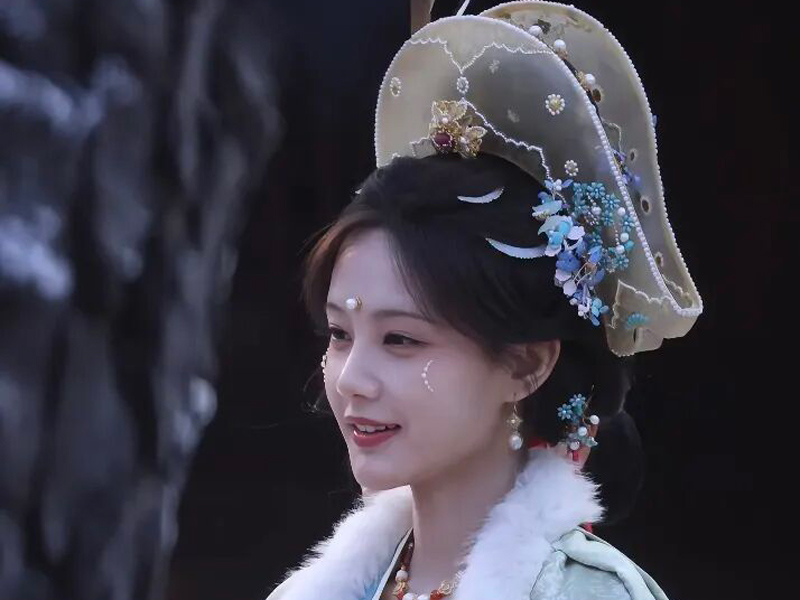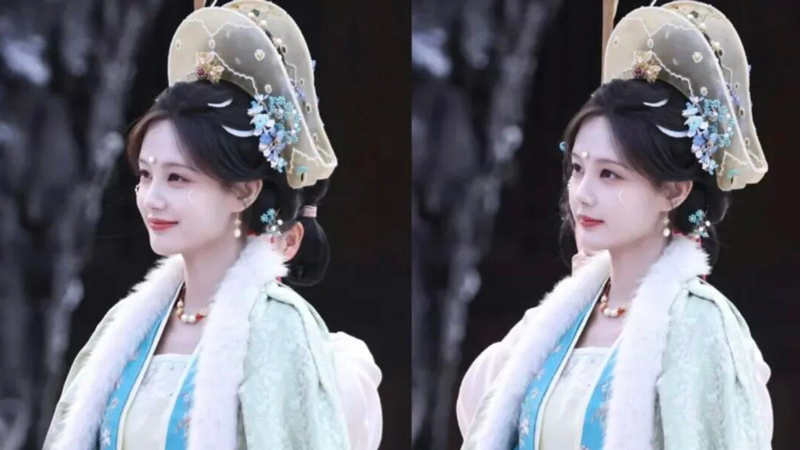
When the first set photos of Li Yitong’s (李一桐) new historical drama Jin Zhi (金枝) surfaced online, they sparked immediate confusion and intrigue among viewers. Her headpiece was not the typical elegant Song Dynasty style fans are accustomed to seeing. Instead, it featured a broad, wing-like structure that drooped dramatically down to her shoulders, leading many to liken it to a “croissant” or some fantastical creation. Was it a Qing Dynasty flag headdress that had slipped through a time warp? The curiosity was palpable.
Yet, far from being a costume designer’s wild fantasy, this unusual adornment is actually a meticulously researched replica of a real fashion trend from the Northern Song Dynasty, known as the Chui Jian Guan (垂肩冠). This was a thousand-year-old symbol of status and style that once dominated the streets and palaces of ancient China.
The “Shoulder-Dropping” Phenomenon
Its very name reveals its unique shape. The term “Chui Jian Guan,” also known as the “draped shoulder crown,” comes from the Chinese character “diao” (亸), which simply means to hang or droop. The name is a perfect description: the crown’s structure was designed with two expansive “wings” that curved outwards and downwards, resting upon the wearer’s shoulders. Historical records, such as the Mengxi Bitan (梦溪笔谈) by Shen Kuo (沈括), vividly describe it as having “two wings embracing the face, drooping down to the shoulders.” It wasn’t just a subtle decoration; it was a statement piece.
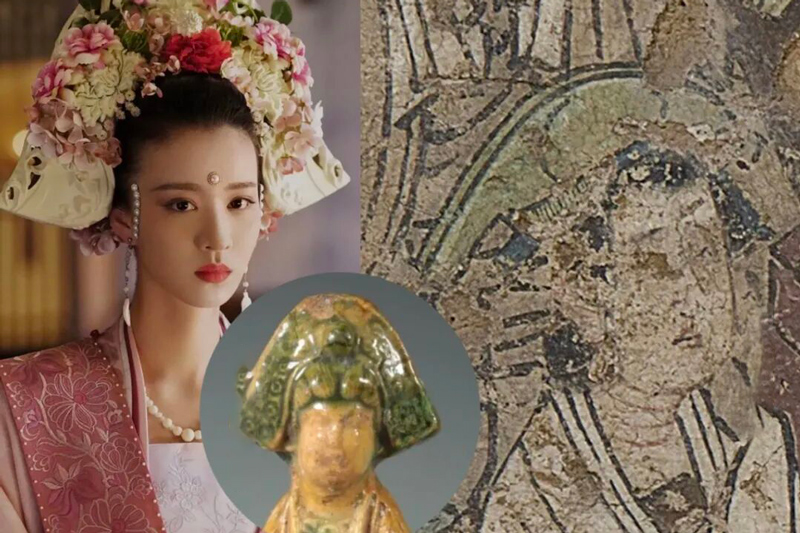
Written accounts from the time confirm the scale of this fashion. The historical text Chen Shi (尘史) notes that the shape involved four corners bending downwards until they reached the shoulder. Some of the most extravagant versions could be two or three Chinese feet wide. Historical texts even humorously mention that women had to tilt their heads sideways just to get into a carriage while wearing one. This level of impracticality was a testament to its popularity—a clear sign that for the fashion-forward women of the Song Dynasty, aesthetic daring was well worth the minor inconveniences of daily life. You could say it was the ultimate power accessory.
The “It” Crown of a Bygone Era
One might assume that such a grand, elaborate headdress was exclusive to the imperial court. However, the Chui Jian Guan achieved a level of mass-market appeal that would make any modern influencer envious. During the mid to late Northern Song period, it was the most mainstream headpiece, adopted by everyone from concubines in the Forbidden City to ordinary women on the street. It was the “must-have” item for any social gathering, be it a grand banquet or a simple outing. Its presence was so pervasive that it became a cultural marker of the era.
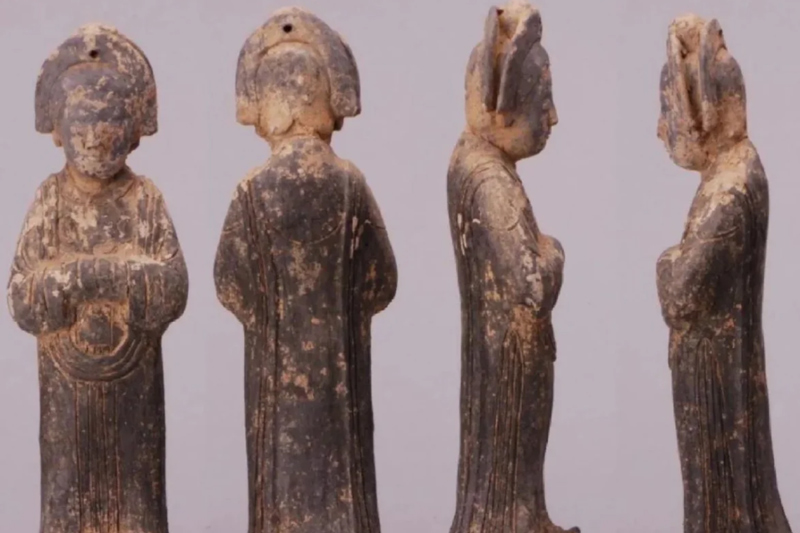
To truly understand its iconic status, we can look at who was wearing it. The famous Mengxi Bitan records that Li Shishi (李师师), the renowned courtesan favoured by Emperor Huizong (宋徽宗), was often seen wearing it. The text describes her as having “a high bun and a Diao Ji crown, her beauty as blue as the hanging clouds.” This single image beautifully encapsulates the crown’s appeal, blending an air of worldly elegance with unmatched opulence. Even the most celebrated entertainer of the time adorned herself with it, proving that it was the crown of choice for the trendsetters of the day.
A Modern Glimpse, A Cultural Echo
The crown worn by Li Yitong in the series Jin Zhi is not a direct copy but a thoughtful cinematic interpretation. For dramatic effect, its dimensions have been scaled down from the historically documented “two to three feet” to something more camera-friendly, but the core design remains intact: the towering height and the wide, drooping “wings” that reach the shoulders. When paired with the character’s simple, elegant robes and minimal makeup, the crown creates a look that feels both authentically “Song” and visually appealing to a modern audience. It successfully bridges a thousand years, allowing us to appreciate the refined aesthetic of ancient China.
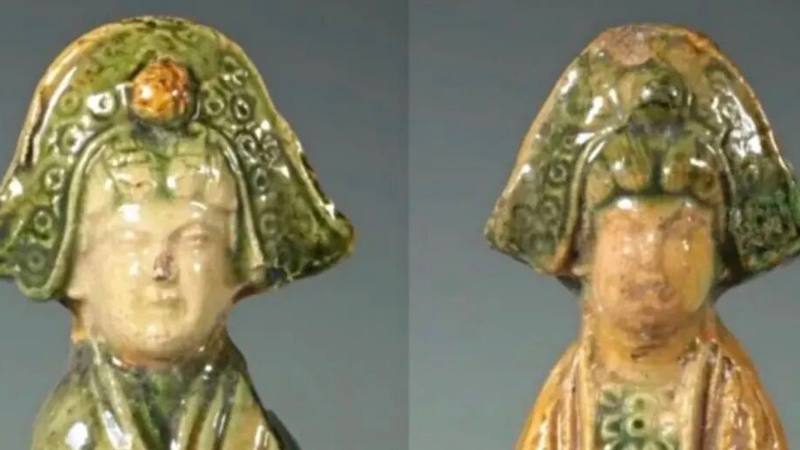
So why did the Northern Song elite so wholeheartedly embrace this “outrageous” style? It was a period of unprecedented economic prosperity and social stability. This wealth fuelled a desire for more elaborate, personalized expressions of beauty and status. The Chui Jian Guan became a symbol of that era’s confidence and creativity. They were crafted from various materials—from crystal and jade for the upper class to gold, silver, and pearl-studded versions for those of lesser means but equal ambition. This variety allowed women from all walks of life to express their individual style while adhering to the societal norms of the day.
Today, the Chui Jian Guan, brought back into the public eye by Li Yitong’s drama, is more than a piece of jewellery; it is a powerful window into the social customs and artistic sensibilities of the Northern Song people. It reflects the ingenuity, the romance, and the powerful sense of self-expression that defined a golden age in Chinese history. It serves as a beautiful reminder that the forgotten art of our ancestors, once unearthed, has the power to captivate and inspire us all over again.