
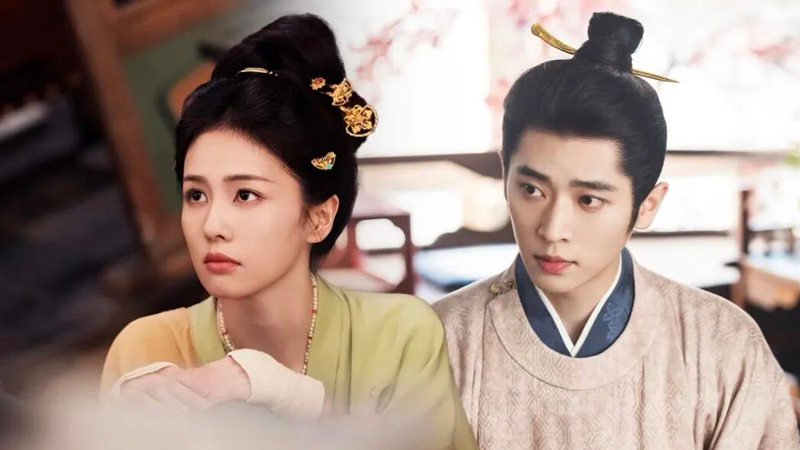
Ye Li (叶璃) from the hit drama The First Jasmine (莫离) sits at the heart of a chilling paradox. She learns her grandmother murdered her mother and then tries to kill her, yet she calmly attends the old woman’s funeral. She appears to have split into Qing Shuang (青霜)and Zhu Fuzi (朱夫子), two alternate personalities she created to survive. What could possibly make a sane mind fracture into pieces, and can love ever put it back together?
The Calm After the Storm
When the tree branch struck her grandmother’s head, Ye Li was holding the very dagger meant for her own heart. The lightning that saved her seemed like a divine intervention, yet the grief of her mother’s murder remained a fresh, gaping wound. She had the chance to strike back, to end the woman who had destroyed her family. But her husband, Mo Xiuyao (墨修尧), stopped her. He saw the rage in her eyes and pulled her back from the abyss.

What was surprising was what followed. She woke up the next morning, laughing with the servants, going for a run in the courtyard, and greeting her husband with a bright smile. It was as if the previous day’s revelation had been a bad dream. Viewers were frantic, typing in the comments that she must have “locked away the pain again.” They had watched her create the gentle Qing Shuang to talk to when loneliness crept in, and the fierce Zhu Fuzi to fight her battles when she was in danger. It seemed like an easy solution to simply create a “happy” Ye Li to go about her day.
When news of her grandmother’s death arrived, she insisted on paying her respects. Even Mo Xiuyao was confused. “Why go? She tried to kill you,” he asked. Her response was unsettlingly calm: “She is my blood. Bone of my bone.” It did not make sense. She had just learned the horror of her family’s history. To attend the funeral and appear to have moved on felt like a betrayal of her mother’s memory. It looked like the ultimate act of emotional suppression, a sign that the cracks in her mind were deeper than anyone imagined.
A Mask of Strength
However, the assumption that Ye Li had simply erased the memory proved to be false. When she succeeded in helping Mo Xiuyao stand again after years of being crippled, a moment of pure joy broke through the walls between them. His initial skepticism—”What makes you think you are better than the royal physicians?”—had melted away. As he took his first shaky steps, he looked at her with gratitude, admitting his past suspicion was wrong. It was in this moment of mutual trust that Ye Li finally let him see behind the mask.
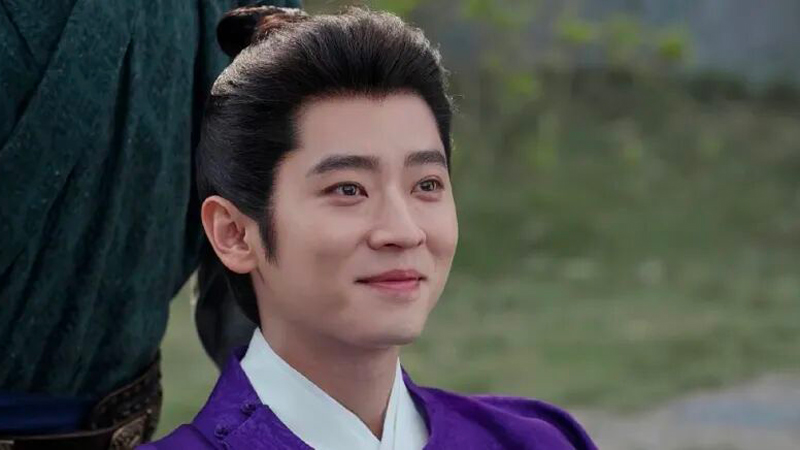
She told him the truth: she knew everything at the funeral. She knew her grandmother was a murderer and that the old woman had stolen a vital item from her mother. She did not have amnesia; she was simply in complete control. This was not the passive act of splitting her mind to forget. This was the active, conscious choice to hide her rage and sorrow in order to function. She chose to be “fine” because showing her wounds would serve no purpose.
This revelation forces us to consider the strength it takes to suppress such massive trauma. Ye Li did not break. She bent. She did not run from the pain; she caged it tightly within herself to ensure she could survive the day. Her decision to see her grandmother’s body was not an act of love or amnesia. It was an act of supreme will. She wanted to say goodbye to the woman who had destroyed her, but on her own terms, with a face of stone. This shows a profound steeliness, a resilience that is often mistaken for coldness.
Surviving by Splitting
Yet, if she was so strong, why the fantasies? When she fell off a cliff, she swore that Zhu Fuzi appeared out of nowhere to kill a venomous snake with a branch, saving her life. Afterward, she told her fellow disciple to find him, but he could not be found. The truth is, no one was there. Ye Li herself broke the branch and killed the snake, but her mind needed to believe it was Zhu Fuzi. This is the nature of her mental condition: she manifests these personas not to erase reality, but to cope with it.

During her lonely eight years on Li Mountain, she had no one. No mother, no grandmother who loved her, and a father who was absent. In that isolation, she created a family. Qing Shuang was the gentle friend she could talk to. Zhu Fuzi was the teacher who protected her. She even imagined her grandfather and other fellow disciples were still with her. It was not a disease of the mind in the typical sense; it was a survival mechanism born from a desperate need for human connection.
She did not split because she was “crazy.” She split because she was alone. The human soul is not designed to handle the extremes of betrayal and loneliness without a voice to speak to. Ye Li created her own companions because the world failed to provide them. This is the tragedy of her character: she built a rich inner world because the outer one was too cruel. Her survival came at the cost of her reality, but it kept her alive.
Ultimately, the story of The First Jasmine suggests that companionship is the only true cure. After marrying Mo Xiuyao, Ye Li started to change. He listened to her, held her hand, and stood by her during her weakest moments. She no longer had to imagine a friend because she had a real one. He was the grounding force that pulled her back from the brink of total dissociation. Their marriage healed the cracks that trauma had created.