
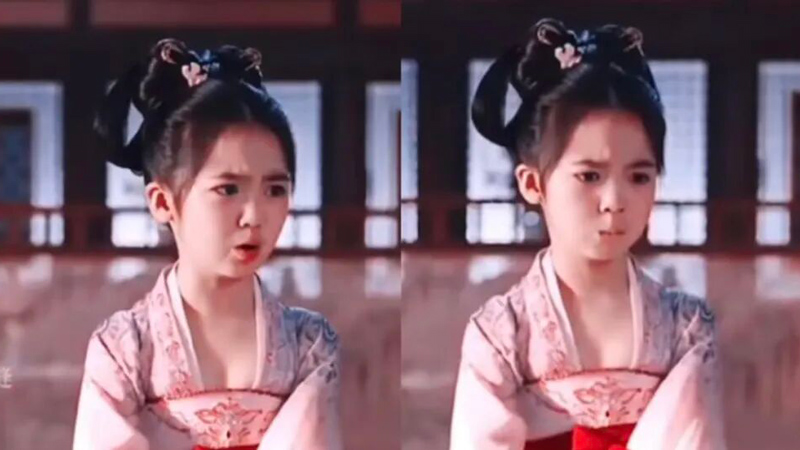
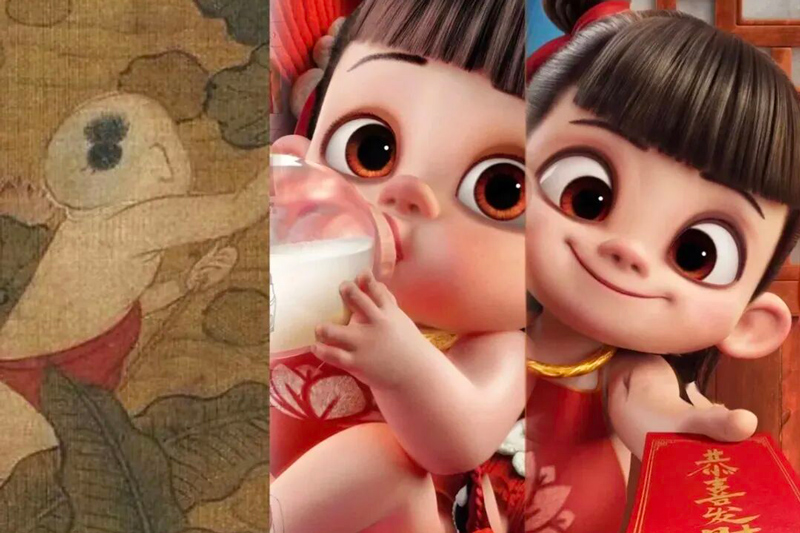
Remember Doudou (肚兜, a traditional Chinese child’s undervest) kid from Nezha? Where is he? That iconic red undervest, worn by the young hero as he romped through summer scenes, is etched into the childhood memories of millions. Yet today’s period dramas rarely show such playful, authentic child characters.
Instead, toddlers and young kids appear in perfectly tailored, miniaturized adult costumes—complete with hats, robes, and sashes—even in casual indoor settings. The carefree, bare-backed Doudou look has virtually vanished from screens.
The Lost Undervest
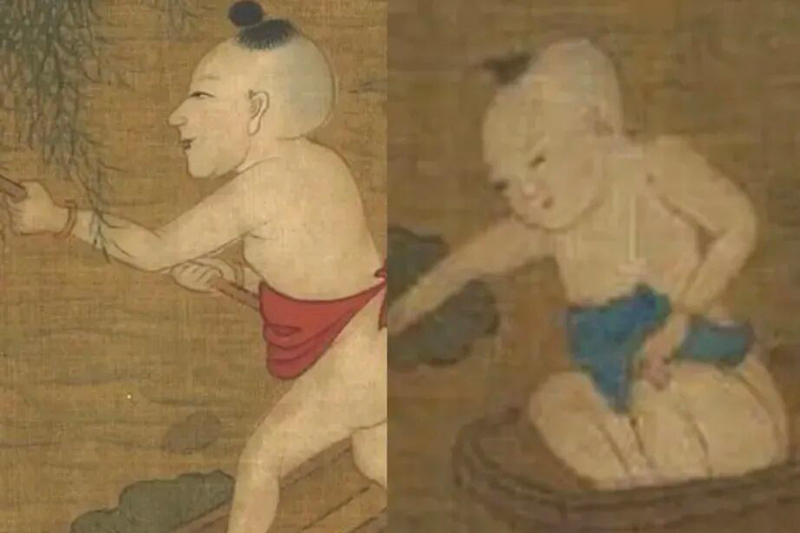
Ancient Chinese children, especially during hot summers, almost never wore formal outerwear at home. Paintings from the Song Dynasty (e.g., Duan Yang Xi Ying Tu, 端阳戏婴图) and Dunhuang (敦煌) murals show kids in simple, backless Doudou—a trapezoidal piece of cloth tied around the neck and back. Unlike the more complex Moxiong (抹胸, a chest-and-belly wrap worn by adults), the child’s Doudou had no ornate embroidery or stiff structure. It was purely functional: lightweight, breathable, and easy to put on or remove.
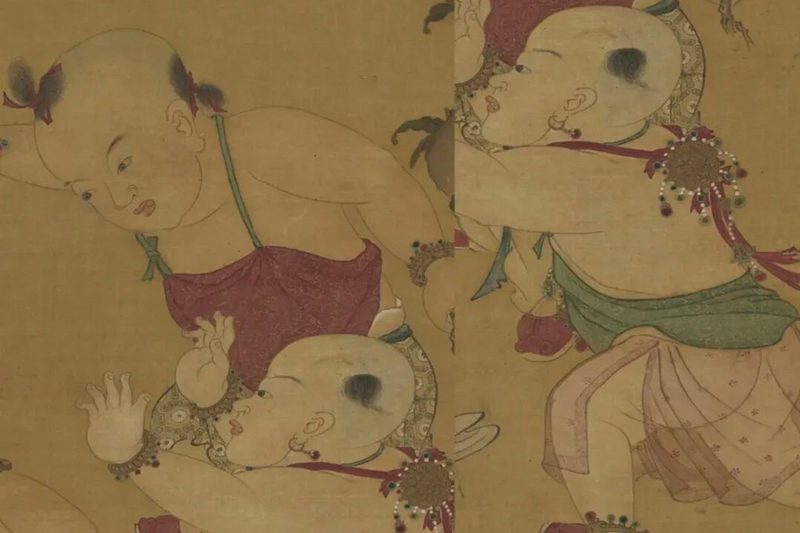
This garment wasn’t just for peasant children. Even noble kids in historical records wore Doudou indoors. The Qing Bai Lei Chao (清稗类钞) from the Republican era notes that “Mofu” (抹腹, another name for belly wrap) was common for all ages. But the child version was distinct—it left the back exposed for better air circulation. Parents often chose red Doudou for good luck, but other colors like yellow or blue also appeared, each carrying family wishes for health and protection. Sadly, this everyday essential has been erased from most modern sets.
Why? Many production teams cite child privacy concerns or convenience. Instead of researching authentic children’s wear, they simply shrink adult costumes. A three-year-old in a period drama now wears the same rigid, multi-layered outfit as his father—down to the boots and headpiece. This approach ignores historical common sense: no ancient toddler would endure such heavy clothes while playing tag in a courtyard.
Warm Bellies, Healthy Kids
The Doudou was never just a fashion choice. It embodied ancient Chinese pediatric wisdom. The Song Dynasty medical text Xiao Er Bing Yuan Fang Lun (小儿病源方论) listed “keeping the belly warm” as the first rule for raising children. Traditional medicine held that a child’s internal organs are delicate, and the navel area is especially vulnerable to cold. A chill there could cause diarrhea, colds, or worse. The Doudou provided direct, constant warmth to the abdomen while leaving the rest of the body free to cool down.
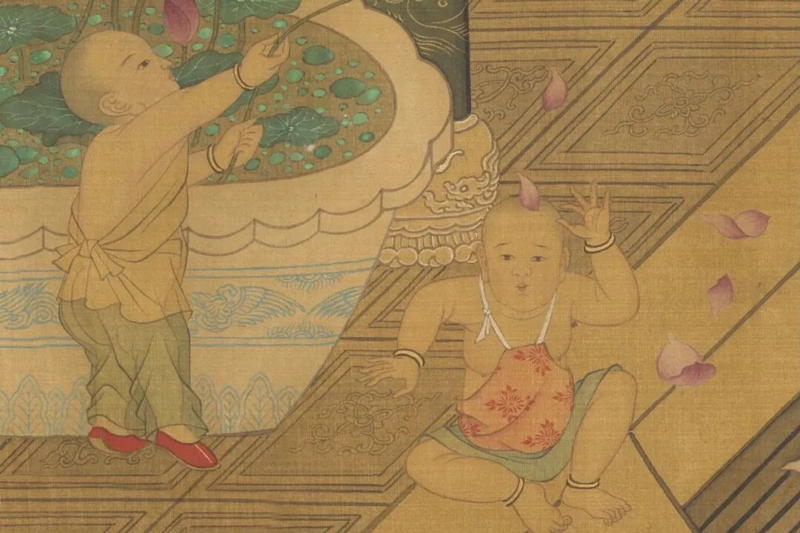
This design was brilliantly adaptive. In summer, kids wore it alone—no shirt, no jacket—to stay cool yet protect their core. In winter, they layered it under a padded coat. The backless cut also prevented overheating and allowed parents to easily check for sweat or rashes. Historical records from the Ming Dynasty, such as Zhuo Zhong Zhi (酌中志), mention adults hiding valuables in their Doudou pockets, proving how universal and practical this garment was for all ages, not just children.
By ignoring the Doudou, modern dramas miss a key storytelling detail. A child in a simple undervest signals intimacy, home life, and parental care—elements that make historical settings feel alive. When every young character wears a miniature official’s robe, the screen loses that human warmth. The ancient world becomes a stiff costume party, not a lived environment.
Costume Drama’s Missing Charm
Today’s period dramas often prioritize visual polish over authenticity. Costume designers, pressured to deliver “epic” looks, lavish attention on adult leads but treat children as afterthoughts. The result: toddlers in silk gowns with tiny jade pendants, looking like dolls rather than real kids. This approach not only distorts history but also drains away the very innocence and energy that child characters should bring to a story.
Restoring the Doudou would not be difficult. A simple piece of cloth, a few ties, and a natural, unlined look—that’s all it takes to immediately convey “ancient child at home.” It would also align with growing audience demand for grounded, believable period details. Viewers notice when a show gets small things right, like a child running barefoot in a Doudou on a hot day. That image carries more emotional truth than any elaborate coronation scene.
It might be more work for the design department, but it’s much more work for the tailoring department to make a full outfit rather than a quick piece of cloth with ties! 😎 Of course, the modern children wouldn’t be allowed to run about bare bottomed so it’s a little more complicated than that but …
Thanks for pointing that out! I’ve updated the article. It’s not about workload—most productions skip historical research and shrink adult costumes, hiding behind child privacy and filming convenience. Sorry for the earlier mistake! 😅