

Ren Min (任敏) ties her hair up after marriage in the period drama A Splendid Match (良陈美锦). Fans noticed something odd: the back of her bun has a tiny flipped tail. Why does Gu Jinchao (顾锦朝) wear that? The answer lies in a forgotten hairstyle called the swallow tail. This wasn’t a random choice. It was a symbol of peace, a marker of status, and a design that traveled from the Five Dynasties to the late Ming Dynasty.
Ren Min’s character uses it to signal her new life as a married woman. But the tail also tells a bigger story about how Chinese women shaped their hair to speak without words. Let’s unpack why that little flip matters.
Fortune and Fidelity
The swallow tail gets its name from the bird. Just as a swallow spreads its two pointed feathers in flight, the hairstyle mimics that clean split at the back. In ancient China, the swallow meant more than a seasonal visitor. People saw it as a sign of homecoming and safe shelter. A married woman wearing a swallow tail was not just being pretty. She was telling the world: my house is in order, my family is stable. The same went for the wild goose, another bird linked to marital loyalty. So this tiny hair detail carried a heavy load of hope.
To build the tail, the hairstylist used real human hair, not fake pieces. They wet it with liquid from, a gel made from elm bark that worked like old-school hairspray. Then they twisted the ends upward until the strands firmed into a small, curved fin. The result looked neat from every angle. It also slimmed the face. For women with round cheeks, the upward flick drew the eye up and made the jaw look sharper. Practical and poetic—that was the genius of Ming Dynasty beauty.
But the swallow tail was not alone. Other biomimetic hairstyles like the Ling She Ji (灵蛇髻), or “spirit snake bun,” also carried lucky meanings. Yet the swallow tail stood out because it sat at the very back of the head, like a secret signature. Only when a woman turned around could you see it. That hint of modesty mixed with playfulness made it perfect for a new bride. She was no longer a girl; she had entered a home. And the tail announced that transition without a single spoken word.
Centuries of Change
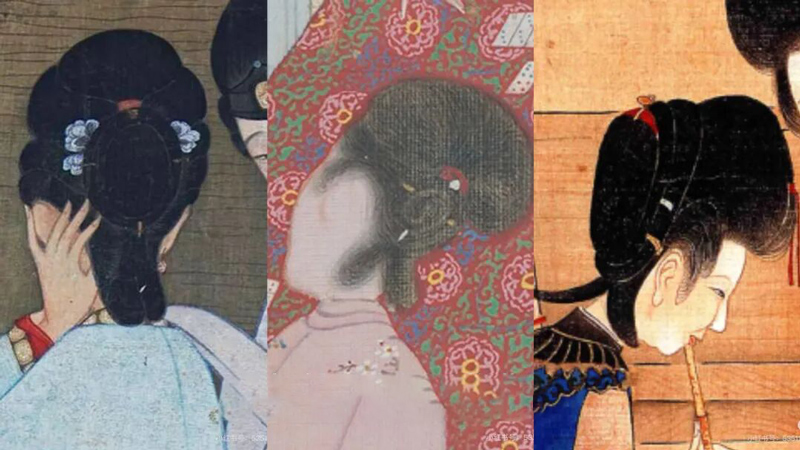
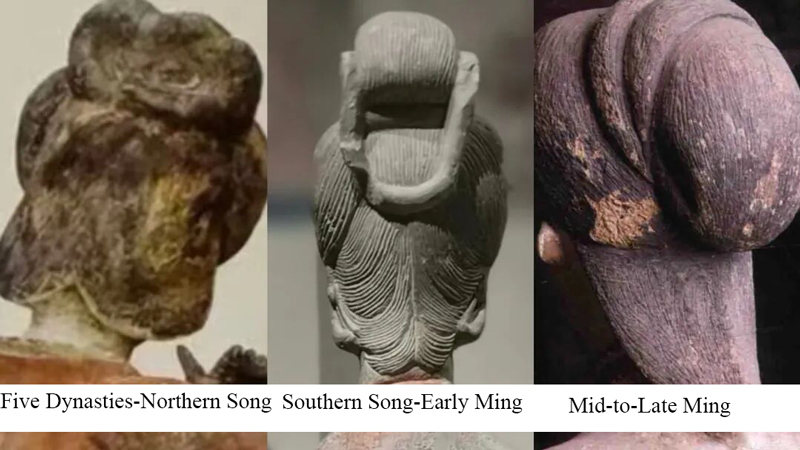
The swallow tail did not appear first in the Ming era. Its earliest clear form shows up in paintings from the Five Dynasties (907–960 AD). Back then, women wore the Pao Jia Ji (抛家髻), a messy bun shaped like a thrown-away home. That style had two thin, cicada-wing side pieces and a small tail at the nape. But the tail was mostly for the temples, not the center back. It was smaller, softer, and less structured. By the middle Ming, everything changed. Women pulled all their hair into a smooth round bun called Yun Bin Tuan Ji (云鬓团髻)—”cloud sideburns and round bun.” The tail moved to the exact middle of the back of the head and firmed up into a sharp upward flip.
This shift tells us about changing beauty standards. The early tail looked romantic and a bit wild. The Ming tail looked controlled and dignified. A married woman in the Ming court or a wealthy merchant’s home needed to project calm authority. The neat, geometric tail matched that need. It also paired beautifully with the Yun Bin—soft, wispy hairs at the temples that resembled morning clouds. The contrast between the fluffy sides and the crisp tail created visual rhythm. Paintings from the period show women wearing this for formal portraits and family ceremonies. It was the power suit of its time.
Then came the Qing Dynasty (1644–1912). Han Chinese women could no longer wear Ming court dress, but they kept the swallow tail in private life. However, the tail changed. It grew wider, more decorative, and less functional. The split became more pronounced, and the two ends curled outward like flower petals. Some versions added jewelry or ribbons. The original meaning—peace, shelter, fidelity—got buried under ornament. A late Ming tail was a promise. A late Qing tail was a fashion accessory. That evolution shows how even the most meaningful symbols can hollow out when removed from their original society.
Screen Magic
So why did the costume team on A Splendid Match pick this specific tail for Ren Min’s character after her wedding? Because they did their homework. The drama is set in the Ming Dynasty, and the swallow tail from that period is historically accurate. But more than that, the tail serves the story. Before marriage, Gu Jinchao wears looser, lower styles that suggest youth and freedom. After the wedding, her hair lifts up and tightens. The tail gives her a new silhouette—more serious, more settled. Audiences may not know the history, but they feel the shift.
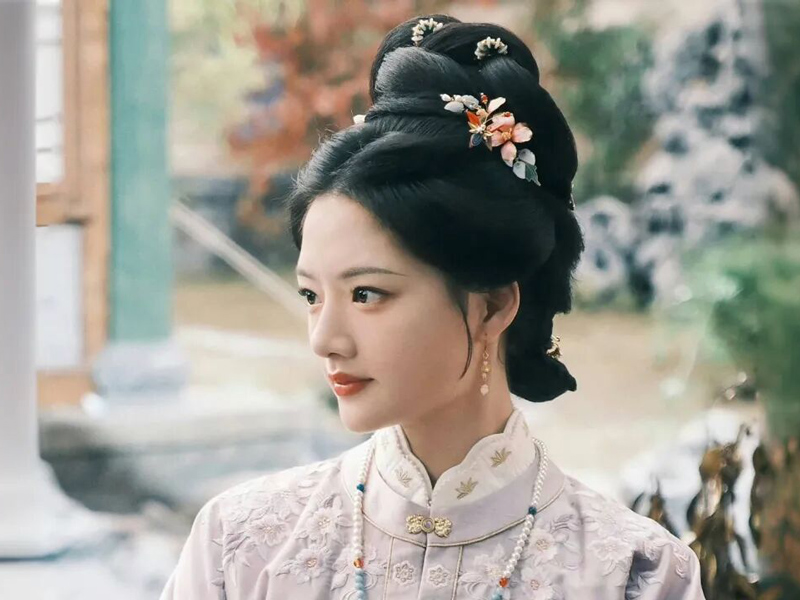
The show also uses the tail to nod to traditional craftsmanship. Unlike many period dramas that glue on plastic extensions, A Splendid Match reportedly shaped Ren Min’s hair with period methods. That meant real hair, real pomade, and real time in the makeup chair. You can see the difference on screen. The tail does not look stiff or fake. It moves slightly when she turns her head. The thin temple hairs float like actual clouds. These are the details that make costume dramas powerful. They are not just stories. They are living museums.
Would you wear a swallow tail today? Probably not as a daily style. But the idea behind it—using a small physical detail to carry big emotional meaning—has never left us. A wedding ring, a tucked-in shirt, a certain shade of lipstick. Humans always find ways to signal who we are and what we want. The swallow tail is just an old version of that. And thanks to shows like A Splendid Match, it gets to fly again, if only for a few hours on a screen. Which era of the swallow tail do you like best? The wild Five Dynasties version? The crisp Ming original? Or the flowery Qing descendant? Each one has its own story to tell.