
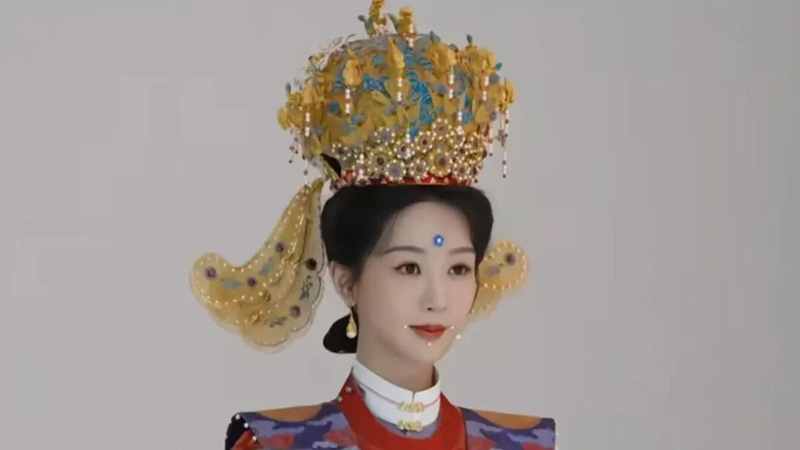
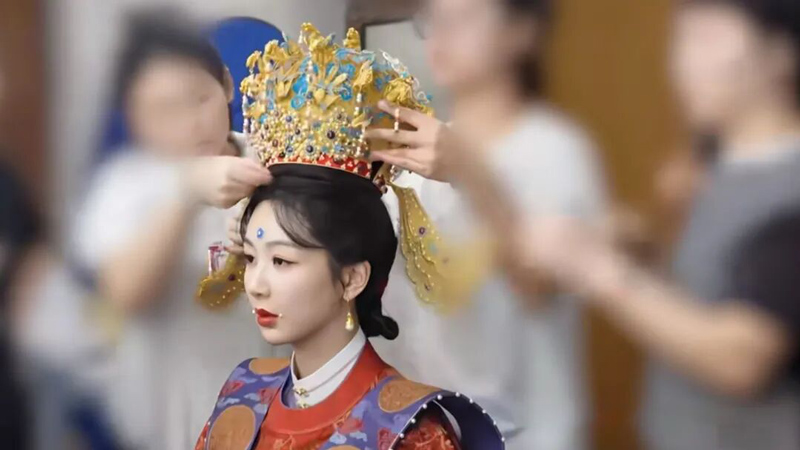
Fans of historical Chinese dramas were stunned when behind-the-scenes photos surfaced of actress Yang Zi in a breathtaking bridal crown from the unreleased episodes of The Mo (家业). The headpiece, a replica of the legendary Twelve-Dragon Nine-Phoenix Crown, never made it to the screen. Why would a production team invest in such meticulous craftsmanship only to leave it on the cutting-room floor? The answer lies in a mix of historical protocol, character logic, and a controversial edit decision that has left viewers mourning what could have been one of the most accurate Ming Dynasty wedding looks ever filmed.
The Crown’s True Royalty
The original Twelve-Dragon Nine-Phoenix Crown was excavated from Dingling (定陵) Tomb, the resting place of Emperor Wanli (万历) and his consorts. It belonged to Empress Xiaojing (孝靖), who received the posthumous honor only during the Tianqi (天启) era (1620–1627). Unlike the standard nine-dragon four-phoenix crown prescribed for a sitting empress in the Ming Hui Dian (明会典), this piece was an outlier—a special commission for a woman elevated to empress after death. Made of a gold wire frame, kingfisher feather inlay, natural pearls, and rubies, it weighs nearly 2,600 grams and features over 3,000 pearls. Such regalia was reserved for state ceremonies like enthronements or ancestral sacrifices, and no ordinary noblewoman could ever wear it.
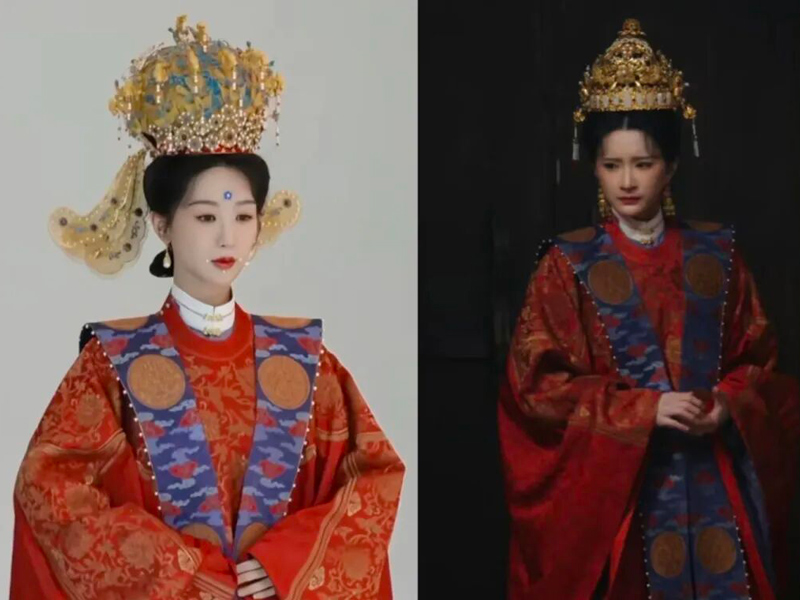
The replica seen on Yang Zi follows the original’s layout: golden dragons and kingfisher-phoenixes arranged in tiers, pearl tassels hanging from the sides, and a signature curved golden phoenix tail at the back—a detail that distinguishes this crown from lower-tier versions. The matching red ceremonial robe and purple-based draped scarf with circular cloud motifs also adhere strictly to Ming records. There are no anachronistic flowing ribbons or fantasy touches. In an industry flooded with generic, mashed-up costumes, this level of dedication to archaeological accuracy is a rare gem.
But here’s the catch: this crown was never meant for the character Li Zhen (played by Yang Zi), a commoner-turned-businesswoman in The Mo. During the Ming Dynasty, strict sumptuary laws dictated what each rank could wear. A merchant’s daughter—even a successful one—could not legally don the Twelve-Dragon Nine-Phoenix Crown. The production team knew this. So why build it at all?
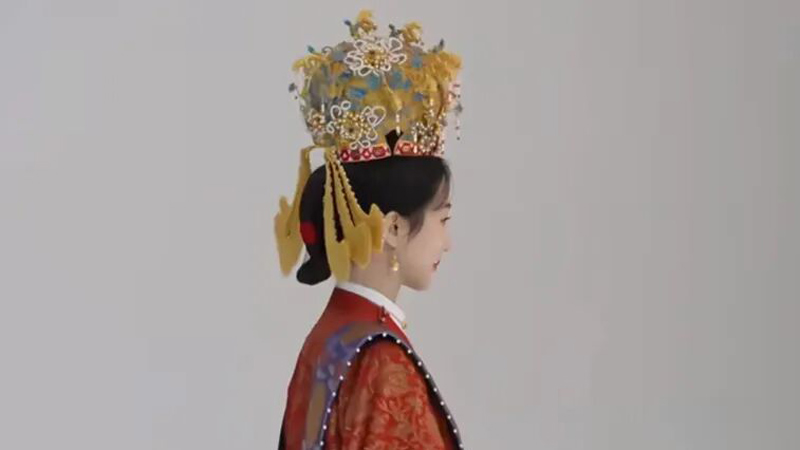
An Improper Splendor
The answer lies in the original script. According to leaked production notes, The Mo initially planned a grand wedding scene late in the story, where Li Zhen, after rebuilding her family’s ink-making business, would marry in a lavish ceremony. However, the crown’s very existence posed a problem: no matter how wealthy or respected Li Zhen became, she could never wear imperial mortuary regalia. The show’s historical advisors likely flagged this as an unforgivable breach of ritual propriety.
In the final broadcast, the wedding never happens. Episode 4 shows Li Zhen discovering her fiancé’s plot to steal her family’s secret ink formula just before the betrothal ceremony. She tears up the marriage contract and publicly calls off the engagement. To match the abrupt, bitter tone of this scene, the costume department replaced the opulent crown with simple silver hairpins and plain pearl ornaments. The shift underscores her fury and humiliation—she has no desire to dress up for a sham wedding.
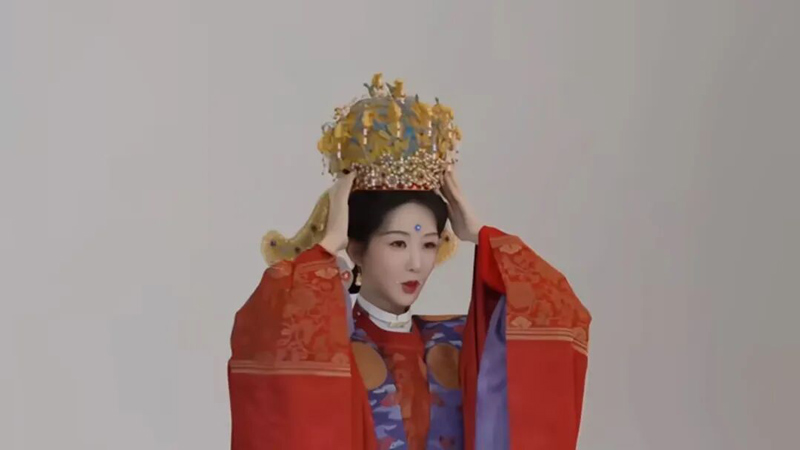
Some fans speculated that another character, Hua’er (华儿), might have worn the crown instead. But side-by-side comparisons show Hua’er’s headpiece is different. Others claimed a later episode originally featured a make-up wedding, but that subplot was cut due to runtime and narrative focus. Whatever the reason, the crown remained unseen except for a few test shots and makeup-room selfies that later leaked online. The production team chose historical plausibility (or perhaps budget reshuffling) over spectacle, and the crown became a ghost prop.
The Lost Scene and a Bigger Problem
The outcry over this deleted costume points to a deeper frustration among Chinese drama viewers. Too many period productions today rely on cheap, formulaic looks: flat eyebrows, gauzy fake crowns, and plastic beads that jumble together elements from different dynasties. A Tang-style collar might appear next to a Song headdress on the same character. Shows that take the time to study excavated artifacts and follow ritual texts are increasingly rare.
When audiences mourn Yang Zi’s unseen crown, they are not just mourning a pretty accessory. They are mourning the loss of a kind of storytelling that respects the past—where every fold of fabric and every gemstone on a crown carries the weight of historical reality. That crown told a story of forbidden ambition, of a woman who might dream of rising above her station but remains bound by the laws of her time. Without it, the show loses that subtle layer of meaning.
Will we see such carefully researched costumes in future dramas? Possibly. The viral regret over The Mo’s cut crown has sent a message to producers: viewers notice the difference between a generic prop and a faithful reproduction. The next time a production team builds a historically accurate outfit, they might think twice before leaving it in the storage room. Until then, fans can only scroll through those leaked images and imagine what could have been—a wedding scene where every bead and phoenix feather whispers the name of the Ming Dynasty.